



5 Health Benefits of Spending Time Outdoors
Getting outside can improve your mood, sleep, and social connections. A NewYork-Presbyterian psychologist shares the mental and physical health benefits of being outdoors — and how to make it part of your routine.
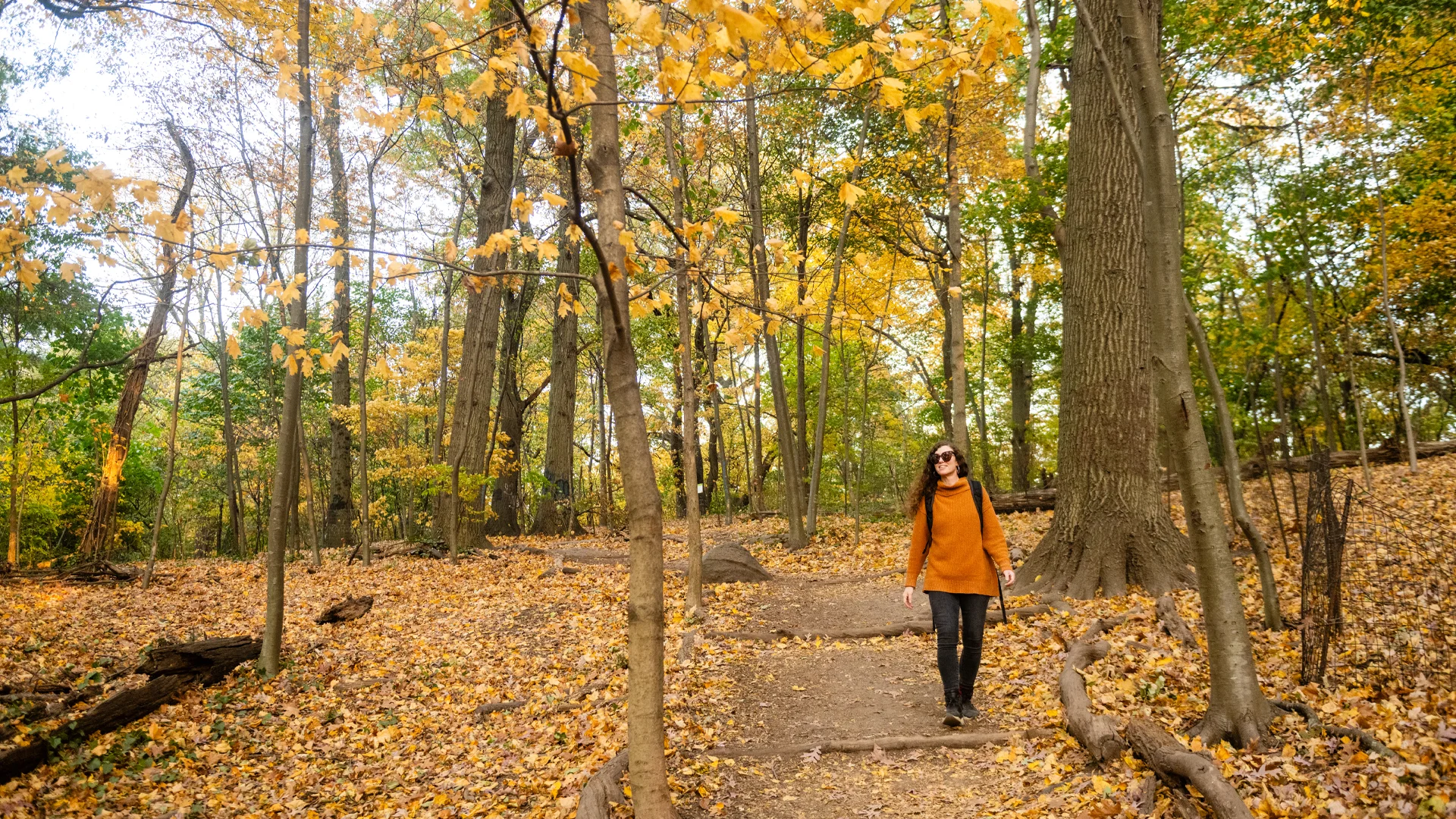
Whether it’s a hike in a park or a stroll down a city street, research shows that enjoying the outdoors benefits our mental and physical health. But despite an abundance of evidence, most Americans spend about 90% of their time indoors.
“I live in New York City, so I am familiar with the challenges of getting outdoors, including the inevitable noise, horns blasting, hustle and bustle of people rushing from one place to another,” says Dr. Evans, a clinical psychologist who established the Mindfulness Based Stress Reduction Program at NewYork-Presbyterian/Weill Cornell Medical Center. “However, you don’t have to be outside long to experience the positive effects of natural light and a change in the environment. Try to take a few minutes each day in the fresh air.”
To learn more about why being in nature improves health and tips for getting outside in the city, Health Matters spoke to Dr. Susan Evans, who is also a professor of Psychology in Clinical Psychiatry at Weill Cornell Medicine.
Here are Dr. Evans’ five health benefits of spending time outdoors:
Explore Mental Health Services at NewYork-Presbyterian
1. Encourages physical activity.
Being outside supports an active and healthy lifestyle, which is one of the best ways to improve your health. According to the Centers for Disease Control and Prevention, physical activity can help manage your weight, reduce the risk of chronic diseases, and make your bones and muscles stronger.
If you haven’t exercised in a long time, Dr. Evans advises starting with what you enjoy — whether it’s dancing, basketball, yoga, running, tai chi, or even simple stretching poses.
“I was a marathon runner, but now I try to get out most days for a walk,” she says. “For someone who was into high-intensity aerobics, I underrated walking. You don’t need an expensive gym membership or fancy equipment to go for a walk.”

Dr. Susan Evans
2. Improves your mood and mental health.
“I often ask patients to take their mood temperature — a measurement from 0 to 10, with 10 being the best mood — before and after taking a walk outside,” says Dr. Evans. “People are often surprised at how much their mood improves.”
Every time we step outside, we experience something new, whether it’s a new encounter or something we have never observed before. Research shows that new experiences activate the reward system in our brain, which elevates the brain chemical dopamine and improves creative thinking.
There is also an abundance of evidence that being outside enhances memory and cognition. For example, one recent study of nearly 62 million older adults found that those who lived near green space had lower rates of hospitalization for Parkinson’s disease, Alzheimer’s disease, and other forms of dementia.
3. Lets you soak in vitamin D.
According to Dr. Evans, one of the best-known benefits to being outside is that it allows exposure to sunlight, which is a source of vitamin D.
Vitamin D is critical for the health of our bones, muscles, blood cells and immune system.
Be aware that over-exposure to ultraviolet radiation from the sun is associated with skin cancers and cataracts, so it is important to take precautions, like wearing sunscreen.
4. Leads to better sleep.
Exposure to sunlight in the morning can help optimize sleep at night. Sunlight regulates the release of the hormone melatonin, which helps pace the body’s circadian rhythms. An early morning walk or bike ride has a double benefit for sleep because it sets a healthy body clock and boosts your exercise routine. If going outdoors is not possible in the morning, Dr. Evans says, being outside any time of day will still improve sleep.
5. Helps form social connections.
Many of us spend our days inside, and this tendency has only grown in the wake of the COVID-19 pandemic. However, social connections and a sense of belonging are vital to our physical and mental health. Studies show that people who feel supported have lower rates of anxiety and depression, obesity and diabetes, cancer, and cardiovascular disease. We also know that relationships are important to healthy aging. Spending time outdoors offers a perfect opportunity to connect with others in our community.
“Going outside increases the chance of social interactions, whether it be with a door attendant in your building, a stranger on the street, or a shop owner,” says Dr. Evans. “Small interactions, even with strangers, are known to boost health and well-being.”
How Much Time Should I Spend Outside?: The 120-minute Rule
How long, and how often, do you need to be outdoors to experience the health benefits? In a landmark study in 2019 of nearly 20,000 participants, researchers found an answer: about 120 minutes a week.
Participants were asked to record their activities in a week, and the people who spent just two hours a week or more outside reported in better health and having a greater sense of well-being. The benefits peaked between 200 to 300 minutes per week, and importantly, it didn’t matter how people spent those minutes — whether it was one outing, several shorter ones, in a city or rural space.
