



Understanding Breast Cancer Screening
A breast radiologist shares how mammograms, ultrasounds and MRIs are used to help detect and prevent breast cancer.
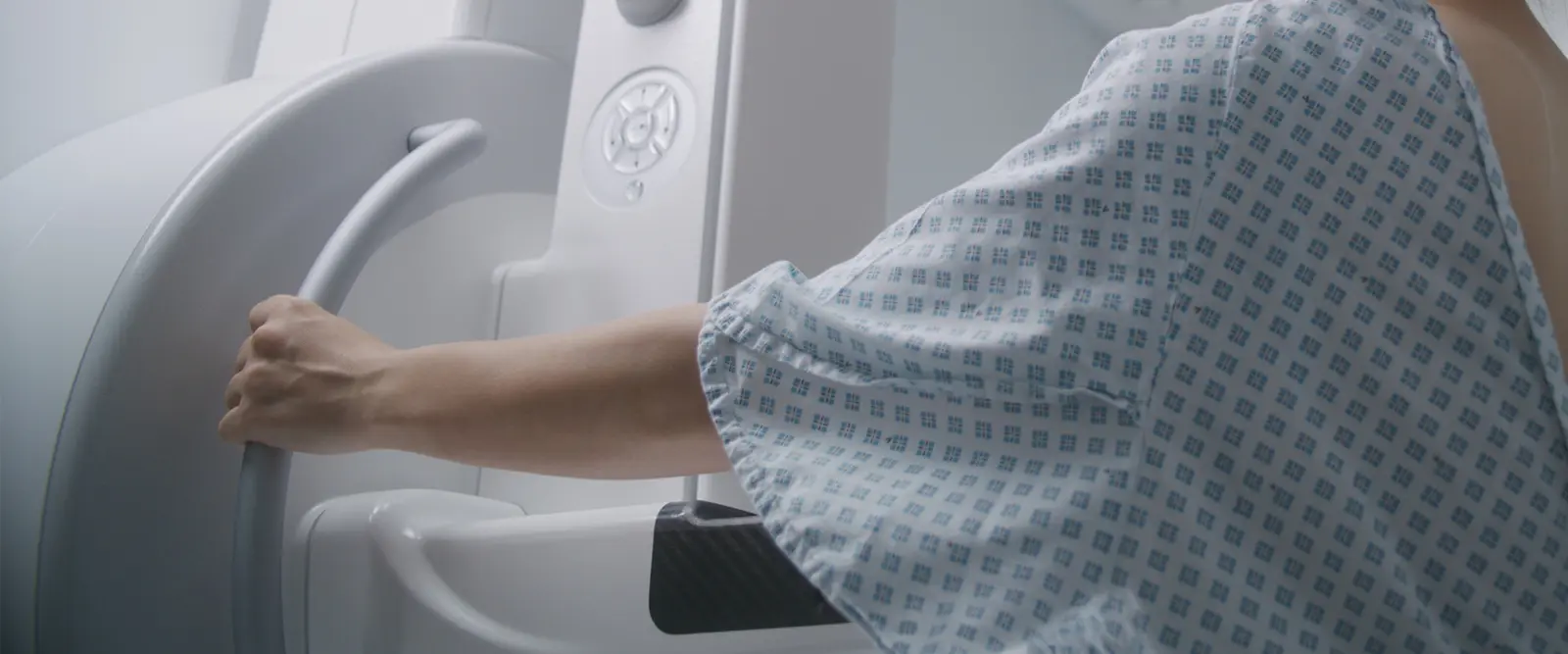
Breast cancer is the second most common cancer among all women in the United States, with an estimated 321,910 new cases of invasive breast cancer expected in 2026, according to the American Cancer Society. But the good news is that we have more tools than ever to help screen for breast cancer. With October marking Breast Cancer Awareness Month, it's a timely reminder to learn about the screenings that can help detect breast cancer early.
“Cases that we find early are usually treatable,” says Dr. Katja Pinker-Domenig, chief of the Division of Breast Imaging at NewYork-Presbyterian/Columbia University Irving Medical Center. “If somebody has a diagnosis of breast cancer, the sooner we can address the problem, the better.”
Explore Cancer Care Services at NewYork-Presbyterian

Dr. Katja Pinker-Domenig
Breast cancer screening for women who are at average risk for breast cancer should begin at age 40, according to the most recent U.S. Preventive Services Task Force screening guidelines. Also, the U.S. Food and Drug Administration (FDA) now requires mammogram centers in every state to notify patients if they have dense breast tissue. About half the women in the U.S. 40 years or older have high breast density, which can mask breast cancers on a mammogram and is also an independent risk factor for breast cancer that often requires supplemental testing.
“We are going into a more layered way of screening, tailoring it to the risk,” says Dr. Pinker-Domenig. “Not everybody who has extremely dense breast tissue has the same breast cancer risk as somebody who has, for instance, a strong family history, which would put them in another risk level.”
Health Matters spoke with Dr. Pinker-Domenig about the different screening methods for breast cancer, including mammograms, ultrasounds, and MRIs, and when these different methods are recommended.
In the U.S., mammograms are the gold standard for breast cancer screening. What can a mammogram detect?
Dr. Pinker-Domenig: Women at average risk for breast cancer are recommended to start with mammograms, which are a low-dose x-ray that looks at breast tissue. The machine has two plates that compress the breast to spread tissue apart before a picture is taken.
In a mammogram, we are not only looking for masses but also details like asymmetries, architectural distortions (distorted shapes or patterns of breast tissue that are not masses), and microcalcifications (small calcium deposits) that can indicate that something might be growing at that spot.
There are different types of mammograms:
- Digital mammography in 2D: In a regular mammogram, which is 2D, there can be overlapping tissue, and patients may get recalled because we are not sure if it is something of concern.
- Digital mammography in 3D: Digital breast tomosynthesis, sometimes referred to as a 3D mammogram, is another type of mammogram that allows us to better separate overlapping breast tissue lowering recall rates and finding more cancers.
- Contrast-enhanced mammography: The newest development is contrast-enhanced mammography, where we use a dye injected into the veins to help visualize cancers. It is a great option in women with higher than average risk and who have high breast density, where mammography or even tomosynthesis are limited. So, it is an exciting new addition to the screening toolbox that we have.
It’s also important to note that in the screening process, self-breast exams are still valuable because you know your body. If you feel there is something different, I recommend having it checked.
What is the difference between an ultrasound and a mammogram?
If there is a finding detected on a mammogram, a diagnostic breast ultrasound is often part of the work up. However, ultrasound can also be used for supplemental screening in women with dense breasts.
While ultrasound is helpful in finding more cancers, it can also generate more false positives. I sometimes get the question: Can I have an ultrasound instead of a mammogram? The answer is no because in ultrasounds, we cannot see microcalcifications, which are often the earliest form of breast cancer. An ultrasound alone is not an appropriate screening test.
Who is recommended to get an MRI, and how are MRIs used for screening?
An MRI is undoubtedly the most sensitive test for breast cancer detection, regardless of risk factors, such as breast density. However, MRI is also the most expensive test. It is currently recommended for patients at high risk for breast cancer, such as those who have a 20% lifetime risk or more. The standard screening for these high-risk women is an MRI plus a mammography because MRIs can also miss the early small cancers that we see as microcalcifications on the mammogram. Ultrasounds are not needed for patients getting a mammogram and MRI.
What happens during a breast MRI?
A breast MRI is a machine that uses strong magnets and radio waves to create detailed pictures of the inside of your breast. Like in contrast enhanced mammography, in breast MRI we use a dye injected into the veins to highlight areas where a cancer could be growing. Unlike mammograms, MRI doesn’t use radiation and is completely painless. It involves lying still inside the scanner that looks like a tunnel. However, if you are claustrophobic and do not like closed spaces you may feel a little uncomfortable being inside.
In what scenarios would doctors do a breast biopsy?
A scenario where a biopsy is recommended is if there is anything suspicious for malignancy. I usually advise patients to not immediately think you have cancer. We’re recommending a biopsy if the likelihood of malignancy is greater than 2% because we do not want to overlook something.
The initial biopsy is not a surgery. The radiologist uses imaging guidance and local anesthesia to take a small tissue sample to study it.
Is a breast biopsy painful?
During the biopsy, you will feel the radiologist doing something, but most patients do not find it painful. I personally compare it to the dentist.
When we are done with the biopsy, we put a tiny clip marker at that area where we took the sample. This is important because if that comes back as benign, it will show whoever reads future mammograms that a biopsy has been done and that results were benign. In case you need surgery, this also helps with knowing exactly where to go, and the surgeon can be as tissue-sparing as possible. The marker doesn’t set off metal detectors, such as at the airport, and it is non-allergic.
What advice do you have for people who are anxious about having their first mammogram?
If it is the first time you have ever had a screening exam, if you get recalled, do not immediately panic. Since we do not have an old image for comparison, we want to look at everything and document everything properly. So, if on a baseline exam you happen to have a recall, that doesn’t necessarily mean that you have cancer.
Patients should also be aware that we want to err on a side of caution and make sure that we catch cancers as early as possible. Almost everything that we find early nowadays is treatable. That is why it is so important to have your screening mammogram.

The health and wellness newsletter you can trust
Featured Experts
Radiology