



Everything You Need to Know About IBS
A gastroenterologist breaks down the symptoms, causes, and treatments for irritable bowel syndrome.
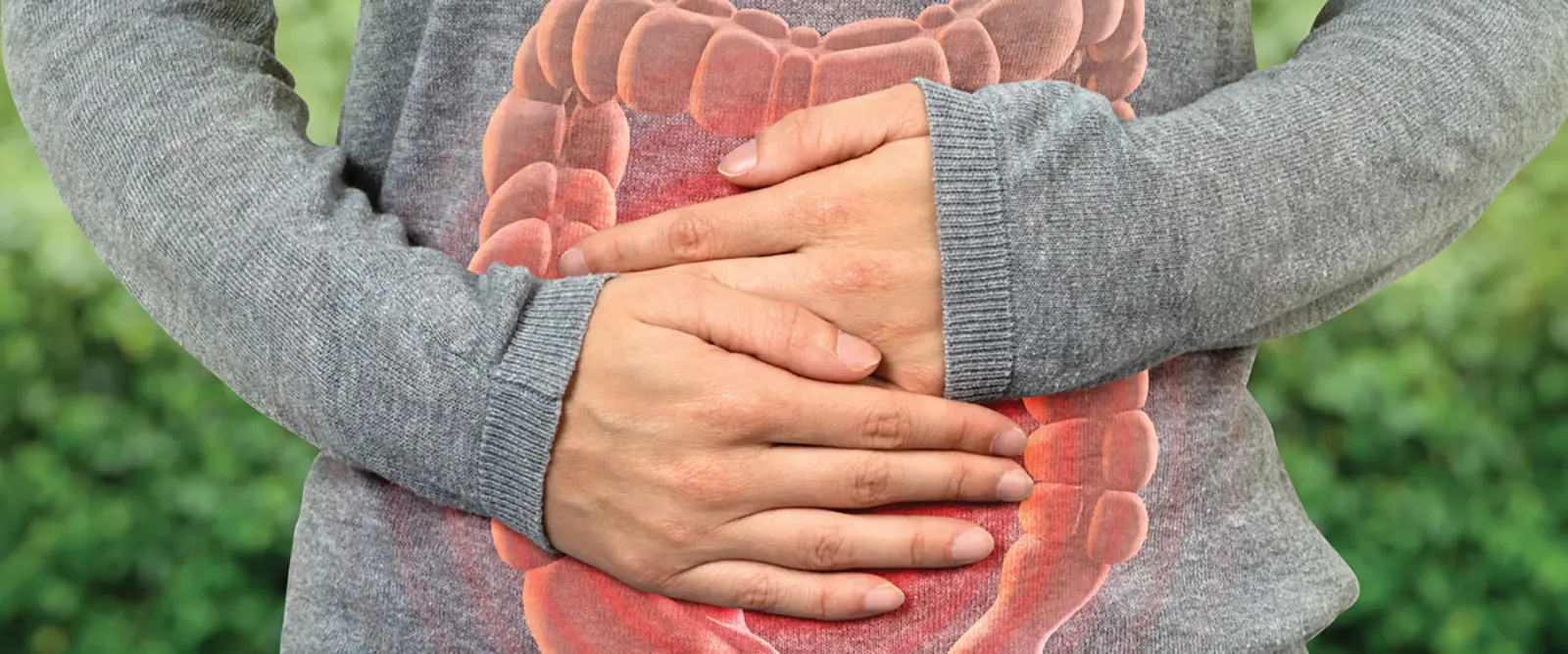
Irritable bowel syndrome (IBS) is a common disorder that causes abdominal pain and changes in bowel habits, such as diarrhea, constipation, or a mix of both. In the United States, it is estimated that one in seven people live with IBS, affecting women twice as much as men.
Explore Digestive Health Services at NewYork-Presbyterian
IBS was previously understood to be an issue with motility – how fast or slow waste moves through the gastrointestinal (GI) tract. Digestive health experts now view IBS as a problem in the interaction between the nervous system and the gastrointestinal (GI) tract, explains Dr. Braden Kuo, chief of digestive and liver diseases at NewYork-Presbyterian/Columbia University Irving Medical Center and professor of medicine at Columbia University Vagelos College of Physicians and Surgeons. “Ultimately, what we’re shifting to is the idea that the nerve-ending sensitivity should be a major target of treatment to help improve patients’ symptoms.”
Health Matters spoke with Dr. Kuo to explain the emerging field of neurogastroenterology, what causes IBS, and how it can be treated.
What is neurogastroenterology?
The human digestive tract is home to the enteric nervous system, a network of more than 100 million neurons stretching from the esophagus to the anus – the largest concentration of nerve cells outside the brain, which is why experts call it our “second brain.” Neurogastroenterology focuses on the complex interaction between the nerves and muscles of the GI tract and the brain.
This gut-brain axis is a sophisticated two-way communication channel between the digestive system and brain. In the case of IBS, when gut pain becomes chronic, it can rewire the brain’s neurocircuitry. This shift turns up the volume on signals from the gut, making standard digestion feel painful.
What are the symptoms of IBS?
The hallmark IBS symptoms are changes in bowel habits and abdominal pain, such as:
- Stomach cramps
- Diarrhea
- Constipation
- Gas
- Bloating
- Nausea
- Stomach cramps
Some patients have pain that improves with a bowel movement, and others have pain irrespective of bowel movements. Symptoms vary from person to person.
What causes IBS?
There is no single cause—IBS comes from a unique combination of genetic and environmental factors. Some people are simply born more likely to develop hypersensitive gut nerves.
A possible contributor is a change in the gut’s microbiota, micro-organisms that live in or on the human body. Some patients develop IBS after an infection like food poisoning or a stomach virus. “We call this post-infectious IBS,” says Dr. Kuo. “An infection, like norovirus, can cause localized inflammation that stimulates the nerve endings and never fully resets, even after the virus is gone.”
How is IBS diagnosed?
A frustrating part of the IBS journey can be receiving “normal” test results while experiencing painful and often debilitating symptoms. Standard tools like endoscopies and CT scans look for structural issues like ulcers or cancer, but they cannot “see” your nerves.
“The challenge is that if the issue is a defect in the nerves or how the brain interprets signals from the gut, current imaging will not demonstrate it,” says Dr. Kuo. This is often called visceral hypersensitivity, where the nerve endings in the gut are over-sensitive to normal functions like digestion or gas.
IBS is ultimately diagnosed after tests rule out other conditions like inflammatory bowel disease and celiac disease. These tests can include blood tests, stool tests, and procedures such as a colonoscopy or endoscopy.
Is there a cure for IBS?
Unfortunately, there is no “cure” for IBS, but with the right combination of lifestyle, dietary, cognitive, and pharmacologic therapies, most symptoms can be managed to improve quality of life. If you have alarming symptoms like weight loss or blood in the stool, you should see a doctor immediately. Otherwise, if IBS symptoms are affecting your quality of life, seeing a doctor may provide you with therapeutic options.
Is IBS the same as inflammatory bowel disease?
No. Inflammatory bowel disease, or IBD, is a disease involving the immune system, where there is overt inflammation of the intestine. In an IBS case, if you were to perform an endoscopy or colonoscopy, it would look normal, whereas with IBD, you would see red, swollen, and inflamed intestinal tissue. IBD symptoms are driven by changes in the way the bowel is functioning.
Can IBS lead to other diseases such as ulcerative colitis, Crohn’s, or cancer?
While IBS can at best be a nuisance and at worst impact a patient’s quality of life, thankfully it does not lead to any form of malignancy or inflammatory bowel disease.
How is IBS treated today?
- Medications: Many FDA-approved medications exist for IBS, targeting both gut function and nerve sensitivity. The medications that are prescribed vary based on symptoms.
- Mind-body therapy: Cognitive behavioral therapy (CBT), hypnosis, or relaxation techniques can help address how the brain interprets pain signals.
- Diet and nutrition: Identifying specific food triggers through diet changes can help. Working with a registered dietitian can help maintain balanced nutrition.
What diet do you recommend for IBS?
The low-FODMAP diet, a temporary dietary protocol in which certain foods are eliminated from the diet to uncover which are causing digestive problems, is the most validated dietary treatment for IBS. However, Dr. Kuo warns against permanent over-restriction, which can lead to avoidant restrictive food intake disorder (ARFID). If you stop eating to avoid pain, your GI muscles can actually “decondition” from lack of use. Always consult with a dietitian when making changes to your diet.
Do probiotics help?
Evidence on whether probiotics help IBS is mixed. While some probiotics show they can change the bacterial environment, they don’t always translate to making the patient feel better.
Are there any emerging treatments on the horizon?
One of the most intriguing new areas of research involves psychedelics. Dr. Kuo is finishing a pilot study on using one-time psychedelic treatments combined with intense therapy. “The goal is to increase neuroplasticity, making the brain more willing to ‘reset’ its interpretation of chronic pain in patients with moderate to severe IBS,” says Dr. Kuo. “It’s an area that is showing great promise.”

The health and wellness newsletter you can trust
Featured Experts
