


As Wildfire Smoke Spreads Across New York, Here’s How to Protect Yourself
With New York State under an air quality advisory, a pulmonary and critical care medicine expert explains how to stay safe.
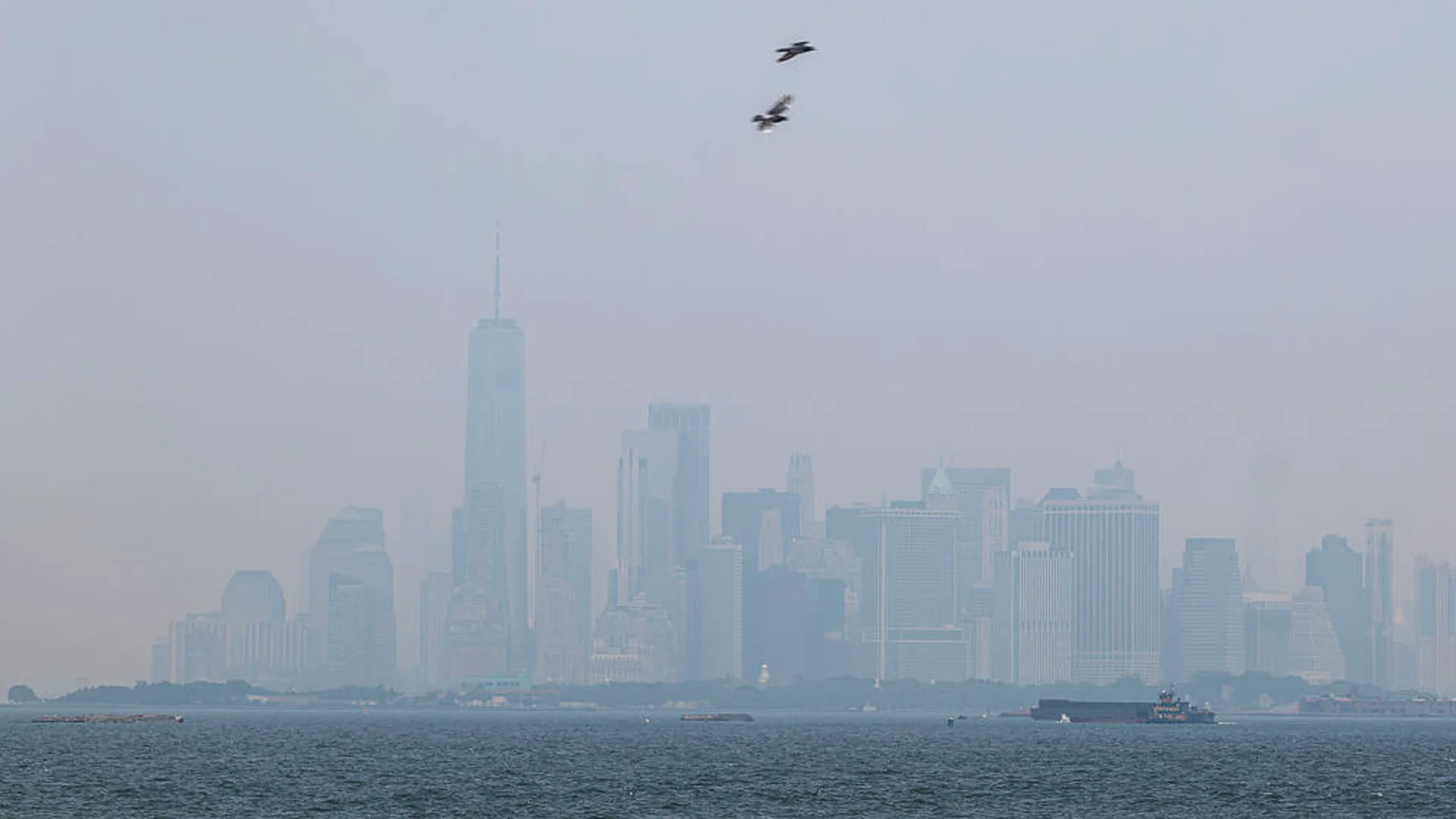
New York State is under an air quality health advisory this week due to smoke from more than 100 wildfires burning in Canada. The combination of poor air quality and extreme heat can pose health risks for children, older adults, and those with underlying conditions.
Air Quality Indexes (AQI) span from 0 to 500, and the higher the number, the greater the air pollution and potential health risks. The AQI in New York City is expected to reach 150 on Friday, according to the New York State Department of Environmental Conservation. Because the AQI is ”unhealthy”, health officials are advising everyone to follow public health guidance, including limiting outdoor activities, keeping windows and doors closed, and wearing an N95 mask outside for extra protection.
“Being mindful of your own susceptibility, especially if you have underlying cardiovascular or lung conditions is important in pollution and heat,” says Dr. Michael S. Niederman, a physician specializing in pulmonary and critical care medicine at NewYork-Presbyterian/Weill Cornell Medical Center and a professor of clinical medicine at Weill Cornell Medicine. “Take extra precautions when you’re outside and stay in air conditioning if possible.”
To help people stay safe in high heat and poor air quality, Health Matters spoke to Dr. Niederman.
How is air quality measured and what is a typical healthy average?
Dr. Niederman: Air quality is a measure of the concentration of particulate matter and gases in the ambient air.
- Air Quality Index below 50: Good air quality
- Air Quality Index above 100: People are more likely to develop symptoms
How can you protect yourself when there is poor air quality and extreme heat?
Dr. Niederman: Taking precautions is essential to protect your health, especially if you find yourself more symptomatic when you go outdoors.
To reduce your risk:
- Limit outdoor activities
- Postpone outdoor events
- Use air conditioning with filters
- Wear an N95 mask
- Don’t smoke
- Limit indoor pollutants, such as candles
Who is most at-risk during air quality alerts?
Dr. Niederman: Extreme heat increases cardiovascular demands on the body, and poor air quality can double stress on people.
Those most at risk include:
- Older adults
- Infants and young children
- People with underlying conditions, such as heart and lung diseases
Those with lung disease are particularly at risk, including those with:
- Asthma
- Emphysema
- Pulmonary fibrosis
How long do air quality alerts last, and what should you do?
Dr. Niederman: At this moment, we want to follow state and city public health announcements and air quality measures, such as through AirNow.
Even healthy people may develop symptoms such as chest tightness, coughing, wheezing, and shortness of breath. Call your doctor if symptoms are persistent and bothersome.
The Air Quality Index, Explained
AirNow, a source for air quality data, states that the six categories include:
- Green (good, 0 to 50): Air is satisfactory, and air pollution poses little or no risk.
- Yellow (moderate, 51 to 100): Acceptable, but there may be a risk for some people, such as those who are sensitive to air pollution.
- Orange (unhealthy for vulnerable groups, 101 to 150): Sensitive groups may experience health effects. The general public is less likely to be affected.
- Red (unhealthy, 151 to 200): Some members of the general public may experience health effects. Members of sensitive groups may experience more serious health effects.
- Purple (very unhealthy, 201 to 300): The risk of health effects is increased for everyone.
- Maroon (hazardous, 301 or higher): Health warning of emergency conditions: everyone is more likely to be affected.

The health and wellness newsletter you can trust
Featured Experts

Pulmonary Critical Care Medicine