




Understanding Pancreatic Cancer: Symptoms and Treatments
A gastrointestinal oncologist shares the facts behind this rare but deadly disease and the breakthroughs on the horizon.
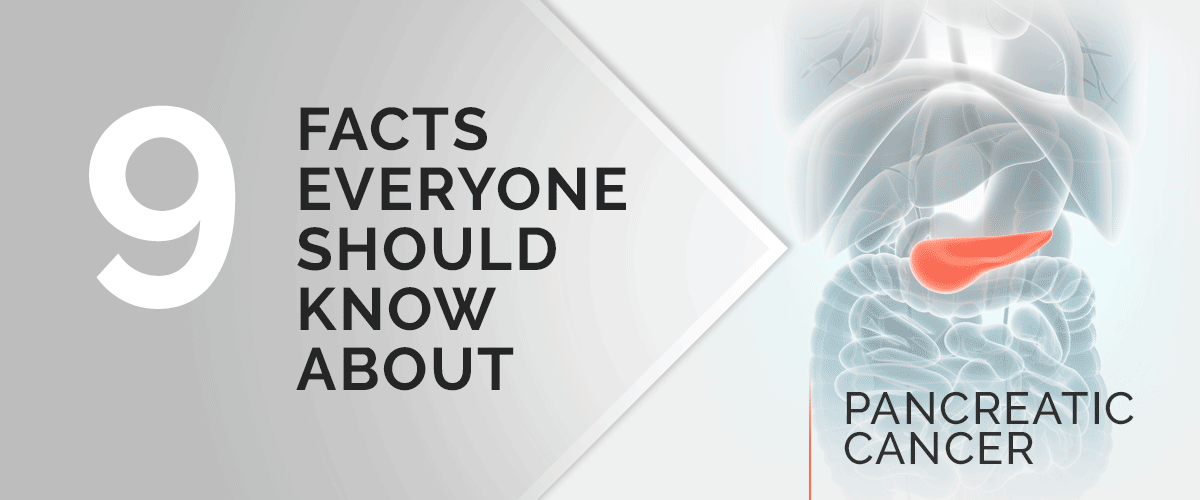
Even though pancreatic cancer is rare — about 67,000 cases are diagnosed each year in the U.S. — it is the third-leading cause of cancer death after lung and colorectal cancers, according to the National Cancer Institute. Because pancreatic cancer is often detected in late stages, the five-year survival rate for patients is about 14%.
While the statistics are discouraging, there’s reason to be hopeful, says Dr. Allyson Ocean, a medical oncologist and attending physician in gastrointestinal oncology at NewYork-Presbyterian/Weill Cornell Medical Center.
“We are at a critical point where we are going to see breakthroughs happen in this disease,” says Dr. Ocean. “I also think it’s going to start with early detection, because the earlier we find this, the better off people are going to be and we’re going to get better outcomes.”
Dr. Ocean, who is also an associate professor of clinical medicine at Weill Cornell Medicine, spoke with Health Matters about the disease’s risk factors, symptoms, and treatment, including advances on the horizon.

Dr. Allyson Ocean
Where is the pancreas and what does it do?
The pancreas is a long, sausage-like organ that is very close to the spine behind the abdomen. It has two primary functions: It produces digestive enzymes so we can digest our foods and process the nutrients within them. The second major role is to regulate sugar metabolism through the production of insulin.
What are the main risk factors for pancreatic cancer?
They include the development of type 2 diabetes later in life, obesity, smoking, alcohol use, a history of pancreatitis, and hereditary factors. Pancreatic cancer is much more common in African Americans — in fact, the incidence rate for African Americans is the highest of any racial or ethnic group, according to the National Cancer Institute. And there are also some very rare familial syndromes (passed on genetically) that can lead to pancreatic cancer.
With respect to diabetes, it could be that individuals develop diabetes and then the cancer forms or that the cancer is forming because of other risk factors and the cancer leads to the late-onset diabetes. Many patients who are diagnosed with pancreatic cancer had developed diabetes within the preceding couple of years. In fact, one out of every 125 people with new-onset diabetes develops pancreatic cancer within three years of their diagnosis.
What are the symptoms of pancreatic cancer?
Back pain, particularly back pain that wakes someone up at night, is a classic symptom. Other common symptoms are weight loss, abdominal pain, and jaundice (the yellowing of the eyes and skin), which results when the tumor blocks the bile ducts.
The problem is that these symptoms can be attributed to other, more common diagnoses. People think it’s gas, constipation, or irritable bowel syndrome, which causes pain and other digestive symptoms. This is why pancreatic cancer can be hard to detect. As a result, the cancer is most often diagnosed late, meaning that it has already metastasized, or spread, to other parts of the body when it’s found. Also, the symptoms don’t happen until the cancer that’s growing in the pancreas is fairly large.
Less common symptoms include the development of blood clots out of the blue and the development or worsening of depression.
How is pancreatic cancer diagnosed?
The disease is usually diagnosed when someone finally comes to their physician with symptoms and gets further workup. That will most likely include blood tests that show if their pancreatic enzymes and liver function tests are elevated. Ultimately, they get imaging tests, which pick up the mass in the pancreas and/or sites where the cancer has spread. Once the cancer is found, a biopsy is needed.
How can people increase the chances of an earlier diagnosis if they have pancreatic cancer?
If you’re experiencing something worrying and you go to the doctor and they tell you it’s nothing or something else, but the symptoms persist, go back or see a new doctor and be an advocate for yourself. People know their bodies best. It’s also extremely important to tell your doctor if pancreatic cancer runs in your family.
What are the treatments for pancreatic cancer?
Surgery to remove the tumor (known as the Whipple procedure), in conjunction with other treatments like chemotherapy and radiation are the only known cure for pancreatic cancer. I and others who treat this disease believe that this is a systemic disease, meaning that the cells have already entered the bloodstream as it has been growing. So if you just cut it out and don’t treat the bloodstream, which is what chemotherapy does, then there’s a significant risk of it returning.
However, because pancreatic tumors are found so late, only about 15% to 20% of people diagnosed with the disease are eligible for surgery. The majority of cases are not operable because the tumor is so large or it’s in a place that is encroaching upon the major blood vessels that course through the pancreas. Cancer that has already spread through the body is also not operable, and systemic therapy is used, which has been shown to extend survival. The rate of recurrence can be as high as 80% even if you have surgery. This is why early detection and high-risk screening are imperative.
I tell my patients not to compare themselves to everybody with this disease because every cancer is different and acts differently. … There are a lot of people who beat this disease and we don’t hear their stories.
What new treatment approaches, like immunotherapy and precision medicine, are being used to treat pancreatic cancer?
We know that there is a hereditary component to pancreatic cancer, so the guidelines for treatment now include genetic testing — both of a patient’s blood and the tumor itself, which is what precision medicine is. We test the tumor genes because we want to see why the tumor is growing, if we can figure out the pathways leading to its growth, and whether there are drugs that target that pathway to inhibit it so that we can affect the growth of the cancer cells.
Research is also underway on vaccines and immunotherapy, which harnesses the patient’s own immune system to fight cancer. Immunotherapy is only useful for the 1% of pancreatic cancers that are considered to be immune-related. But there are a lot of clinical trials now combining chemotherapy and immunotherapy. The goal of these treatments is to wake up components of the immune system with immunotherapy drugs so that they go after and kill the cancer. Another active area of research is medicines that interfere with cancer metabolism, the way the cancer cell gets its energy supply to sustain its growth.
How can patients who are diagnosed with pancreatic cancer maintain a positive outlook?
I tell my patients not to compare themselves to everybody with this disease because every cancer is different and acts differently. Yes, the statistics are bad, but not everybody falls into those bad categories. There are a lot of people who beat this disease and we don’t hear their stories.
That was the crux of why one of my patients and I developed an organization called Let’s Win! Pancreatic Cancer in 2016. What began as a patient-centered educational platform has grown into a highly respected international resource for patients, caregivers, physicians, and researchers around the world.
Now in its 10th year, Let’s Win! provides trusted education, patient stories, expert insights, a clinical trial finder, and a doctor finder to help patients access specialized care more quickly. We are also developing a real-time clinical trial hub designed to help investigators and referring physicians identify open trial spots more efficiently, with the goal of accelerating patient access to promising therapies. In a disease where time matters tremendously, improving access to information and clinical trials is critically important.
How optimistic are you about the future for pancreatic cancer patients?
The future of pancreatic cancer treatment is more hopeful than at any point in my career. Recent advances in targeting a mutation of the gene that controls cell growth, KRAS – a driver of pancreatic cancer that has been long considered “undruggable” – represent a major turning point. The FDA’s recent decision to allow expanded access to daraxonrasib, an experimental oral therapy that acts as an inhibitor against this mutation, reflects both the urgency of this disease and the growing recognition that meaningful advances are finally emerging for patients with pancreatic cancer. Early data from the RASolute 302 trial showed significant improvements in survival compared with chemotherapy, generating enormous excitement throughout the oncology community. At the same time, we are seeing advances beyond KRAS inhibitors alone, including personalized vaccines, biomarker-driven therapies, tumor-treating fields, novel immunotherapy combinations, liquid biopsy technologies, and earlier detection strategies.
I believe the future will involve smarter combinations of targeted therapies, immunotherapy, precision medicine, and earlier intervention. Pancreatic cancer remains one of the most challenging cancers we treat, but for the first time in many years, there is a growing sense that we are entering a new era of meaningful progress.
When should someone see a specialist, and what should their next steps be?
If you experience persistent symptoms — such as unexplained back pain that worsens at night, jaundice, or sudden weight loss — don’t wait. See a specialist, ideally a gastrointestinal oncologist. Request genetic testing for both hereditary risks and tumor markers, as well as exploring clinical trial options before beginning your first line of treatment.

The health and wellness newsletter you can trust
Featured Experts

Medical Oncology