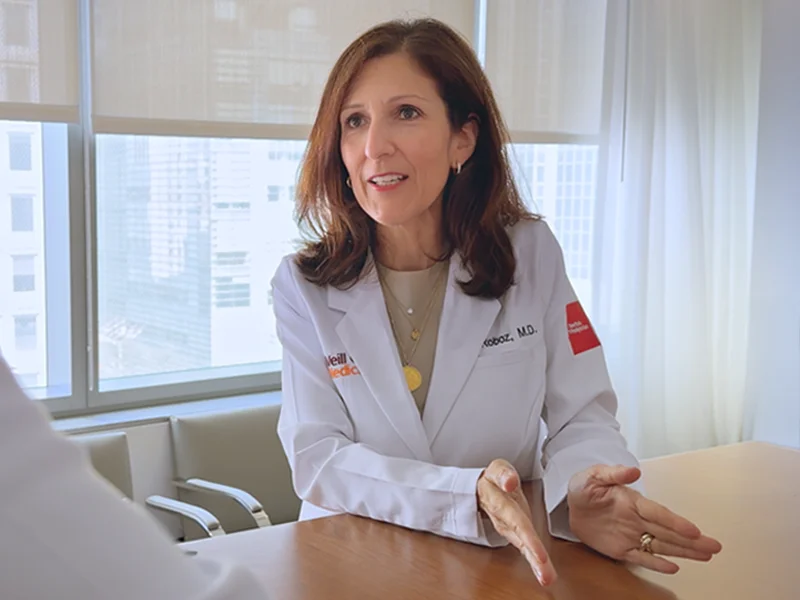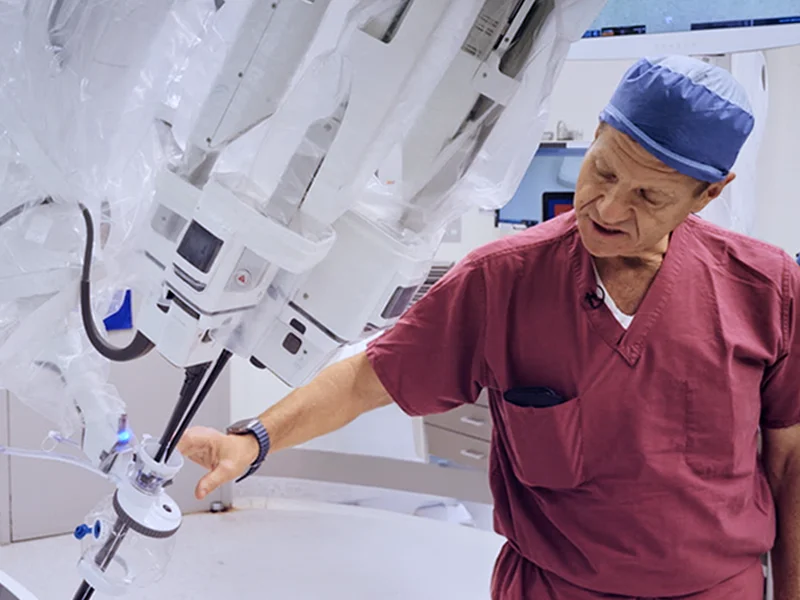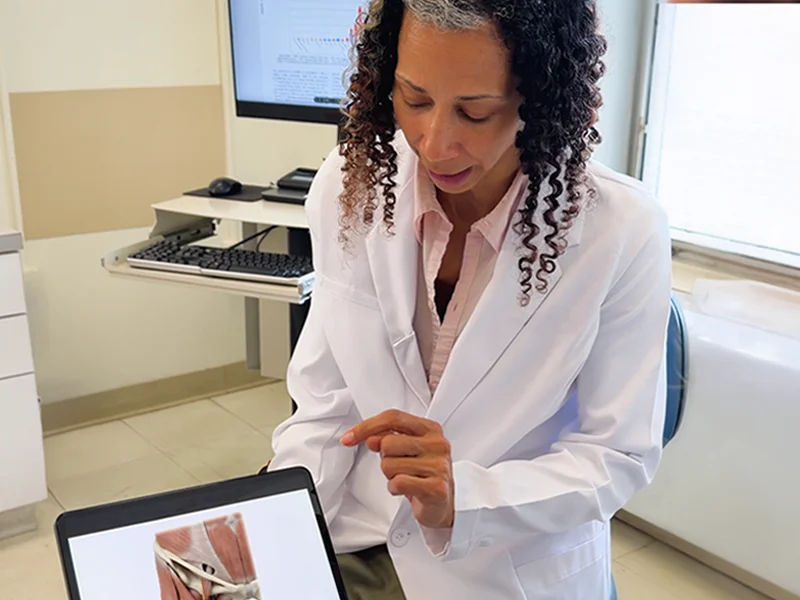
Wakenda Tyler, M.D., chief of orthopedic oncology at NewYork-Presbyterian and Columbia, describes the unique orthoplastics model she and her team developed for soft tissue sarcoma and how it has led to an increase in limb-sparing surgeries. This collaborative approach involves orthopedic and plastic surgery teams working together in presurgical planning, procedures, and throughout all ancillary care to improve patient outcomes — helping to avoid amputations. NewYork-Presbyterian was one of the first institutions to integrate orthoplastics in soft tissue sarcoma and is working to establish this model as the standard of care so patients everywhere can benefit from this approach.
Dr. Wakenda Tyler: Surgical Collaboration Enhances Soft Tissue Sarcoma Outcomes
Surgical Collaboration Enhances Soft Tissue Sarcoma Outcomes
[0:00–0:08]
On-Screen Title: Limb-sparing surgery for soft tissue sarcoma drives better outcomes with a collaborative orthoplastics model
[0:09–0:20]
Dr. Wakenda Tyler: At NewYork-Presbyterian Columbia Hospital, we have a very intentional orthoplastics program. We were one of the first institutions to really have a combined, collaborative effort between the orthopedic surgeons and plastic surgeons.
[0:21–0:38]
Dr. Wakenda Tyler: So the main challenge that we have as surgeons when we're dealing with patients with soft tissue sarcomas in the extremity is whether we can salvage a limb. These tumors are often close to nerves, vessels, and bone; critical structures that we need to salvage a limb and to make sure a limb is still functional at the end.
[0:39–1:02]
Dr. Wakenda Tyler: As we've gotten further along in our understanding of limb-sparing surgeries, we realized the plastic surgery team and team of surgeons who understand soft tissue coverage has helped modify our surgeries to give us better outcomes for patients and to allow for us to spare a limb. So we're constantly meeting, discussing what's going to happen and how we're going to proceed with the surgical plan.
[1:03–1:33]
Dr. Wakenda Tyler: They're intricately involved in the care of the patient from start to finish, including all of the ancillary care, like our tumor board meetings and other such meetings. We don't always see that at a lot of institutions and the reason that's important is because it gives our plastic surgery colleagues a chance to understand some of the nuances of what the surgical plan will be. So having them work with us and be involved at that intricate level allows for a higher probability of limb-sparing surgeries that have better functional outcomes, and then that ultimately leads to a better quality of life for patients.
[END]