Expandable Cages Enhance Minimally Invasive Spinal Fusion
[0:00–0:15]
On-Screen Title: Advanced cage technology provides innovative solutions for spinal fusions
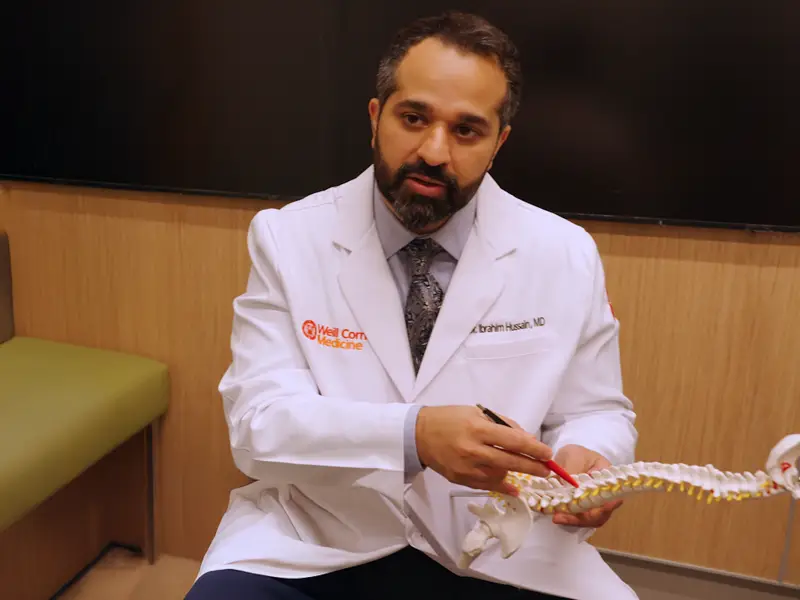
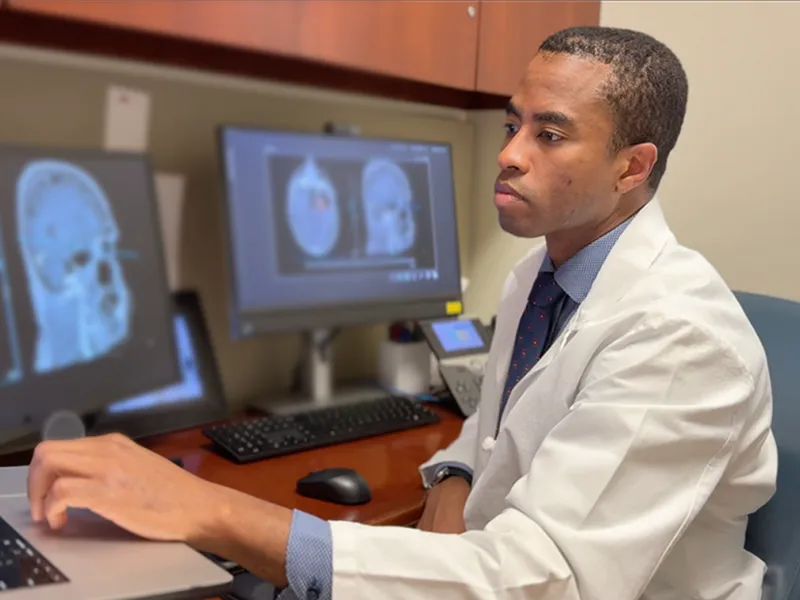
Dr. Ibrahim Hussain: At Och Spine at NewYork-Presbyterian, we specialize in performing the full gamut of minimally invasive operations, and we perform them at a very high volume.
[0:16–0:31]
Dr. Ibrahim Hussain: So for patients who require spinal fusion due to disc degeneration, there's collapse of the vertebral bodies. And part of the goal of the operation is to try to restore that height. A minimally invasive transforaminal lumbar interbody fusion, or a TLIF, may be an acceptable option.
[0:32–0:59]
Dr. Ibrahim Hussain: And in order to gain access into the disc space itself, you need to have special technology and techniques. With the newer generations of expandable cage technologies, they can go in even smaller, even lower profile into a very small space, and then have special expansion mechanisms that allow them to then restore height without causing collateral damage to the adjacent vertebral bodies. Not only can we restore the height of the disc, but we can actually restore the lordosis, the natural curvature of the spine.
[1:00–1:29]
Dr. Ibrahim Hussain: Some of the key benefits that we've seen from the patient perspective have involved: faster discharge from the hospital, less reliance on postoperative opiates, a faster reduction in back pain and leg pain. At Och Spine at NewYork-Presbyterian, we've been researching and helping innovate expandable cage technology to try to provide personalized options, a better long-term outcome
for these patients to hopefully minimize the chances that they might need other surgeries later on in life.
[END]