[0:00–0:34]
On-Screen Title: New 3D MRI visualization revolutionizes gynecological surgery
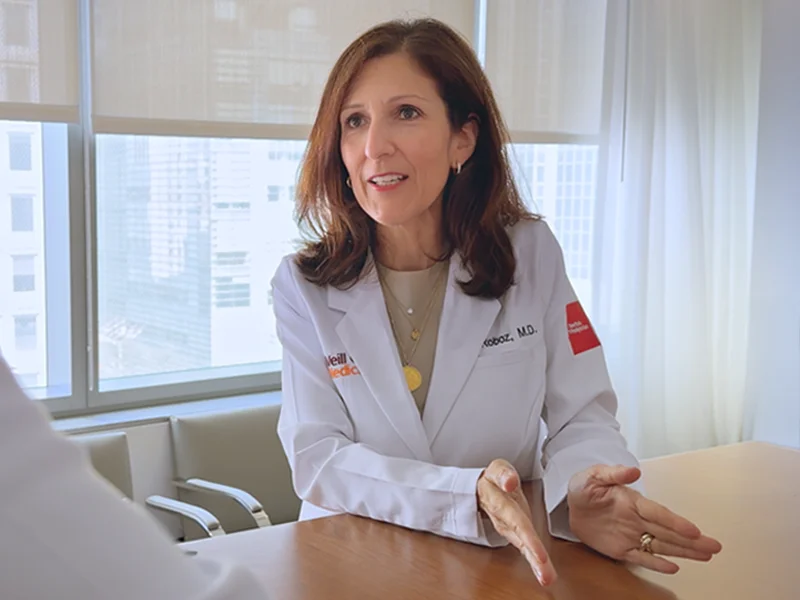
Dr. Tamatha Fenster: Fibroid surgery is really complex and challenging, because fibroids can grow in any plane on the uterus. The current challenge of 2-dimensional MRIs are finding all the different layers of fibroids. It’s critical for a surgeon going into these cases to have a really comprehensive understanding of where all these fibroids are and other anatomical structures.
[0:35–0:59]
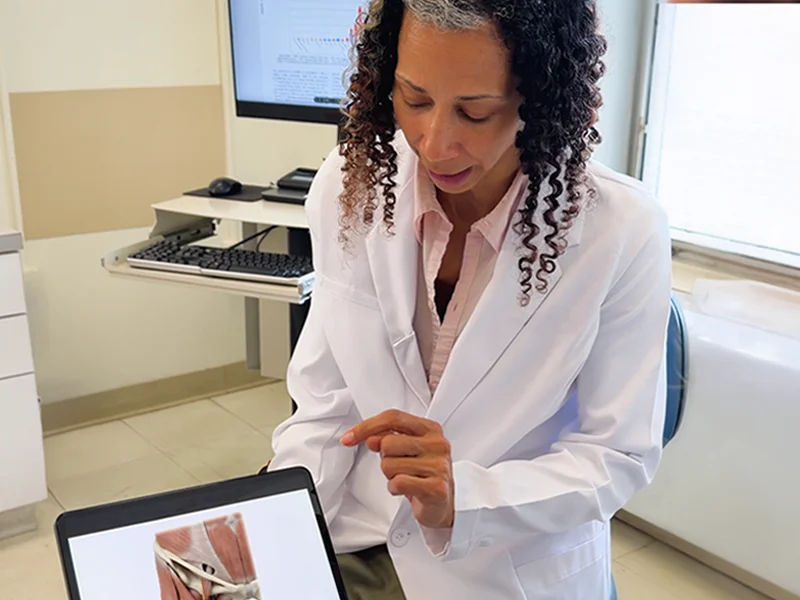
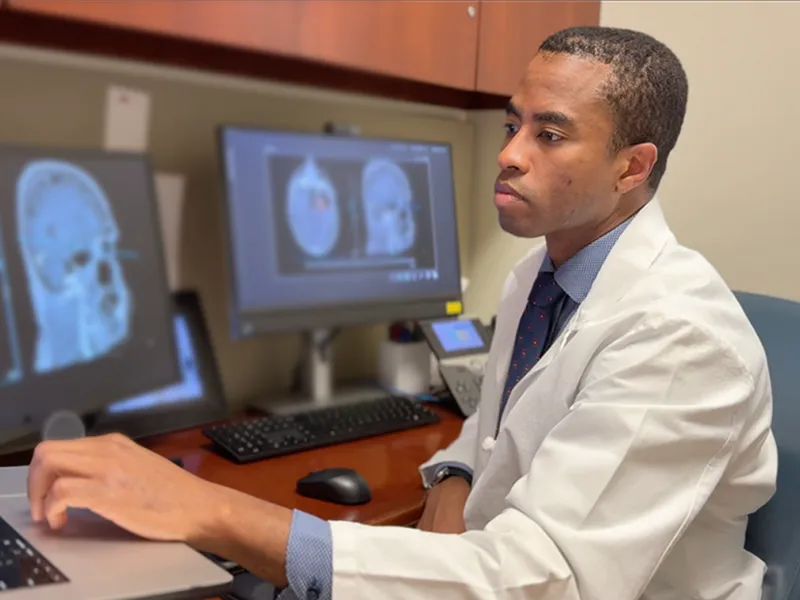
Dr. Tamatha Fenster: So over the last 3 years, what we’ve been working on is smartHER MRI technology, created at Weill Cornell Medicine in conjunction with the engineering labs. And what we’ve been able to do is train our technology to automatically take 2-dimensional MRIs, recognize fibroids, and create a 3D image that we can use in the operating room.
[1:00–1:27]
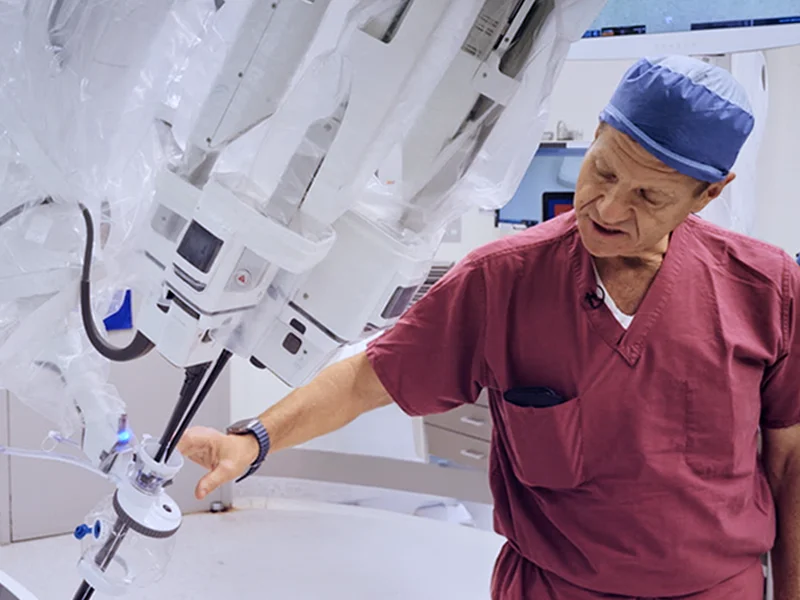
Dr. Tamatha Fenster: We’re able to rotate these projections 3-dimensionally and understand where the fibroids are in relation to other structures: the bladder, other blood vessels, the ovarian blood supply. So if I can put smartHER MRI adjacent to a robotic console and seamlessly transfer from one image to the next, it allows me to have a very efficient, safe surgery, and ensure that I’ve removed all fibroids.
[1:28–1:53]
Dr. Tamatha Fenster: We were so fortunate at Weill Cornell Medicine to be able to perform a pilot study of smartHER MRI technology. The patients were very complex; they had multiple fibroids throughout the uterus. At the 6-month follow-up, we found that surgeons that did not use smartHER MRI technology had residual fibroids, whereas surgeons who had used the smartHER MRI technology did not have residual fibroids.
[1:54–2:23]
Dr. Tamatha Fenster: The results of smartHER MRI showing that these patients had decreased residual fibroids is critical, because one of the huge setbacks of fibroid surgery is regrowth. We’re talking almost 30% to 40% of patients come back to their gynecologist for additional surgeries and additional symptoms within 5 years. So showing that we can get a more comprehensive removal of fibroids the first time is really groundbreaking.
[2:24–2:43]
Dr. Tamatha Fenster: We want smartHER MRI all over the world so that women everywhere can make informed decisions about their surgical care.
On-Screen Title: smartHER MRI is enabling more accurate fibroid removal to prevent recurrence
[END]