Dr. Danielle Trief: Advancing pediatric cornea care through a multidisciplinary approach
[0:00–0:20]
On-Screen Title: A dedicated pediatric cornea program at NewYork-Presbyterian provides comprehensive care for the most complex eye conditions
Dr. Danielle Trief: This is one of the first centers in the country that's dedicated to pediatric corneal disease. Children are not little adults. Their anatomy is different. The corneal size is different.
[0:21–0:46]
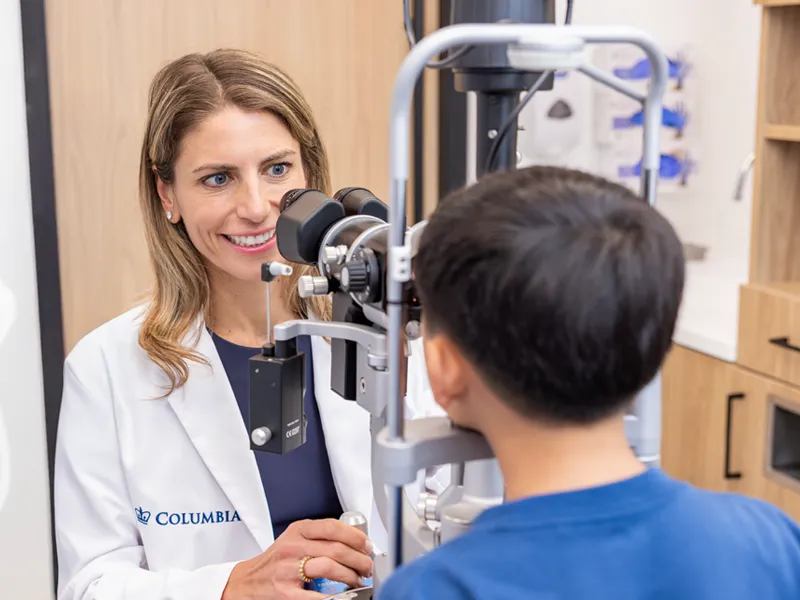
Dr. Danielle Trief: One thing that's special about our center is that we have a few different subspecialties in ophthalmology that help take care of these children. I have colleagues in pediatric retina and pediatric glaucoma, and we have a whole dedicated genetics center. If the child has any renal issues or cardiac issues, which also sometimes accompany the eye issue, we can develop a team that can help take care of the child, if needed.
[0:47–0:58]
Dr. Danielle Trief: Because we're integrated with Morgan Stanley Children's Hospital, we're able to take care of the most complex pediatric diseases and we're able to take care of children that other facilities might not be able to.
[0:59–1:09]
Dr. Danielle Trief: A lot of the children have very abnormal anatomy, it's not just the corneal opacity, and to be able to understand the whole eye and offer this comprehensive care, I think, is very unique.
[1:10–1:33]
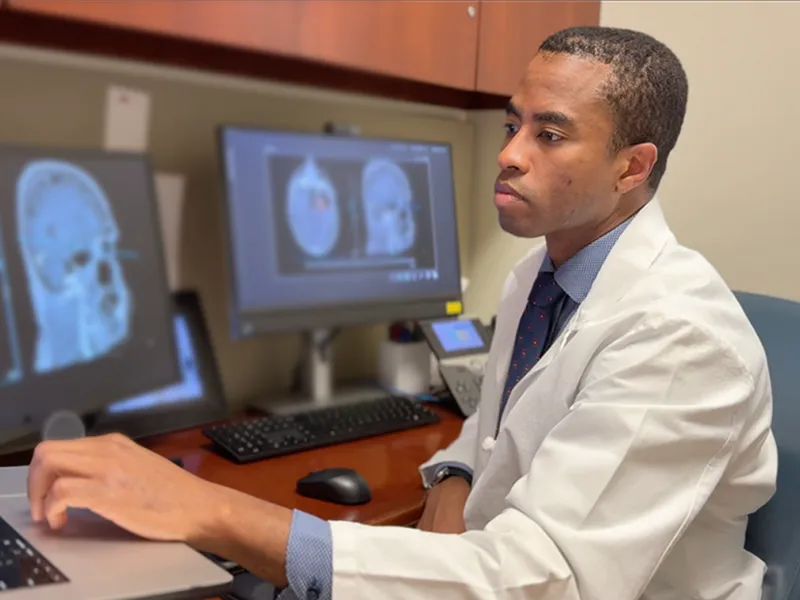
Dr. Danielle Trief: With some of our imaging technology, we can understand what's beneath the opacity. We have probably the world's expert in ultrasound, so we can get really high quality images of the inside of the eye to understand the underlying disease process. And then we can take the toolbox of all the most innovative corneal treatments and offer that to our patient based on their specific disease.
[1:34–1:43]
Dr. Danielle Trief: Pediatric corneal transplants are different surgeries than adults and high risk, and that's why it's helpful to have the expertise and experience to handle these children.
[1:44–2:08]
Dr. Danielle Trief: Usually I'll do full thickness transplants, but I'm quite comfortable with partial corneal transplants. So if the inside of the cornea is abnormal, for instance, in congenital hereditary endothelial dystrophy, but the anterior part of the cornea is healthy, we can do a partial corneal transplant. I'll often get referrals from around the country. Sometimes these children have a diagnosis and sometimes it's a mystery.
[2:09–2:39]
Dr. Danielle Trief: Working at NewYork-Presbyterian/Columbia allows me to innovate and advance the field. We have some of the world experts in pediatric disease and pediatric ophthalmology subspecialty. So it's really been a privilege to be able to collaborate with these world experts in pediatric care.
On-Screen Title: With unrivaled expertise, Dr. Trief and team are restoring vision for more children with corneal disease
[END]