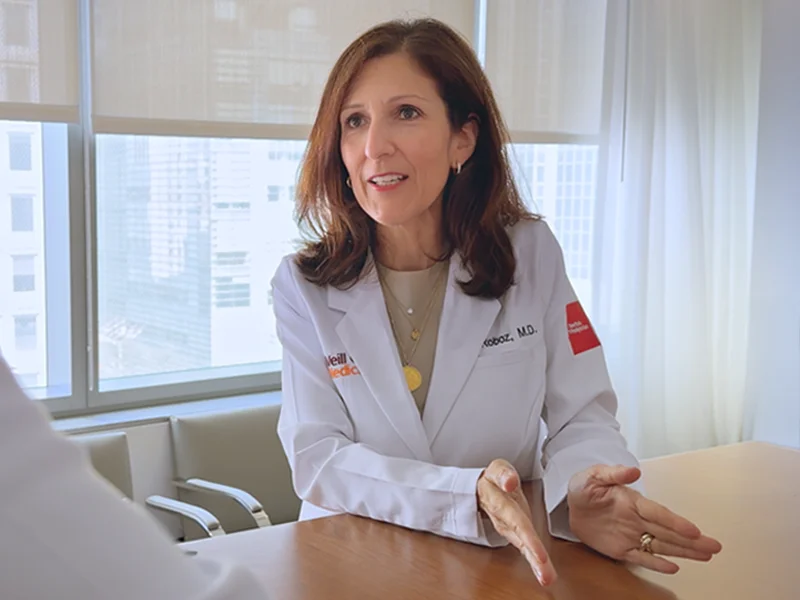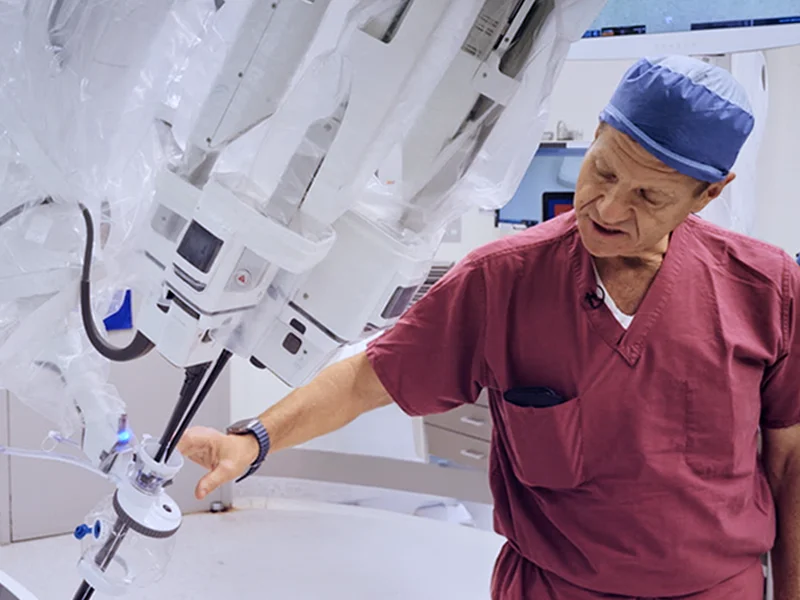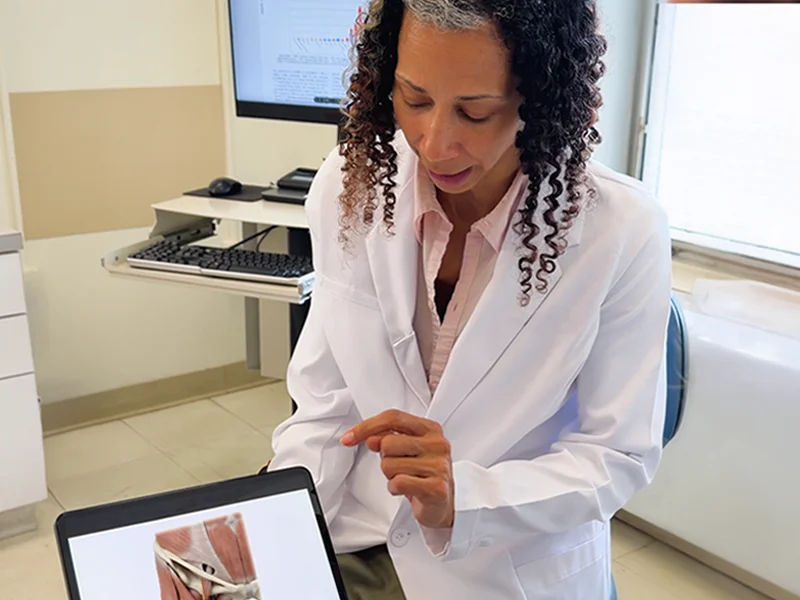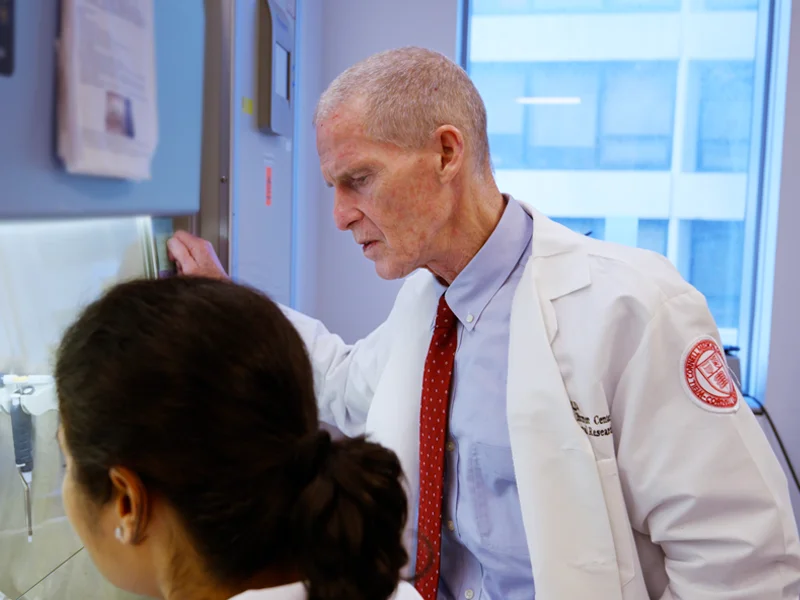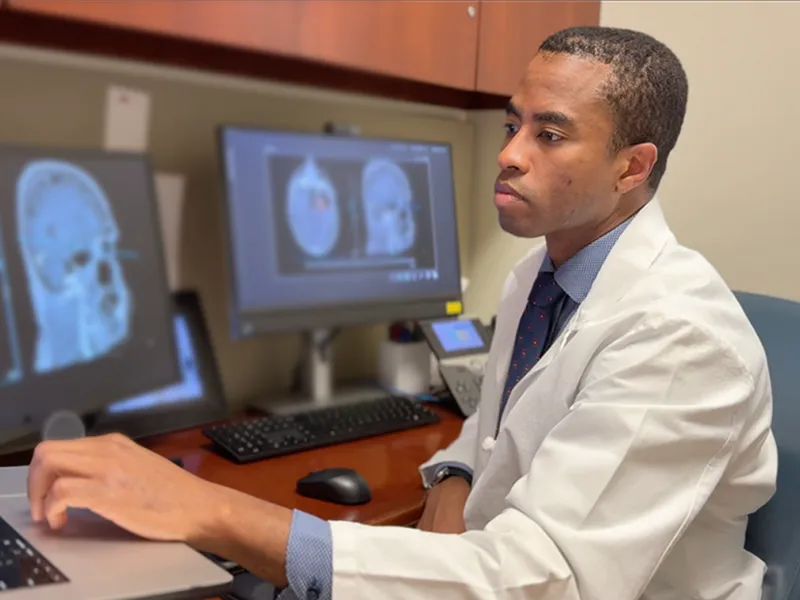
Dr. Howard Fine, a neuro-oncologist at NewYork-Presbyterian and Weill Cornell Medicine, discusses how a new approach to glioblastoma research may expand treatment options and advance precision oncology. His preclinical model, GLICO, uses cerebral organoids, or mini brains, to create a more accurate representation of glioblastoma tumor biology. Through an advanced, high-throughput drug-screening system that Dr. Fine and his team developed, they can screen hundreds of GLICOs against various drug regimens to identify personalized glioblastoma therapies—with the ultimate goal of extending patient survival for one of the most lethal cancers.
Dr. Howard Fine: Cerebral Organoid Model Transforms Glioblastoma Research
Cerebral Organoid Model Transforms Glioblastoma Research
[0:00–0:08]
On-Screen Title: Development of cerebral organoid models allows for more effective drug screening against glioblastoma
[0:09–0:22]
Dr. Howard Fine: The median survival of glioblastoma is about 15 months. At this point, there are few other cancers that have such a poor track record, either in our ability to treat them or in overall survival.
[0:23–1:07]
Dr. Howard Fine: Glioblastoma is different than other cancers in that it doesn't just reside within the brain, it actually integrates functionally. Glioma cells are so intricately interconnected with the normal cells of the brain, and if you can disconnect them from the normal cells, they all of a sudden become weak. When you break the tumor down into individual cellular components, it in no way reflects the biology of the disease. The only way we could build a model that represented the human disease was to build a model of the normal brain, from which the glioma cells could then interact the way they do in our patients. We call that model GLICO for Glioma Cerebral Organoid.
[1:08–1:49]
Dr. Howard Fine: We retro-engineer the patient's own glioma stem cells into that cerebral organoid to reproduce the interaction and the functional integration of the glioma tumor cells with the normal human brain cells. So it allows us to not only study each patient's tumor in an individual way, we can also screen therapeutics against that patient's individual tumor. For instance, we see that drugs that inhibit synaptic interactions—anti-seizure drugs, certain antipsychotic drugs, certain cardiac drugs—we find can be surprisingly active in a way that no one would ever envision.
[1:50–2:22]
Dr. Howard Fine: Our hope is that the GLICO model will improve patient prognosis in two major ways: We'll be able to screen multiple drugs against the patient's own GLICO, identify the drugs and treatments that look most effective for that particular patient. Number two is that GLICO gives us a dramatic look at novel biology. We have now new therapeutic targets. We're going to be developing new drugs that work in entirely different ways, that target processes that we've never thought about in cancer.
[2:23–2:49]
Dr. Howard Fine: Working at NewYork-Presbyterian has been integral to allow my group and myself to pioneer this work. And I think part of that is the tremendous interdisciplinary type environment, both clinically and on the research side. Right now it's all about finding the better treatments. The work I'm going to do is directed with only one goal in mind, and that's to make a difference for our patients.
On-Screen Title: Dr. Fine and his team of researchers are continuing to pioneer GLICO research to ultimately extend patient survival
[END]