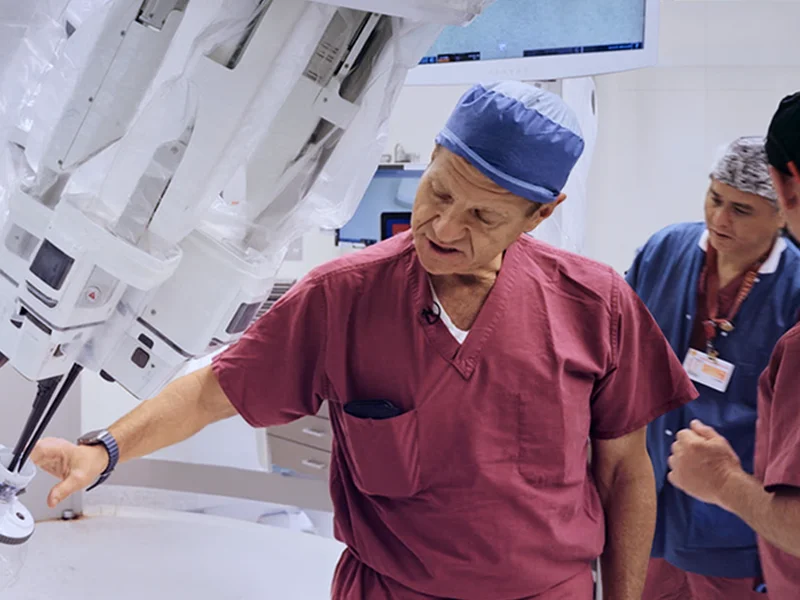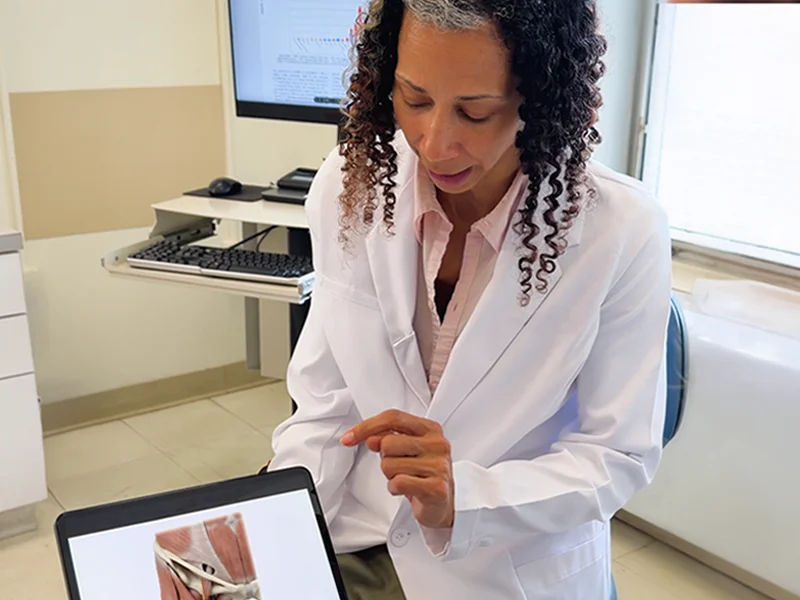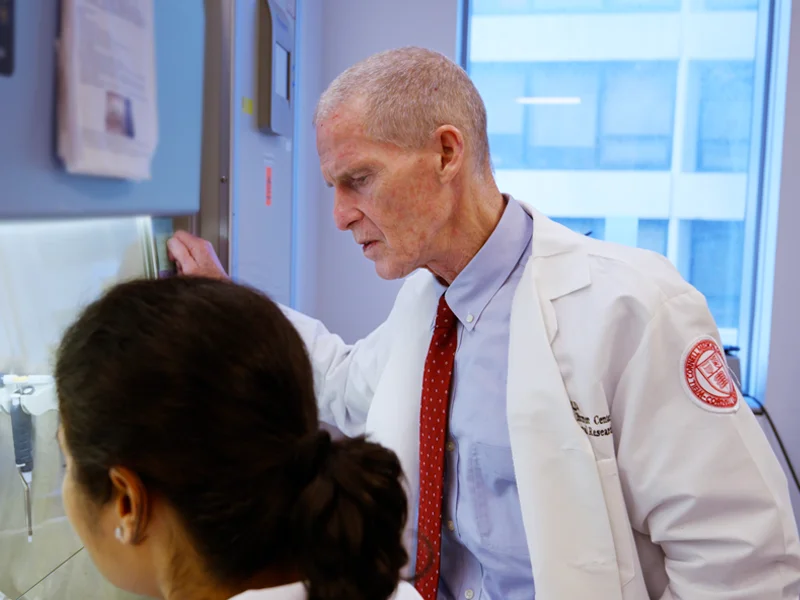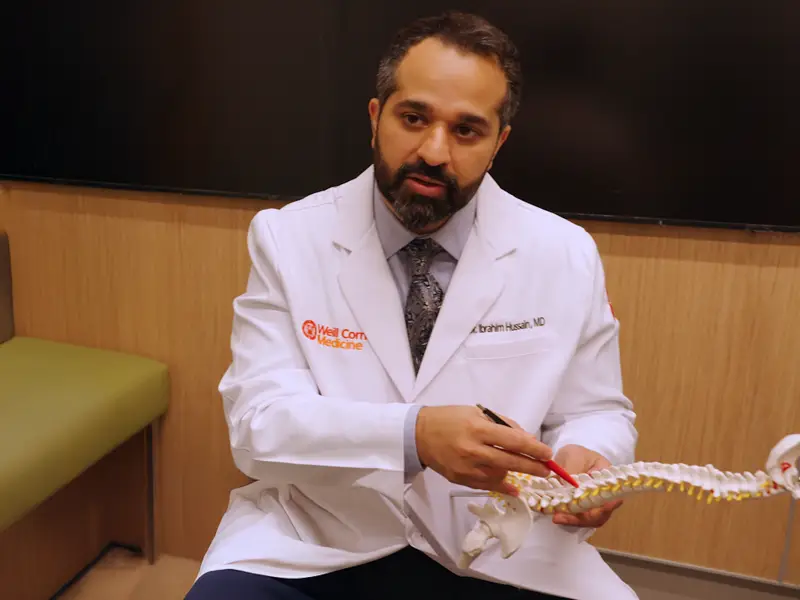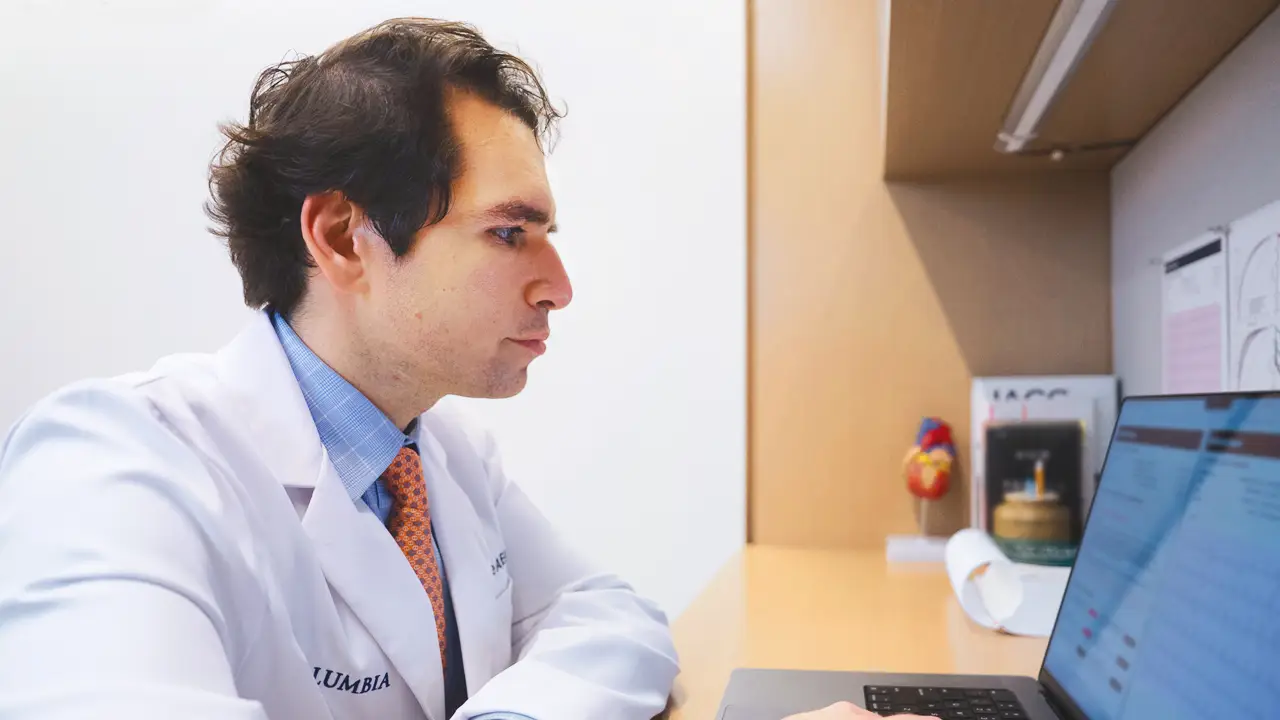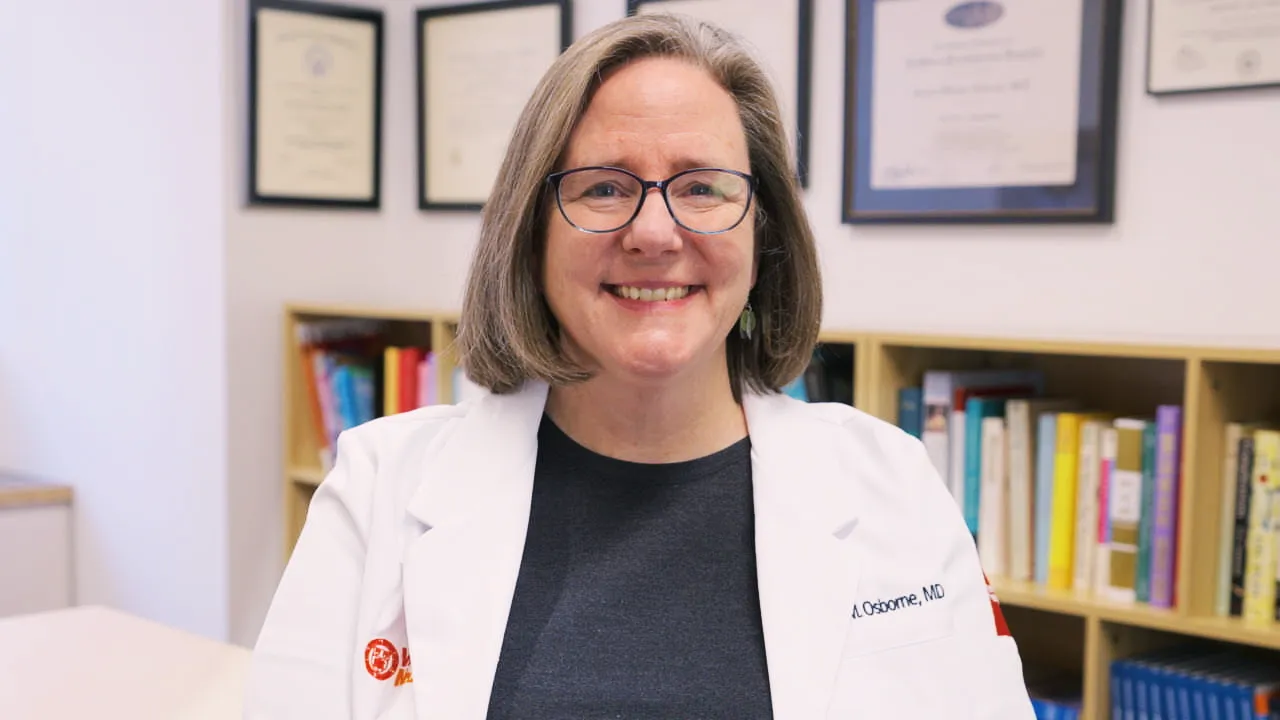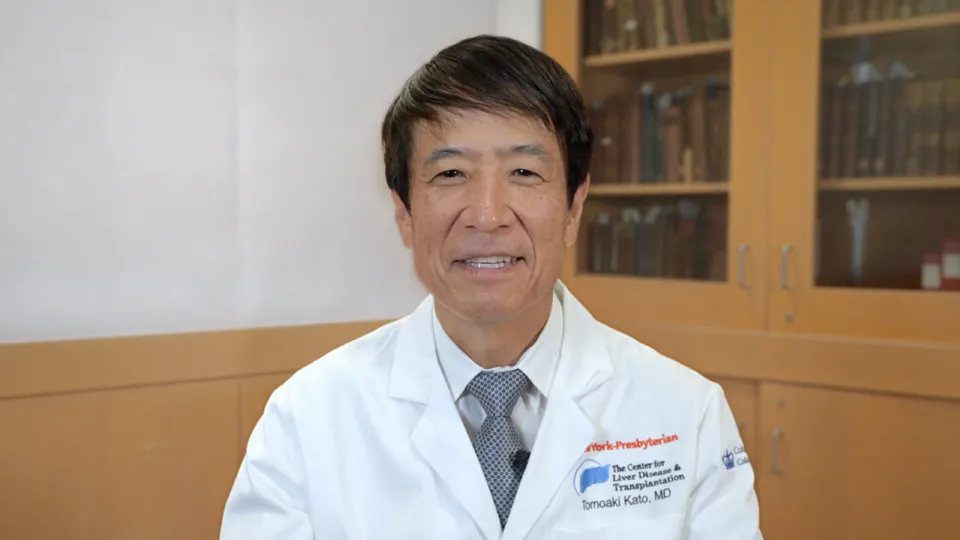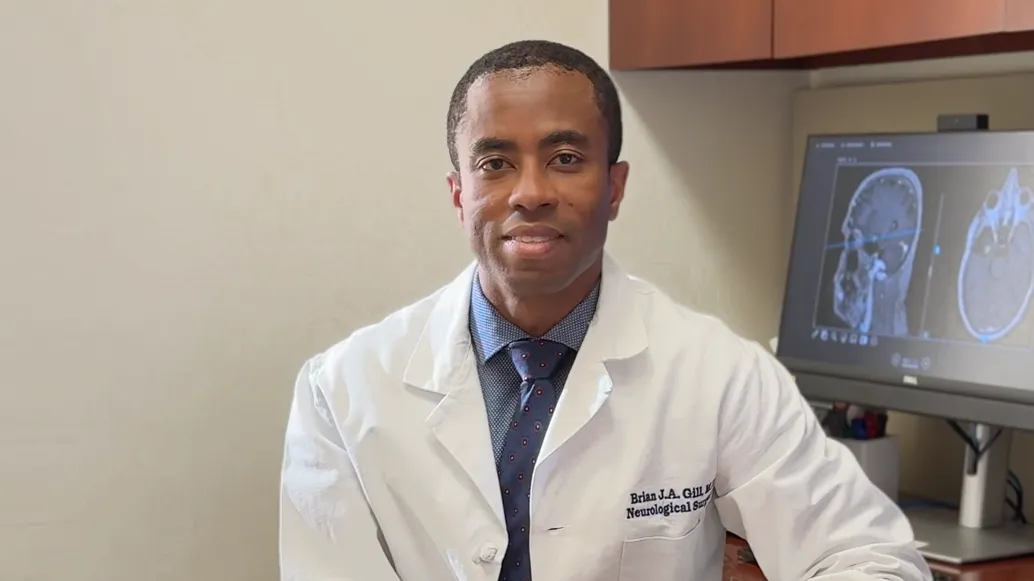
Surgeons at NewYork-Presbyterian and Weill Cornell Medicine are advancing the use of single-port robotics for complex thoracic surgery. While multiport robotic surgery requires 4-5 incisions around the ribs, the single-port platform uses one incision through the diaphragm, improving surgery success and reducing recovery time. By being an early adopter, the center at NewYork-Presbyterian and Weill Cornell Medicine has become one of the highest volume single-port thoracic surgery programs in the U.S. The cardiothoracic team has successfully performed surgery for a range of thoracic malignancies, including late-stage lung cancer, mediastinal masses, and esophageal cancer. Their commitment to evolving robotic surgery and training the next generation is helping to expand access to minimally invasive thoracic procedures.
Single-Port Robotics Improves Outcomes for Thoracic Surgery
Single-Port Robotics Improves Outcomes for Thoracic Surgery
[0:00–0:08]
On-Screen Title: Single-port robotics is yielding unprecedented patient benefits in cardiothoracic surgery
[0:09–0:17]
Dr. Jeffrey Port: Robotic surgery has really taken hold in thoracic surgery, but there's still room for improvement. Unfortunately, many of our patients don't qualify because they have extensive comorbidities.
[0:18–0:23]
Dr. Jonathan Villena-Vargas: The single-port surgery is really a fundamentally different way of approaching lung cancer or lung resection.
[0:24–0:33]
Dr. Benjamin Lee: We're making a single incision that goes under the rib cage. So this allows patients not to have to experience that intercostal nerve pain.
[0:34–0:39]
Dr. Jeffrey Port: With the less stress of the incisions, less discomfort, the quicker recovery time, more patients may qualify for surgical resection.
[0:40–0:46]
Dr. Jonathan Villena-Vargas: Here at NewYork-Presbyterian, we've become one of the country's leading single-port thoracic surgery programs.
[0:47–0:50]
Dr. Benjamin Lee: We are the highest volume center for single-port robotics.
[0:51–1:22]
Dr. Jeffrey Port: It's been a natural transition for us, given our extensive experience with the multiport standard platform. We have gone from simple wedge resections to some of the most complex thoracic surgeries. We are now approaching even more challenging, larger cases, even after chemotherapy, esophageal cancer, mediastinal masses. The procedure starts with insufflation of CO2 into the chest cavity for better visualization and for easier access, making it easier to open the diaphragm and place our single port. That's a technique that we innovated here at NewYork-Presbyterian/Weill Cornell.
[1:23–2:01]
Dr. Jeffrey Port: A single arm is deployed. There's an air-sealed unit, which creates an air seal with the patient when this is coupled to the wound protector. There are multiple entry points for the instruments, and they can be coordinated so that they fit through a four centimeter incision
without collision. Operationally, we have three fingers working through the single-port arm. We have multiple utilities; we can use graspers, cauteries. We can use a camera, which is flexible, from above, below, in something called a cobra position, which allows us to even see around corners. Postoperatively, a patient's healing is accelerated as well as their discomfort is decreased, compared to the standard robotic technique.
[2:02–2:26]
Dr. Benjamin Lee: When we started doing single-port robotics, naturally, we wanted to include
that training for our fellows. Being that we’re one of the few centers in America that actually have a dual console, our fellows, at the same time, were also hands-on learning it
side by side with us. And we developed an ability to not only teach them regular robotic surgery, but also single-port robotic surgery.
[2:27–2:48]
Dr. Jonathan Villena-Vargas: The way that we became the go-to center is not only by having master surgeons, but by really backing it up with our data and our academic rigor. And we actually studied the first 90 days that we took this upon ourselves and showed that by, you know, by the second day, the patients are requiring half as many pain medications as the traditional surgeries.
[2:49–2:56]
Dr. Jeffrey Port: Doing something minimally invasive with the most lung preservation
is critically important in getting patients through this procedure.
[2:57–3:03]
Dr. Benjamin Lee: I think at NewYork-Presbyterian, we've always been innovators. Training our physicians for tomorrow has to be part of our mission here.
[3:04–3:13]
Dr. Jonathan Villena-Vargas: And we've graduated the first fellow that's certified in single-port surgery in the country. So that's just a testament to how we kind of approach this new technology.
[3:14–3:33]
Dr. Jeffrey Port: Single-port robotic surgery offers the possibility for a patient to be cured of their lung cancer through a single incision in an operation that lasts less than an hour. Patients can be discharged the next day without chemotherapy, without immunotherapy, without any other kinds of radiotherapy. That's an incredible advancement just over the 20 years that I've been doing thoracic surgery.
[3-34–3:44]
On-Screen Title: The cardiothoracic surgery team is leading the field in single-port robotic surgery as they apply the technology to increasingly complex cases.
[END]