

[0:00–0:20]
On-Screen Title: Novel transcatheter solution approved for tricuspid regurgitation; Dr. Susheel Kodali
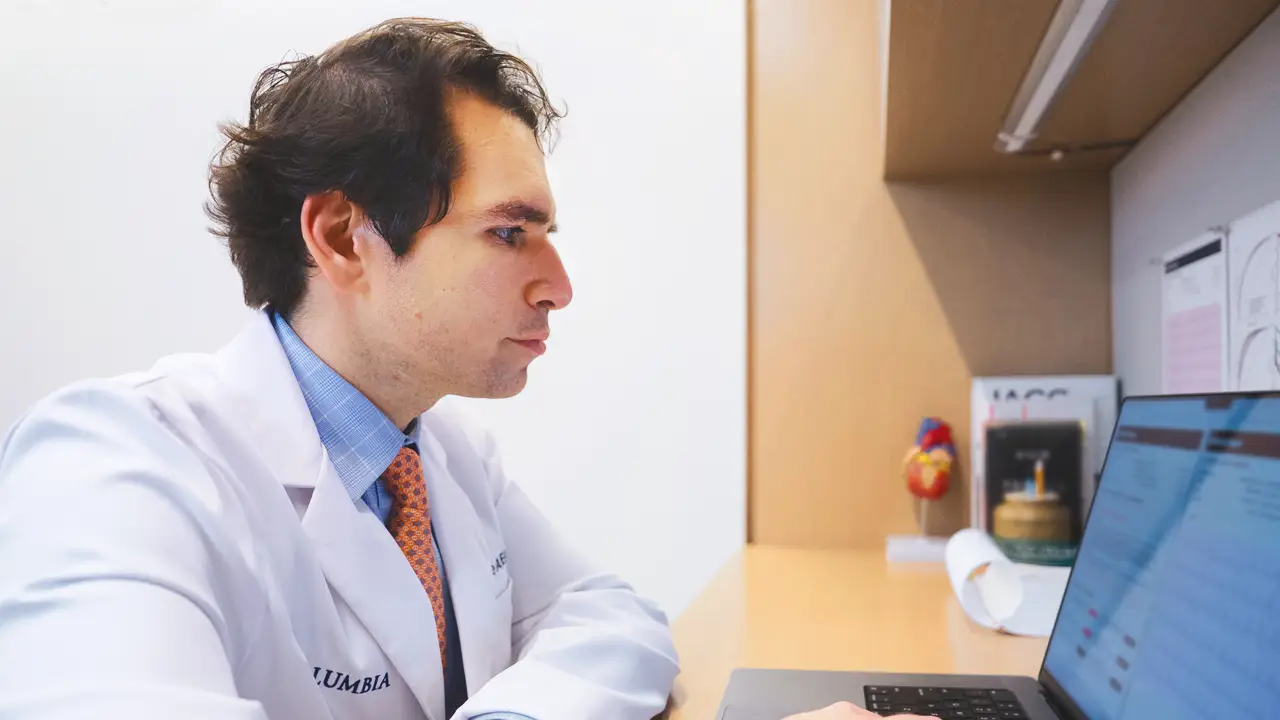
Dr. Susheel Kodali: Hi. My name is Susheel Kodali. I’m director of the Structural Heart and Valve Center at NewYork-Presbyterian and Columbia University. One of our major focuses here over the last decade has been investigating transcatheter treatment options for tricuspid regurgitation.
On-Screen Title: Investigating transcatheter treatment options
[0:21–0:39]
On-Screen Title: Surgery has high morbidity and mortality
Dr. Susheel Kodali: For many patients, medical therapy is ineffective, and surgery has a high morbidity and mortality. So that’s why there’s an unmet need, and we’ve been looking for other solutions that will benefit these patients. The TRISCEND II trial was a combination of that work and demonstrated the efficacy of the EVOQUE system for treating severe symptomatic TR.
On-Screen Title: TRISCEND II trial proved efficacy of EVOQUE system; Courtesy of Edwards Lifesciences
[0:40–1:10]
Dr. Susheel Kodali: The EVOQUE transcatheter heart valve is a bovine pericardial tissue valve that is designed to be delivered via catheter without any incisions. The valve itself is sewn into a nitinol frame and compressed onto a delivery catheter that allows it to be advanced from the femoral vein to the heart. Once the valve is in the right position across the native tricuspid annulus, it is slowly expanded. As it expands, it anchors onto the native tricuspid valve leaflets and once it is fully deployed, the native valve is excluded and the new prosthetic valve takes over the function.
On-Screen Title: Advanced from the femoral vein to heart
[1:11–1:25]
Dr. Susheel Kodali: We had successful implantation in 96% of patients with a cardiovascular mortality of 3% at 30 days. The patients themselves reported a more than 20-point improvement in quality of life based on the KCCQ scale. More than 90% were able to be discharged home.
On-Screen Title: Results: 96% of patients, successful implantation; only 3% cardiovascular mortality at 30 days; 20-point improvement in quality of life; 90% of patients discharged from hospital to home
[1:26–1:56]
Dr. Susheel Kodali: Right now, we’re at the early stage of our understanding of this disease state. Multidisciplinary care is key to the success of transcatheter therapies. Not only do we need to educate patients, but also the referring community and physicians on when treatment is appropriate. We also need to make the technology more available while continuing to critically analyze the data and to make sure the right patients are benefiting from this therapy.
On-Screen Title: Educate patients and physicians on when treatment is appropriate
[END]