[0:00–0:38]
On-Screen Title: Tackling complex cancer care with a patient-centered approach
On-Screen Title: Kiley Durham; Breast cancer, age 36; Brain metastases, age 37; Leptomeningeal disease, age 38
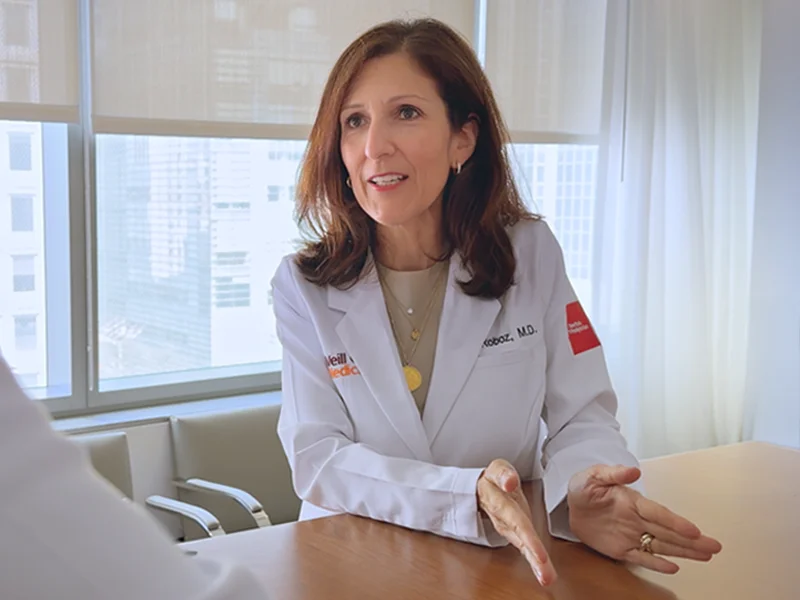
Dr. Tessa Cigler: Kiley initially presented in her mid-30s. She was three months postpartum with her second child, and she had felt a lump in her breast, and this prompted imaging which confirmed a mass in the breast, a T2 lesion. Based on her clinical presentation, she underwent genetic testing and as a woman in her 30s with a triple-negative breast cancer and was found to have a deleterious BRCA mutation.
[0:39–0:44]
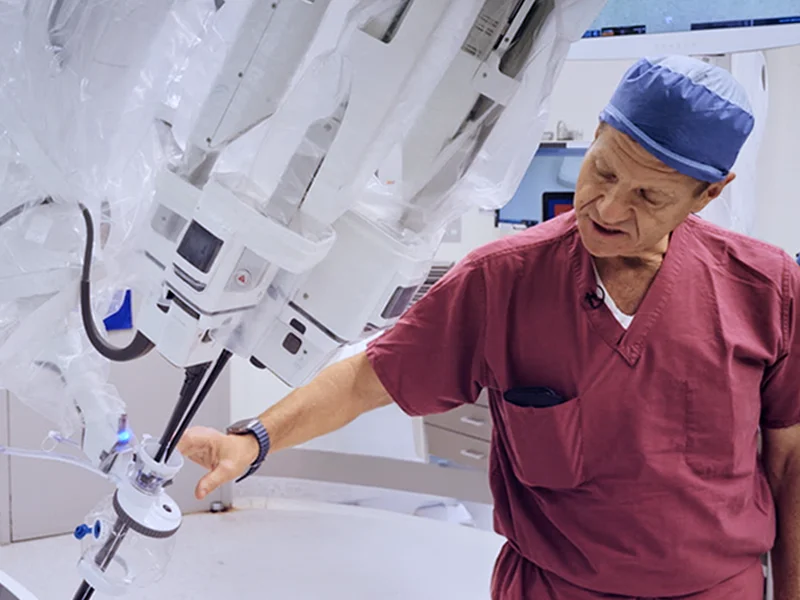
Dr. John Ng: We discussed the likelihood that she would need radiation treatment after the surgery.
[0:45–0:53]
Dr. Tessa Cigler: During her radiation therapy, she began to experience kind of intractable headaches. The imaging showed brain metastases.
[0:54–1:02]
Kiley Durham (Patient): The brain tumor was so scary. And, you know, I was so fortunate to have the care team that I did. And they were so confident, and we were very confident in them.
[1:03–1:18]
Dr. Tessa Cigler: She was immediately admitted and underwent neurosurgical evaluation and was operated on by our neurosurgeons the very next morning.
On-Screen Title: After managing two diagnoses over two years, Kiley suddenly presented with new neurologic symptoms
[1:19–1:25]
Dr. John Ng: Just before Labor Day, she’s with her family and she’s out in Long Island. Suddenly she’s feeling this numbness in her legs and she’s feeling headaches.
[1:26–1:46]
Dr. Tessa Cigler: Her symptoms prompted imaging of her brain and of her spine. And at that time, the radiographic findings were consistent with leptomeningeal disease. We typically estimate prognosis on the order of months; less than a year.
[1:47–1:54]
Dr. John Ng: How many more opportunities would she have to be able to spend quality time with her family? And that that should be a priority.
[1:55–2:03]
Kiley Durham (Patient): Dr. Ng walked me over to the radiation team who had done all of my other breast and brain radiation, and they were waiting for me, and he had tears in his eyes talking to me about it.
[2:04–2:31]
Dr. John Ng: One of the more conventional approaches would be to do radiation treatment to the whole brain and the spine. It’s called craniospinal radiation. I talked with Kiley. It just didn’t really fit into her situation at that given time. And we agreed that, and maybe this was a little bit out the box, what we were going to try to focus on was where she was feeling symptoms, which was the lower spine disease that was causing her lower back pain, causing some leg weakness.
[2:32–3:07]
Dr. Tessa Cigler: Her diagnosis came at a time when we were starting to use immunotherapy, in breast cancer it was not yet approved, but there was data to suggest that it might be helpful, particularly in triple-negative breast cancer. But I really wanted to make sure that I, we were doing the right thing for Kiley and encouraged her to seek opinions outside of our institution with other experts in treating breast cancer with brain metastases and leptomeningeal disease.
[3:08–3:22]
Kiley Durham (Patient): We actually flew across the country and met with another hospital or another cancer treatment center. They weren’t as ideas-based as these doctors that I was working with at NewYork-Presbyterian.
On-Screen Title: Kiley continued care at NewYork-Presbyterian and her team was granted approval for immunotherapy to treat her leptomeningeal disease
[3:23–3:35]
Dr. Tessa Cigler: Treating Kiley has always been an art, trying to balance side effects of therapy in order to preserve her quality of life and her active life, and maximize efficacy.
[3:36–3:48]
Kiley Durham (Patient): A couple of months passed without treatment. I was feeling a little better. And so we did the scans, and they were totally clean. And she said, okay, I think this is time for you to live. We’ve kept you alive. Now it’s time for you to live.
[3:49–4:05]
Dr. Tessa Cigler: Here we are now, five years since her diagnosis of leptomeningeal disease. And Kiley is off therapy. She is feeling well, and she has no evidence of disease.
[4:06–4:24]
Dr. John Ng: We often speak about patient-centered care, but what that really should mean is that it is one human being taking care of another human being.
On-Screen Title: At NewYork-Presbyterian, we approach cancer care from every angle for the best patient outcomes
[END]