



Shingles Vaccine May Lower Dementia Risk, Studies Increasingly Show
New research suggests that adults who receive the shingles vaccine may be less likely to develop dementia. A neurologist explains the connection between shingles, inflammation and brain health.
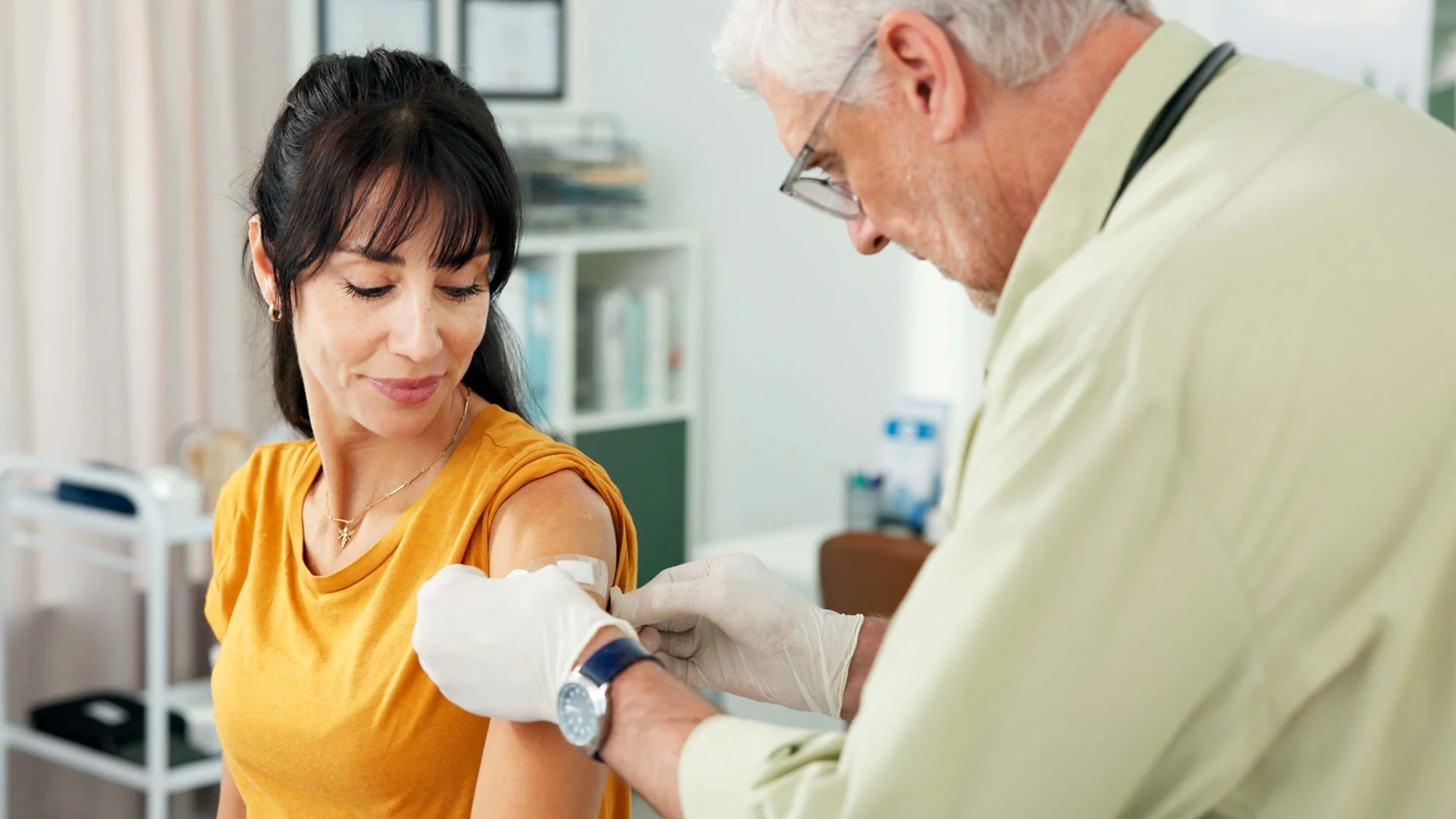
The shingles vaccine may do more than protect against a painful rash, according to recent studies. New research published in Annals of Internal Medicine suggests that older adults who get vaccinated against shingles have a significantly lower risk of developing dementia than those who don’t. The study adds to a growing body of evidence connecting brain health to getting the shingles vaccine.
Why exactly this connection exists is still emerging. One leading theory centers on the varicella-zoster virus, which causes chickenpox and remains dormant in the body’s nerve cells for life. When the virus reactivates later in life as shingles, it can trigger inflammation and other processes that may affect the brain.
Explore Neurology Services at NewYork-Presbyterian
“Most adults over 40 are already carrying this virus from childhood chickenpox, and you don't need to have had shingles to benefit from the vaccine,” says Dr. Sonja Blum, a neurologist with NewYork-Presbyterian/Weill Cornell Medical Center. “Yet only about a third of eligible adults have been vaccinated. That’s a missed opportunity.”
Health Matters spoke with Dr. Blum, who is also director of the Memory Disorders and Cognitive Neurology Division at NewYork-Presbyterian and Weill Cornell Medicine, about the benefits of getting vaccinated and what patients should know about shingles, inflammation and brain health as they age.
Can you briefly explain the findings of this most recent study?
Dr. Blum: This study followed about 510,000 older adults in skilled-nursing facilities and found that those who got the Shingrix vaccine (the only available and recommended shingles vaccine in the U.S.) had a 24% lower risk of developing dementia over four years than those who didn’t.
The study is observational, meaning the researchers gathered data from real-world settings without intervening. It shows a strong association between getting the vaccine and reduced dementia risk, but not definitive proof. That said, it's consistent with several other large studies from different countries all pointing in the same direction.
What explains the association between the vaccine and reduced shingles risk?
Dr. Blum: We don't know for certain yet, but the leading theory is straightforward.
After you recover from chickenpox, the varicella-zoster virus hides in your nerve cells for life. If it reactivates as shingles, it can cause inflammation, which in turn can cause damage to blood vessels in the brain and may promote the buildup of proteins linked to Alzheimer’s disease.
By preventing shingles outbreaks, the vaccine stops the virus from repeatedly causing widespread inflammation that can damage the brain. There's also some evidence that the vaccine may help the immune system better regulate inflammation in general. That’s why it’s worth getting the vaccine even if you’ve already had shingles.
Inflammation is now considered a central driver of Alzheimer’s, not just a side effect. This damage can accumulate if you experience repeat shingles episodes over the years.
Can the shingles vaccine help prevent Alzheimer’s disease?
Dr. Blum: Several studies have found the vaccine is associated with a reduced risk of Alzheimer’s, specifically, not just dementia broadly. But Alzheimer’s has many causes — genetics, lifestyle, other health conditions — so the vaccine likely reduces one contributing factor, not the whole disease.
Are certain people more likely to benefit from brain protection than others?
Dr. Blum: In this study, the benefit was stronger in women — researchers are still learning why that is. And people at greater risk of shingles — such as those with weakened immune systems — also showed a stronger dementia risk reduction, which makes sense: More potential reactivation means more damage to prevent.
Does timing matter? Are there benefits to getting vaccinated earlier?
Dr. Blum: The current recommendation is that people age 50 or older get vaccinated. There's no direct evidence yet on whether earlier vaccination provides greater brain protection, but the logic is simple: Every shingles episode is a potential source of brain damage, so the earlier you prevent them, the better.
Could the vaccine help people who already have mild cognitive impairment or early dementia?
Dr. Blum: Possibly. One study found that among people already living with dementia, vaccination reduced deaths due to dementia — suggesting it may slow progression, not just prevent new cases. This is preliminary but intriguing.
What would you tell a patient who isn't sure if the vaccine is right for them?
Dr. Blum: Shingles is a painful condition that can cause lasting nerve pain and other serious complications, and the shingles vaccine is already recommended for everyone 50 and older. It’s safe and over 90% effective.
The emerging evidence on dementia is an exciting potential bonus, but even without it, the case for vaccination is strong.

The health and wellness newsletter you can trust
Featured Experts

Psychiatry & Neurology