



Health Matters
Podcast: The Rise of Cancer in Young Adults—and What's Giving Experts Hope
A colorectal surgeon explains what's driving the rise in cancer among young adults and the advances in treatment offering hope.


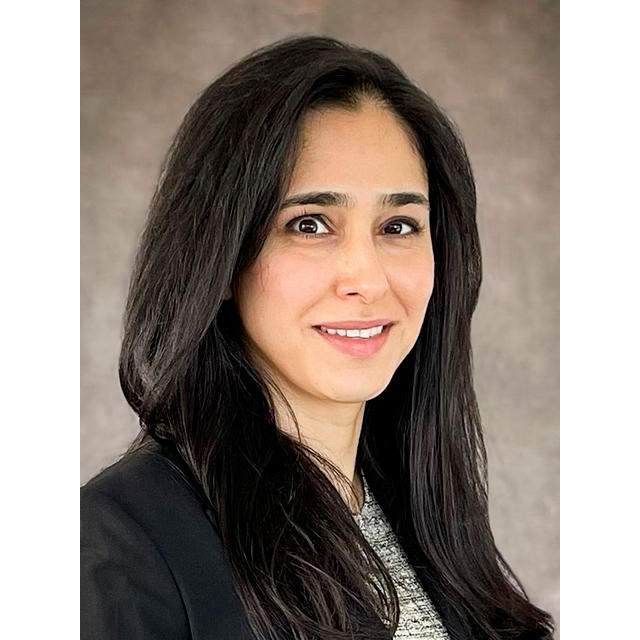
This week, Courtney Allison is joined by Dr. Mehraneh Dorna Jafari, chief of colorectal surgery at NewYork-Presbyterian Brooklyn Methodist Hospital. Dr. Jafari explains what's behind the rise in cancer diagnoses among young adults, discusses the latest research into possible causes, and shares the advances in treatment that are giving experts hope. Dr. Jafari also offers ways we can all reduce our cancer risk.
Explore Cancer Care Services at NewYork-Presbyterian
Episode Transcript
Dr. Jafari: Colorectal cancer mortality has gone up in patients less than 50 compared to those who are in the screening age. The mortality overall for everybody has gone down, but for colorectal specifically for early onset, that mortality has increased.
Courtney: Welcome to Health Matters, your dose of the latest in health and wellness from NewYork-Presbyterian. I'm Courtney Allison.
This season on Health Matters, we're covering your health from A to Z, asking our experts to break down the health topics and wellness trends we're all curious about. Today, we're at O for oncology.
Colorectal cancer is now the leading cause of cancer deaths for people under the age of 50. So today, we're talking to Dr. Dorna Jafari, chief of colorectal surgery at NewYork-Presbyterian Brooklyn Methodist Hospital, to get some answers. Why are colorectal cancer deaths on the rise in young people? And why are certain cancer rates rising across the board? Dr. Jafari also shares what gives her hope for the future of cancer treatment and what we can all do to reduce our cancer risk.
Dr. Jafari, thank you so much for joining us today.
Dr. Jafari: Thank you so much. It's a pleasure.
Courtney: So Dr. Jafari, we're here today to talk about something we're all seeing. Cancer used to be associated with aging, and now it's on the rise in young people. What's going on?
Dr. Jafari: We have seen an incidence in early onset cancers in general, and that includes breast and GI cancers. We define young or early onset cancer as anyone under the age of 50. So since 2010, around that time, we've seen an increase in the incidence of cancer. By 2030, early onset colorectal cancer was gonna be the number one cause of cancer mortality in patients under the age of 50. However, we just reached that this year.
Courtney: Are you seeing this firsthand in your practice?
Dr. Jafari: Unfortunately, yes. I think being part of a large academic medical center my entire career, at first the thought was that it was anecdotal just because you see more complicated cases, but it turns out that when you actually look at the data, it's across not only the US but globally, the numbers have increased. Overall, all cancer mortality is going down. A lot of that has to do with a lot of changes and improvement in the way we treat cancer, specifically lung and breast cancer. Unfortunately, colorectal cancer mortality has gone up in patients less than 50 compared to those who are in the screening age.
Courtney: You said colorectal is now the leading cause of cancer death under the age of 50.
Dr. Jafari: Yes.
Courtney: Do we know what's behind that?
Dr. Jafari: We don't exactly know what's behind that. Cancer is not very simple. What people have seen is they're calling it this birth cohort effect that began in the 1960s, and essentially what they saw is that in individuals who were born after 1960, there's a fourfold higher colorectal cancer risk.
Courtney: Wow.
Dr. Jafari: If you look at the 1960s, environmentally it's very different, right? Antibiotics, hormones, what we're putting in our food, plastics. Diets have changed a lot, and that may have changed the bacteria in our gut. Ultra-processed food, it's not something that our bodies were used to, right? We were eating a lot more fiber than meat as we sort of evolved as human beings until recently. So those Western diet patterns have definitely increased GI cancers and specifically colorectal cancer numbers.
Courtney: What might ultra-processed foods have to do with rising cancer rates? One JAMA study we came across looked at nurses over a long period of time and showed that more ultra-processed foods led to growth that could become cancer.
Dr. Jafari: So that study shows that those dietary patterns have really impacted early onset advanced colorectal adenomas, which is basically the precancerous lesions. High fructose is not something that was normally in our diets before the 1900s. If you have more than two servings of that, like sugar-sweetened beverages, that can basically increase your relative risk factor of early onset colorectal cancers by like twofold, which is a lot. It's something easy to eliminate, easier said than done, but I think sodas or sugary drinks, just look at the back of the label.
Courtney: I think another thing people are frightened of are microplastics.
Dr. Jafari: Right.
Courtney: Can you talk about microplastics as a potential carcinogen?
Dr. Jafari: People have talked about microplastics a lot. It's a growing body of literature. We just don't know exactly how it affects everyday cells, but the emerging evidence is there is some causations with it. There are some studies that show that there's a high concentration of it around the tumor tissue, but I think everything is very preliminary. But I think it's still important because plastic's not supposed to be in your body. Because again, it's around the 1950s, '60s that we had this plastic boom, and there is enough evidence that you should try to eliminate it. And if you can go to plastic substitutes in the house, you should try to do that. It's actually been shown that even a little amount of effort, like not using bottles, helps decrease the microplastics in your system. So little changes makes a difference.
Courtney: You also mentioned antibiotics earlier and the microbiome. Is there any evidence that overprescription of antibiotics or a microbiome lacking in diversity contributes to these cancer rates?
Dr. Jafari: There definitely is data behind that. We, as children, got a lot more antibiotics, as I think now there's a stewardship, and we try not to give antibiotics for, like, let's say, viral syndromes. I remember every time I had a cough as a child, I would get antibiotics, which was unnecessary, and that definitely changes your microbiome. But there have been studies that show that some cancers who respond well to, for example, radiation, like rectal cancer, there's certain bacteria that if you have it, have better responses to radiation.
Courtney: If you had to prioritize just a few habits for people to help reduce cancer risk, what would they be?
Dr. Jafari: So there's little things you can do to keep your microbiome healthy. Having thirty grams of fiber in your diet every day does keep a healthier microbiome, and that's been studied over and over again. Diet is incredibly important, and that high fiber, it's not just good for your gut health, it's also good for your cardiovascular health, so that's one thing that I would hone in the most. Getting rid of the microplastics as best as you can, and then exercise helps you with your stress levels and to be in a better cardiovascular health. You have to take it step by step because when you try to be like, "Okay, I'm really scared, I'm gonna get rid of everything that's processed foods," especially if you're working and you've got kids, it's impossible. I think you just have to start slow and be like, "Okay, I'm gonna s- now substitute all sugary drinks with water, but I'm gonna do it slowly." If you had, like, a soda every day, you go to, like, three times a week, and then you go slowly.
Courtney: I really appreciate your moderate, realistic approach to all this. So switching gears, I'd love to talk about the bigger picture of cancer care today and what's giving you hope. I think cancer treatment is really scary and difficult for people, and so wondering what's on the horizon that's exciting for you.
Dr. Jafari: There's a lot happening in cancer care. Before, like, the last four or five years, what we were doing a lot was there's a cancer, and we're basically gonna give it cytotoxics, which is basically chemotherapy, which kills not only the cancer cells, but also other things. And now, the entire cancer world is moving towards targeted therapy, so all the basic science research that's been funded for the last 20, 30, 40 years is really coming to a fruition, and what we're seeing is that whether it's utilizing your immune system to fight the cancer or targeting specific targets within the tumor itself, you target it, and you kill those specific cells, is kind of what's in the horizon. And so it's, it's a very exciting time.
Courtney: I also saw that there was some news about GLP-1 drugs, that patients taking the drugs showed lower risks of developing cancer and disease progression, better survival, and improved responses to treatments compared with people who are not taking GLP-1s. It sounds like the research is still early, but any comments on that?
Dr. Jafari: You have to take it with a grain of salt because it's not comparing it to people who are essentially not on GLP-1s, but it's important to also remember that it has to do with obesity and metabolic syndromes. There is some data that when you have a metabolic syndrome, your response to treatment is not as good. So a lot of those improvements is also that obesity-related, metabolic syndrome-related effects on cancer and cancer progression itself. So if you eliminate that, you most likely can change the outcomes.
Courtney: So, I know teams across NewYork-Presbyterian, Weill Cornell, and Columbia are all working with AI to analyze imaging in a way that will better predict breast cancer risk. Are there examples you're seeing of AI helping with cancer treatment?
Dr. Jafari: They can be additive tools to the physician, where they basically look at, like, a billion images and come up with these computational models of picking things up. Eventually, I think what'll happen with a colonoscopy is it'll be like this polyp is cancer, this polyp isn't, and then we m- potentially may not have to send it to pathology once that AI has been confirmed. I think it's gonna be very interesting because if you can diagnose things much sooner and perhaps know the mutation of the cancer, you can then target therapy and then cure that without a surgery, without cytotoxics. That's hopefully where the future's going to go.
Courtney: Screening is one of the most powerful tools we have. What should people know about colonoscopies, and we're hearing about newer blood-based screening tests, too.
Dr. Jafari: The gold standard is colonoscopy. Why? Because colonoscopy p- picks up precancerous lesions. It's not only a diagnostic, but it's a screening tool, meaning that if you have a precancerous or an adenoma, it gets cut out. The issue with the current blood test, like the ones that pick up the DNA in the stool, is that if it's negative, it doesn't mean that you don't have those precancerous lesions. It picks up the cancerous stuff. So the blood test, if you have, like, a stage I through III colorectal cancer, is about 87.5% sensitive. It's specific for advanced cancers, but if you have a precancerous lesion that may become a cancer in a couple years, you're gonna have to wait for it to be cancer for it to pick it up. And because it's not 100%, it means that if it's negative, it doesn't mean that you don't have it. That's why colonoscopy is the gold standard, because we get rid of things that could become cancer and diagnosis at the same time. That's why colorectal cancer mortalities overall compared to other diseases is better because of the screening and diagnostic tools.
Courtney: So switching gears a little, how important is a holistic approach to cancer treatment, especially in treating young people?
Dr. Jafari: A holistic approach is incredibly important. The issue is, especially with early onset, anybody who's working and taking care of their parents or has kids, is that there's a lot of other things going on. So across all cancer centers, social workers, et cetera, are very involved in our cancer care. For early onset colorectal cancer, fertility preservation's incredibly important for patients. For men, a little bit easier than women because you just can bank your sperm. For women, it's a little bit more cumbersome to harvest eggs, but there are fertility specialists that take care of cancer patients. We have nutritionists on call. If you have kids and we don't know how to tell the children that mom or dad has cancer, there's child-life services at a lot of the cancer centers.
Courtney: So we've talked about so much today when it comes to cancer. What do you hope people take away from this conversation?
Dr. Jafari: If you have symptoms, you should be seeking medical care. However, mortality rates for cancer are improving or are going to improve. Screening, like colonoscopies, mammograms, that's gonna decrease the number of people who have cancer. So just stay up to date with all of that. Try to eliminate the things that are easy for your lifestyle, and that does make a difference. That's my biggest thing to patients is, like, you wanna have a glass of wine? Have a glass of wine. You wanna have a piece of cake because it's your birthday? That's not gonna make the cancer grow. We can just do what we can do.
Courtney: Dr. Jafari, thank you so much for joining us today and breaking down this really complex topic.
Dr. Jafari: Absolutely. Happy to help.
Courtney: Our many thanks to Dr. Dorna Jafari. I'm Courtney Allison.
Health Matters is a production of NewYork-Presbyterian. The views shared on this podcast solely reflect the expertise and experience of our guests.
To learn more about Dr. Jafari's work with patients, check out the show notes.
NewYork-Presbyterian is here to help you stay amazing at every stage of your life.
Join us next time when we talk about ways we can improve our posture to benefit our long-term health. That's in two weeks, right here on Health Matters. So you don't miss it, be sure to follow and subscribe on Apple Podcasts, Spotify, or wherever you get podcasts.

The health and wellness newsletter you can trust
Featured Experts
Colon & Rectal Surgery