



Sitting Risks: How Much Sitting Is Too Much?
An orthopedist explains what happens to your body when you sit more than six hours a day and how regularly you need to get up and move.
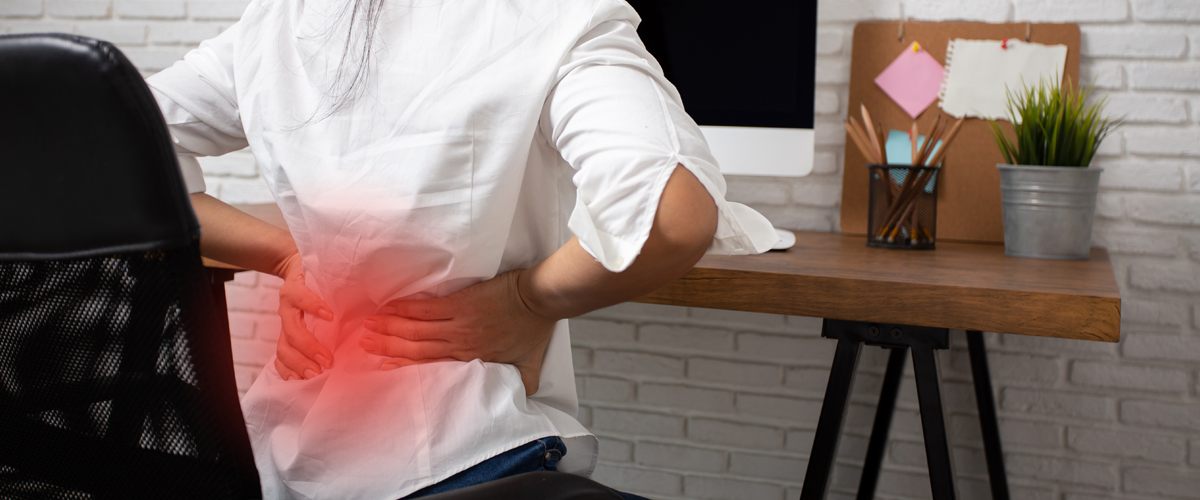
Our bodies were not designed to sit for long periods of time — and yet, regardless of our age or occupation, we sit far more frequently than we should, often in front of a screen.
Dr. Elan Goldwaser, a pediatric and adult sports medicine physician with NewYork-Presbyterian/Columbia University Irving Medical Center, spoke with Health Matters about how sitting too long can harm our necks, backs, and even our metabolism — and discusses steps people can take to stay healthy, high functioning, and pain-free.
Explore Orthopedics Services at NewYork-Presbyterian
How much sitting is too much sitting?
Health risks start to rise once total sitting approaches 6 to 8 hours a day and get clearly higher above about 8 to 10 hours per day. One possible consequence of prolonged sitting? Dead Butt Syndrome (or gluteal amnesia).
How frequently should I get up and move if I sit all day?
A practical rule is to avoid sitting more than 30 minutes at a time; aim to stand, stretch, or walk briefly at least every half hour. For most people, this level of movement helps reduce stiffness, improve blood flow, and lower metabolic risk.
What is good sitting posture?
For good posture in an office chair, keep your feet flat on the floor, hips and knees at roughly 90 degrees, back supported in a neutral position, shoulders relaxed, and the screen at eye level so your neck stays comfortably aligned.
If you’re on the couch at home, try to sit upright with your back supported, hips higher than knees if possible, and avoid slouching or twisting for long periods; if you recline, support your neck and lower back and change positions frequently.
Why does sitting cause neck and back pain?
Sitting can make you arch your neck up, which increases the curvature of our necks. This puts a strain on our trapezius muscle, which connects to the shoulder and the upper back to hold the neck up in place. Over time that becomes tender, painful, and tight. We begin to develop those classic “knots.”
Then the whole back starts to arch forward because the muscles get a little strained and thus a little weaker. As the back starts coming forward, the body is almost caving in on itself. The lower back bears the brunt of the strain.
Additionally, when we sit for long periods, the discs between our lumbar vertebrae may start to bulge, which can become a chronic problem. When a disc bulges or even herniates, the muscles around it start to lock up to hold everything in place so we can’t damage it further. Which is fine if we don’t move, but that’s not what our bodies were made for. We’re made to move, and when we try to stand and move again, we’re asking these tight muscles to comply but they’re not going to, causing back and neck pain.
5 Simple Ways to Get More Movement Throughout the Day
Five simple tips to get you up from an office chair and moving more:
- Try simple chair exercises. With your back straight and feet flat on the floor, lift one knee slowly towards the ceiling, pause, then lower it back down. Or from the same position, try straightening one knee at a time while tightening your thigh and core.
- Stand and do 10 to 15 glute squeezes. This will help combat Dead Butt Syndrome. If you are able, you can also try gentle glute bridges against a chair by lying with your back on the floor, placing your heels on a sturdy chair or couch, then lifting your hips while squeezing your glutes.
- Add work-appropriate “movement snacks.” Walking to a farther printer or restroom is a great start. Or do brief posture resets at your desk, like a standing backward bend.
- Take the stairs. Skip the elevator to both build leg and gluteal strength and get your heart rate up.
- Force yourself to walk a little further. If you take public transportation, get off one stop early. If you drive, park a bit farther away so you can walk an extra block or two daily.
What are some other side effects of too much sitting?
Sitting doesn’t just affect the bones and muscles. It affects metabolism as well, and as we gain weight, it’s more pressure and increased force that go through the joints and can cause more injury.
You also see decreased blood flow. People end up with more varicose veins. Even blood flow to the brain gets a little dampened, so you get “brain fog,” where you’re a little slower just because your blood isn’t moving as smoothly as it should.
Over time, too much sitting has been linked to higher risk of heart disease and earlier death, even in people who exercise regularly, which is why breaking up sit-time matters so much.
If I exercise regularly, do I still need breaks from sitting?
Yes. While exercise can help counteract the effects of sitting, it’s still important to regularly get up and move throughout the day. Whether it’s standing desks, treadmill desks, or frequent breaks, we all have the challenge of finding our own life hacks to getting exercise in where we can to stay strong and live healthy lives.

The health and wellness newsletter you can trust
Featured Experts
