



Inherited EGFR Gene Mutation Linked to Much Higher Lung Cancer Risk, a New Study Has Found
Researchers found that a rare inherited EGFR mutation may raise lung cancer risk up to 25-fold. An oncologist explains what the findings could mean for patients.
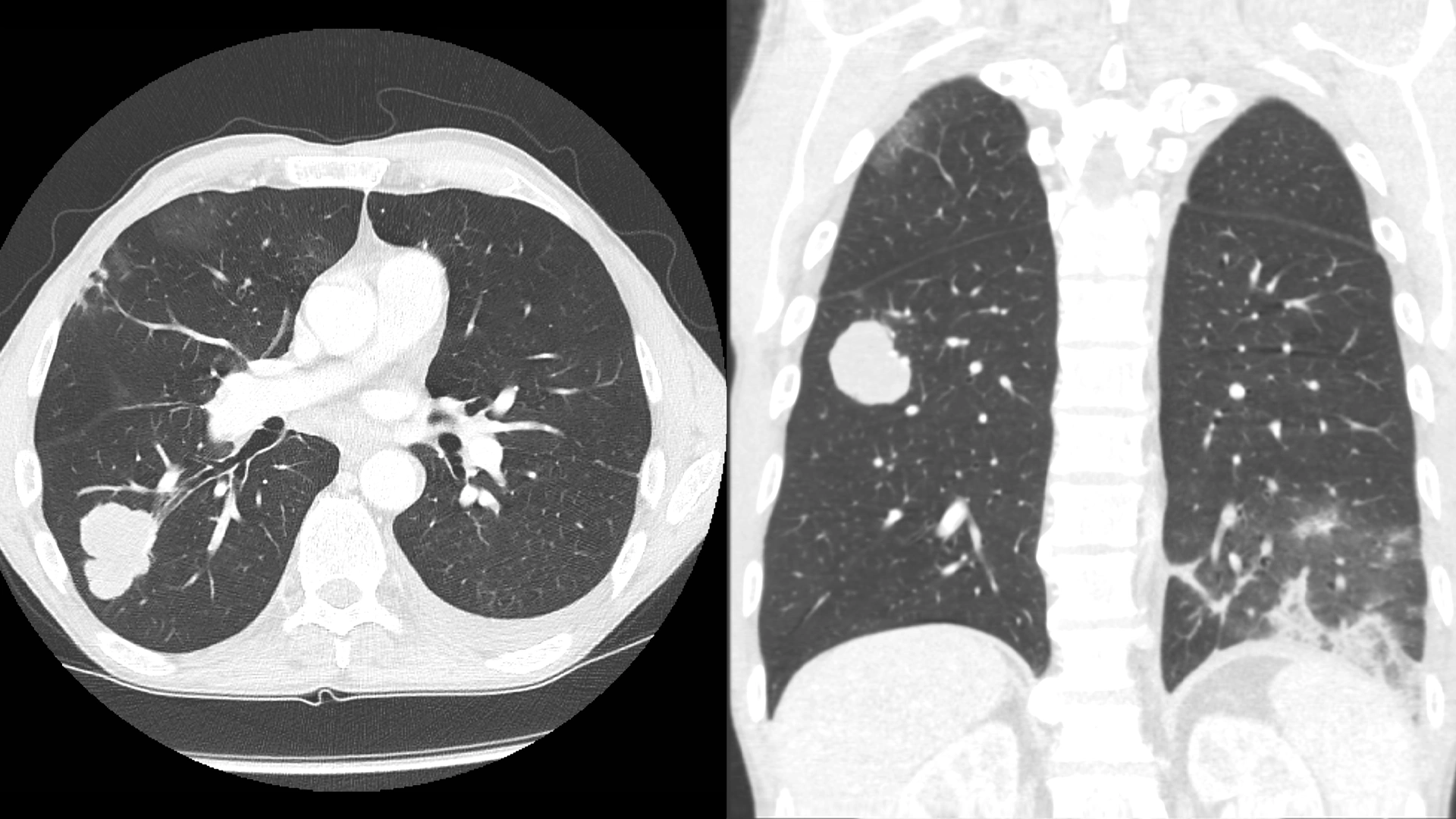
A new study, led by researchers at Dana-Farber Cancer Institute and 23andMe Research Institute, found that a rare inherited mutation in the EGFR gene known as T790M raises a person’s risk of developing lung cancer 25-fold. What’s more, the study also found that non-smokers carrying the mutation are more than 60 times as likely to develop lung cancer than nonsmokers who do not carry it.
“We’ve known that this mutation can be inherited and raises the risk of lung cancer,” says Dr. John Robert Ferrarone, an oncologist at NewYork-Presbyterian/Weill Cornell Medical Center. “What we didn’t know was the magnitude of that risk, or how common the mutation is in the general population."
Health Matters spoke with Dr. Ferrarone about what the study reveals about lung cancer risk, how rare the mutation is, and who may benefit from genetic testing.
Explore Cancer Care Services at NewYork-Presbyterian
What does it mean to have the T790M mutation on the EGFR gene?
Dr. Ferrarone: EGFR, which stands for epidermal growth factor receptor, is a gene that everyone has. It is responsible for making a certain type of protein (called EGFR protein) that helps cells grow and make copies of itself when needed; for example, to heal a wound. If the gene becomes damaged in some way, it can make a mutant form of EGFR that is stuck on, telling a cell to constantly replicate itself.
T790M is a rare variant of the EGFR gene that has been known for about a decade. What this study has newly identified is how rare it is and how much risk it carries.
How rare is the inherited T790M mutation?
Dr. Ferrarone: The study evaluated genetic data from more than three million people, and it found that about one in 15,000 people in the U.S. have it, and about one in 2,000 people in the Southern Appalachian region have it.
The T790M is more common in Appalachia. Why?
- About one in 2,000 people in the region have it.
- Researchers found that most people with the inherited mutation have similar ancestry: British and Irish settlers in the US about 200 years ago.
- A “genetic bottleneck” occurred among these settlers; the population decreased in size, lowering genetic variation.
How significantly does it increase the risk of lung cancer?
Dr. Ferrarone: The study found that people born with this mutation are 25 times more likely to develop lung cancer over their lifetime. For context, this puts them at about the same level of risk that is associated with smoking cigarettes.
The study also found that it increases the risk of lung cancer by 62 times in nonsmokers and by 10 times in never- smokers.
Who should get tested for the mutation and how?
Dr. Ferrarone: The only way to know if you have an inherited EGFR T790 mutation would be to undergo genetic testing.
For the average person, this study does not mean you need to go out and get testing done. However, people with a family history of lung cancer, especially in relatives who never smoked, may want to discuss their risk with their primary care physician and ask whether genetic evaluation is appropriate.
If testing is recommended, patients are typically referred to a medical geneticist. A blood or saliva sample may be used to analyze DNA for inherited cancer-risk mutations, like EGFR T790M and other well-known mutations, such as BRCA.
Are there treatments available that specifically target lung cancer caused by EFGR mutations?
Dr. Ferrarone: Yes, and they are generally very effective. Treatment depends on factors such as the specific EGFR mutation, the stage of the cancer, and the patient's overall health, but it may include targeted therapies designed to attack cancer cells with EGFR mutations.
What makes this mutation different from other inherited cancer-risk genes?
Dr. Ferrarone: Unlike other inherited cancer-related mutations, which may increase the risk of several types of cancer, EGFR T790M appears to be particularly linked to lung cancer. That makes it unique among inherited cancer-risk mutations.

The health and wellness newsletter you can trust
Featured Experts

Medical Oncology