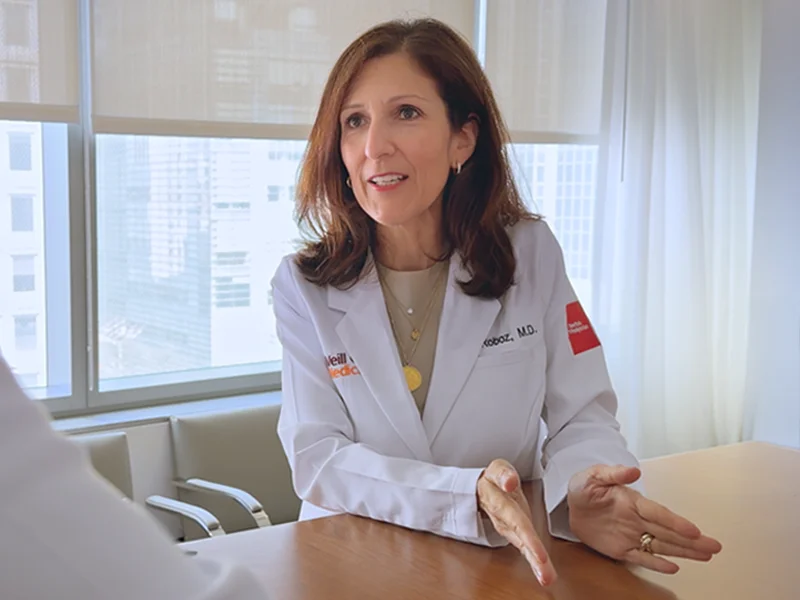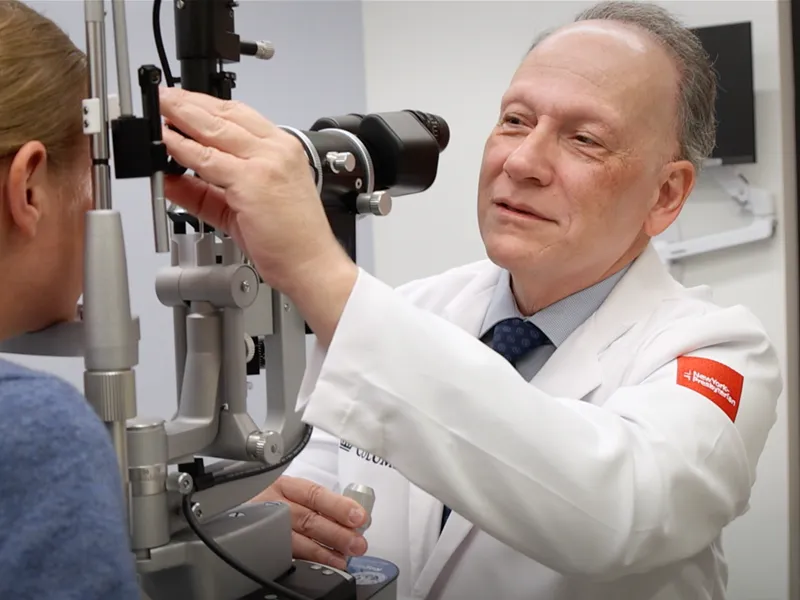
Gail J. Roboz, M.D., director of the Clinical and Translational Leukemia Program at NewYork-Presbyterian and Weill Cornell Medicine, discusses a recent clinical trial for acute myeloid leukemia (AML) that resulted in FDA approval of an all-oral treatment regimen for newly diagnosed older patients and those who cannot tolerate intensive chemotherapy. The trial established safety and efficacy by developing patient-tailored scheduling and dosing modifications to optimize outcomes. The new oral regimen improves convenience of care by eliminating the need for in-person infusions and is creating more opportunities for patients who may not have otherwise been candidates to undergo potentially curative stem cell transplantation.
Dr. Gail Roboz: All-Oral Regimen for AML Provides New Treatment Pathway
All-oral regimen for AML provides new treatment pathway
[0:00–0:08]
On-Screen Title: All-oral regimen for AML shows efficacy for patients who cannot tolerate intensive chemotherapy
[0:09–0:24]
Dr. Gail J. Roboz: AML, or acute myeloid leukemia, is the most common form of acute leukemia in adults. So the disease paradigm is to get the disease into remission, and then figure out if the patient needs more chemotherapy or a stem cell transplant for cure.
[0:25–0:59]
Dr. Gail J. Roboz: Venetoclax is an oral BCL-2 inhibitor which has changed everything in AML. Simply put, venetoclax makes chemotherapy work better. In a clinical trial called ASCERTAIN-V, we looked at oral decitabine-cedazuridine in combination with the BCL-2 inhibitor venetoclax in older patients with AML and younger patients whose comorbidities precluded intensive chemotherapy and used this combination to get them in remission and then kept going with the same regimen in ongoing cycles in an effort to maintain remission.
[1:00–1:25]
Dr. Gail J. Roboz: We made dose and schedule modifications that allow tailoring of the regimen to individual patients to optimize safety and efficacy. We have to really, really monitor
these patients closely, check for drug interactions, look at all of what they're taking, and really optimize how and when they're taking the pills to get those safe and efficacious results that we saw in the clinical trial.
[1:26–1:55]
Dr. Gail J. Roboz: Our leukemia program at NewYork-Presbyterian and Weill Cornell Medicine has been directly involved in the clinical trials and development programs, leading to the approval of 14 different therapies since 2017 for AML. But the goal here is to have a clinical trial for everybody: for newly diagnosed disease, for relapsed disease. We want there to be a clinical trial to push the envelope for all patients with AML.
[END]