


Vaccines and the Flu Shot During Pregnancy: Why They’re Important for You and Your Baby
An OB-GYN shares expert guidance on the vaccines that can help protect you and your baby before and after birth.
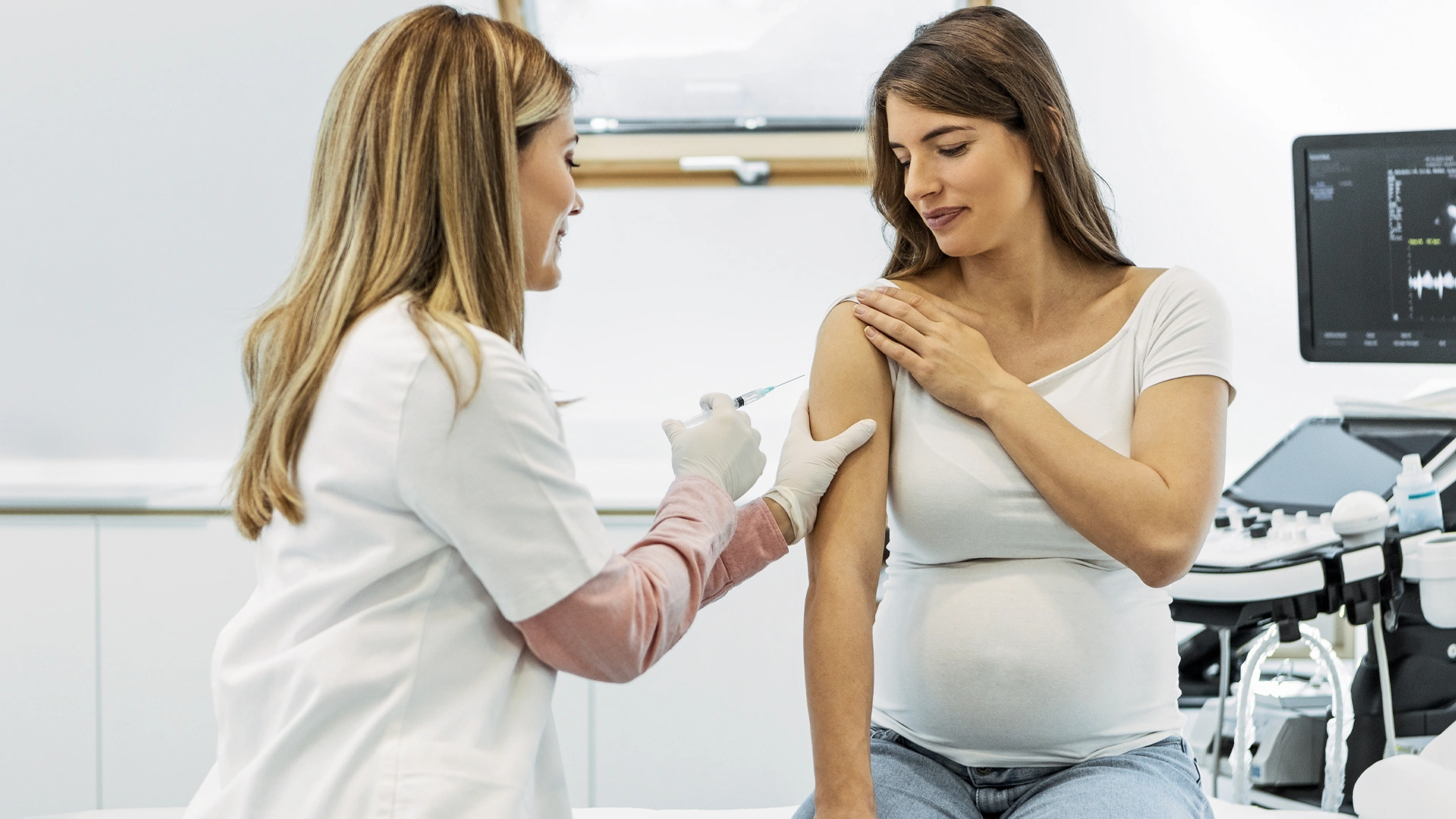
When you’re pregnant, it can often feel as if there’s no such thing as an easy answer, no matter the question. But when it comes to getting your seasonal flu shot, the evidence is clear: The flu shot reduces a pregnant person's risk of being hospitalized with the flu, and those who get a flu shot during pregnancy have a lower risk of preterm delivery and even maternal and fetal death.
Yet despite the strong recommendation from the American College of Obstetricians and Gynecologists (ACOG) that all pregnant women get a flu shot, only about 50% of pregnant women get vaccinated in a typical year.
“I think that there are more women who question every vaccine, and that’s OK,” says Dr. Laura E. Riley, an obstetrician and gynecologist-in-chief at NewYork-Presbyterian/Weill Cornell Medical Center. “I think you should question it. You should question any therapy that has risks and benefits. But we know all the bad things that can go wrong when you get the flu. So it is literally moms’ and babies’ best protection.”
Health Matters talked to Dr. Riley, who has worked with the Centers for Disease Control and Prevention (CDC) and leading OB-GYN organizations to provide guidance on protecting pregnant women and their babies through vaccination, about all this and more.
Explore Women's Health Services at NewYork-Presbyterian
Should pregnant women get the flu shot?
Dr. Riley: Yes. Pregnant women, if they get the flu, are at greater risk for having severe complications, including preterm labor, severe pneumonia that can lead to intensive care admission and even maternal death. The best prevention is the flu shot.
Prematurity is a big problem. You don’t want to get the flu at 30 weeks and then deliver at 31 weeks. Now you’re sick and you’ve had a preterm baby who could be sick.
Is the flu shot safe for the developing baby?
Dr. Riley: Not only is it safe for the baby, but the flu shot protects the baby – especially if they’re born during flu season.
When moms get the flu vaccine, they then build antibodies to influenza and those antibodies are transferred through the placenta and into the baby. So the baby then has protection from the flu for at least the first 3-6 months, when they’re at highest risk, but still cannot get the flu shot themselves.
Newborns have the highest risk of flu-related deaths among children, so you want to do all you can to prevent your baby from getting it. Flu vaccinations given to pregnant women reduce the risk of hospitalization from influenza for infants younger than six months old.
What about pregnant patients who have never gotten the flu vaccine before and have never gotten sick?
Dr. Riley: I tell them I strongly recommend the flu vaccine and why. When you’re unfamiliar with the disease, and the potential severity of the disease, you’re less likely to want to be protected. The flu in pregnancy is very different from the flu when you’re not pregnant.
There are two kinds of flu vaccines: inactivated and those made with a weakened form of the live flu virus. Neither type will give you the flu, but pregnant women should get an inactivated influenza vaccine. Ask for that if you go to a retail pharmacy for your vaccine.
Is the flu vaccine safe for breastfeeding moms?
Dr. Riley: Yes. Breastfeeding moms should also get the flu shot because women are at increased risk of severe illness from the flu up to about two weeks after giving birth.
In fact, the recommendation is that everyone older than six months receive a flu shot to protect themselves and those around them.
What should you do if you get the flu while pregnant?
Dr. Riley: Call your physician right away. The doctor will prescribe an antiviral medication to decrease the severity of your illness, and that medicine is most effective if used as soon as you get sick. The flu symptoms to prompt a call include fever, cough, and body aches. If you are exposed to the flu while pregnant, it is important to call your doctor because prescription antiviral medication can also decrease your chances of developing the flu.
When is the best time for pregnant women to get the flu shot?
Dr. Riley: You can get it during any trimester, but it's best to get it at the beginning of flu season, which is September or October. The flu season lasts through at least April, and that’s a long period of time that mom is at risk and baby is at risk. That's why you want that prevention.
Checklist: What other vaccines do pregnant women need?
In addition to the flu vaccine, ACOG recommends pregnant women should get:
- RSV: This should be offered to patients who are between 32 and 36 and 6/7 weeks’ gestation. Although RSV can be serious in pregnant people, the goal is to protect the baby after birth. It’s incredibly effective at preventing RSV in babies.
- Tdap: Given early in the third trimester, this offers protection against pertussis, or whooping cough. Its greatest benefit is to protect the baby from dying of pertussis. Nearly a third of infants who get whooping cough need to be hospitalized, and getting the Tdap vaccine lowers the risk of infants getting the illness by 78%.
- COVID: COVID is still circulating, and COVID vaccines are incredibly important to protect the newborn. The updated COVID vaccines are now available and remain one of the best ways to reduce the risk of severe illness.

The health and wellness newsletter you can trust
Featured Experts
