


For a Veteran Facing Metastatic Colorectal Cancer, a Living Donor Liver Transplant Offers Hope
After stage 4 colorectal cancer spread to his liver, a multidisciplinary team at NewYork-Presbyterian/Columbia recommended chemotherapy and a living donor liver transplant, offering Thomas Calvo a second chance.
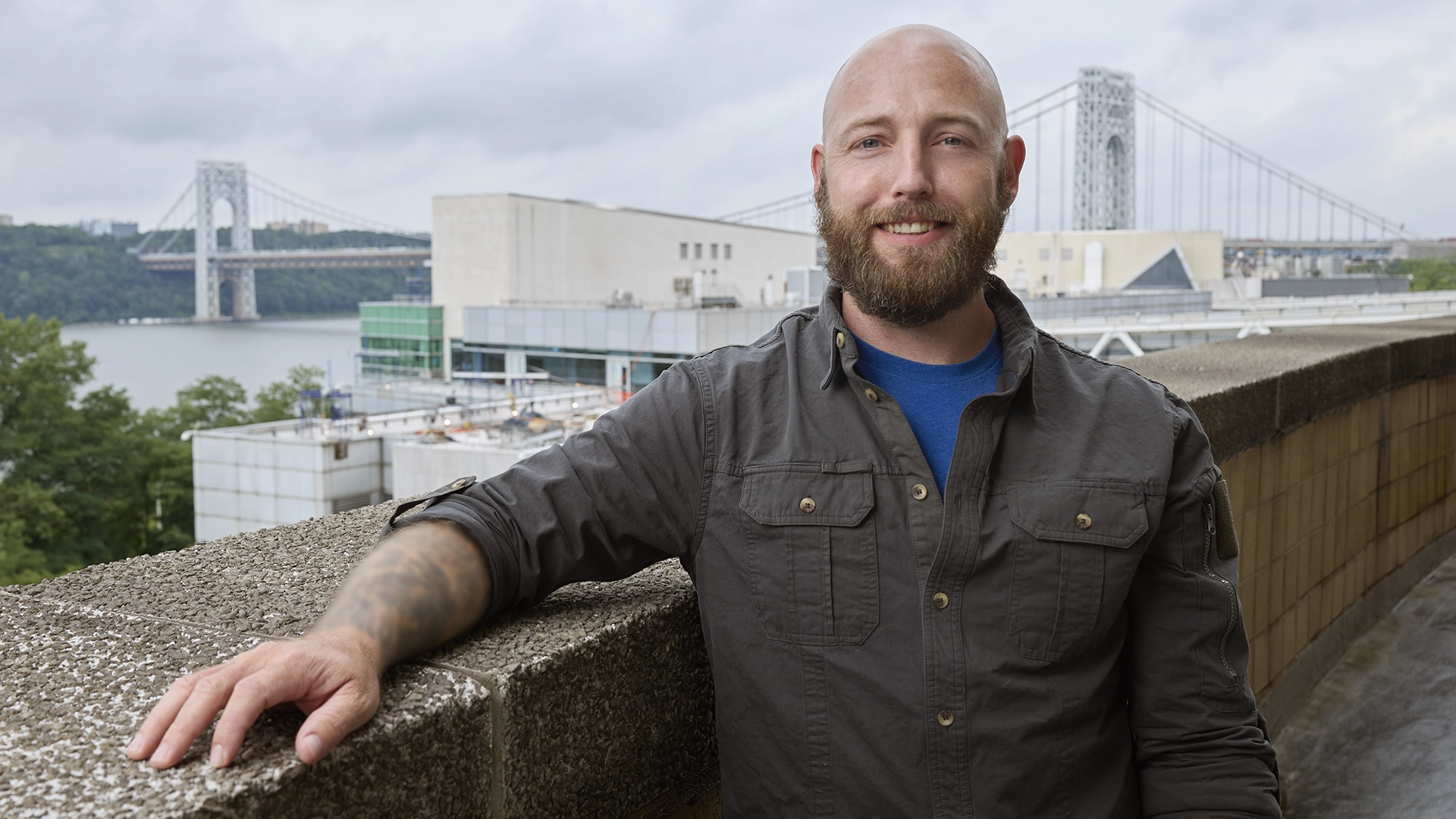
Thomas Calvo, then a first sergeant in the Army, thought he had a stomach bug.
While deployed in Iraq in March 2024, stomach pain and cramping kept him up at night. Within days his symptoms quickly progressed and became so severe he could no longer keep down food or water. Medics quickly evacuated him to Germany, where doctors confirmed he had a blockage in his colon and rushed him into surgery for a full colectomy to remove the organ. At 35, Thomas learned he had stage 4 colorectal cancer that had spread to his liver.
“It’s not something that I ever thought would happen to me,” says Thomas, who lived a healthy, active lifestyle prior to his diagnosis.
Explore Transplant Services at NewYork-Presbyterian
A New Path Forward
A week after his emergency surgery, Thomas returned to the United States where he began chemotherapy and was later referred to NewYork-Presbyterian/Columbia University Irving Medical Center for a liver transplant evaluation.
Because tumors covered both sides of Thomas’ liver and involved critical blood vessels, surgeons could not remove them individually without leaving cancer behind.
“In this case, transplant was the only way to reliably remove all the metastatic disease to his liver and give him the best chance of a cure,” says Dr. Jason Hawksworth, surgical director of adult liver transplantation at NewYork-Presbyterian/Columbia University Irving Medical Center.
“For patients with metastatic colorectal cancer, we’re able to make very unique treatment regimens and carefully time their chemotherapy and treatments with their living donor liver transplant.”
Thomas continued intravenous chemotherapy at the Herbert Irving Comprehensive Cancer Center at NewYork-Presbyterian/Columbia University Irving Medical Center until September 2024, then remained on oral chemotherapy as maintenance. The treatment kept his cancer under control, helping prepare him for a transplant that could offer a path beyond long-term chemotherapy and a chance at a cure.

Calvo and Adrada, a fellow service member and close friend, preparing for their living donor liver transplant in May 2025, at left, and running together post-transplant in August 2026.
A Bond Forged Through Service
Thomas’ best option was to find a living donor. Motivated by a desire to be there for his daughter, he reached out to friends and family, many of whom volunteered to be tested.
Karen Adrada, a fellow service member, one of his close friends, and his wife Justina’s best friend, was among many who stepped forward. Thomas and Karen spent years pushing each other through military fitness tests, deployments, and the demands of service.
“I already knew that I was going to apply. I am going to be Thomas’ donor and I am going to save his life,” Karen said. “I did it because I love them. All I cared about was him living.”

From left to right: Adrada, Calvo, and Justina Calvo, Thomas' wife, in uniform.
Expanding the Possibilities of Colorectal Cancer Care
On May 8, 2025, two surgical teams worked simultaneously in neighboring operating rooms. Dr. Hawksworth removed the right portion of Karen’s liver through a fully robotic, minimally invasive procedure.
In the adjoining room, Dr. Tomoaki Kato, chief of transplant surgery at NewYork-Presbyterian/Columbia University Irving Medical Center, and his team removed Thomas’ entire liver and transplanted Karen’s donated portion. Thomas’ native liver still contained cancer, which meant that the disease would eventually have grown and spread without the transplant.
“This approach for Thomas required a lot of expertise, including excellence in robotic surgical technology, oncology, hepatology, total patient care and a living donor team,” says Dr. Kato. “I’m so glad that we were able to give him a second chance at life.”
The morning after surgery, Karen made her way down the hall to Thomas’ room. At his bedside, they held hands as she reminded him that they weren’t going to give up.
“That feeling that you get that you know you’re both okay, there’s nothing like it,” Thomas says.
Life After Transplant
Running has carried Thomas through some of the defining moments of his life: military service, chemotherapy and preparing for a living donor liver transplant. Now, every mile is a gift.
Less than a year after his transplant, Thomas was back to camping with his wife and daughter, lifting weights and running again — even crossing a 5K finish line with Karen.
Today, he has no evidence of disease and no longer needs chemotherapy. He continues to receive close follow-up from his oncology and transplant teams, including bloodwork and scans every three months, and takes immunosuppressants for his new liver.
“Before getting this liver transplant, I really thought that I would never be able to run again,” he said. “And I ran three miles this morning.”
“I want to say thank you to the doctors, thank you for saving my life and being as good as you are, to be able to do the things you do.”
“I get to see my daughter smile; I get to enjoy all this time with my family that I didn’t think I would have.”

Time with his wife and daughter carries new meaning post-transplant.

The health and wellness newsletter you can trust
Featured Experts

Liver & Abdominal Transplant Surgery
Hepatobiliary Surgery and Transplant Surgery