Health Matters
Feeling Stuck? Why Task Paralysis Happens
Why is it so hard to start the things we know we need to do? A psychologist explains the science behind task paralysis and shares simple ways to move past it.



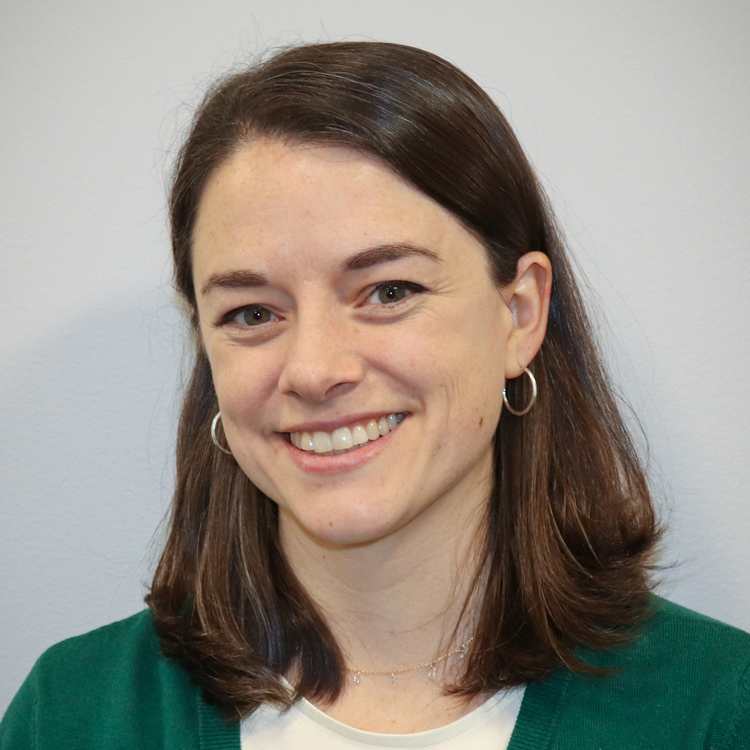
We've all experienced it: starting a task, knowing it needs to get done, but feeling unable to start. This week, Courtney Allison is joined by Dr. Alyssa Ames-Sikora, a psychologist at NewYork-Presbyterian and Columbia, who explains what's happening in our brains when we experience task paralysis, how anxiety and perfectionism can get in the way, and practical strategies to help us get unstuck.
Explore Mental Health Services at NewYork-Presbyterian
Episode Transcript
Dr. Ames-Sikora: We have been putting things off for as long as we've been documenting history. The Egyptians had a hieroglyph to describe slacking off. There is a Greek poet in seven hundred BCE, this quote from him, "Do not set your work next week and the week after next, for a slow laborer will not fill his barn." Avoiding something hard is something we all do as humans.
Courtney Allison: [instrumental music] Welcome to Health Matters, your dose of the latest in health and wellness from NewYork-Presbyterian. I'm Courtney Allison. [instrumental music] This season on Health Matters, we're covering your health from A to Z, asking our experts to break down the health topics and wellness trends we're all curious about. Today, we're at the letter T for task paralysis. We all know the feeling, being so overwhelmed by a task that you don't even know where to start. To help, we talked with Dr. Alyssa Ames-Sikora, a psychologist with NewYork-Presbyterian and Columbia. Dr. Ames-Sikora explains what's happening in our brains when our to-do list makes us freeze and shares steps we can take to finish what's important to us. She also shares why this can be even harder for kids and offers parents advice on how to help. [instrumental music] Dr. Alyssa Ames-Sikora, welcome to Health Matters. Thank you so much for joining us today.
Dr. Ames-Sikora: Thank you so much for having me on this podcast. What a privilege it is to get to sit with you and talk about this.
Courtney: I am so excited to dive in. I think it's a topic that a lot of people can relate to. So, what exactly is task paralysis, and how might it be different from everyday procrastination?
Dr. Ames-Sikora: I see task paralysis as one name that can kind of cover a lot of ground. I do think of task paralysis as, like, a procrastination. I also think of task paralysis as avoidance, maybe performance anxiety, maybe decision paralysis, maybe executive dysfunction. But when I think of the term task paralysis, I think it's driven by just this idea of they can't quite get started, and maybe there's an anxiety at its root.
Courtney: Do we know just how common task paralysis is?
Dr. Ames-Sikora: There is survey data that shows that ninety-five percent of people admit that they put things off.
Courtney: Hmm.
Dr. Ames-Sikora: Twenty-five percent of people share it's a chronic defining characteristic about themselves. They sort of define themselves as procrastinators. You'll also find that teenagers and college students have even higher rates. As you get older, your rates of having task paralysis or procrastination actually decrease, which is really fascinating.
Courtney: Is this a modern problem, or have humans always struggled with putting things off?
Dr. Ames-Sikora: Putting things off, avoiding something hard, is something we all do as humans. We have been putting things off for as long as we've been documenting history. The Egyptians, like, a thousand [chuckling] years before common era, they had a hieroglyph to describe wasting time, delaying works, slacking off. There is a Greek poet, Hesiod. He wrote about it in seven hundred BCE.
Courtney: Wow.
Dr. Ames-Sikora: This quote from him, "Do not set your work next week and the week after next, for a slow laborer will not fill his barn." And in the 1800s, there was this term, “tomorrower.” [chuckles] They used it to refer to people who continuously put things off till tomorrow.
Courtney: That is fascinating, and I wanna go into that more, what that means about the brain or learned experiences. But I wanted to ask, is it true that task paralysis might extend to other species? Is it just humans who struggle with this, or do animals?
Dr. Ames-Sikora: [chuckling] This is so cool. So yes, other animals too. There really is a brain base, right? So there is a really interesting study that James Mazur, I believe is his name, was trying to study procrastination in animals. So he trained pigeons on two different work schedules. He gave them a choice of which to pursue. So, the first work schedule...actually, both of them, they would have a tasty treat at the end of each work schedule at the same time. But the first work schedule, what they did is they had to do a little bit of work followed by a long delay, so, like, rest and relaxation, while the second work schedule was where you had a long delay, no work, and then you had to do a lot more work right before the treat was there, and you had to do up to four times as much. And so then he gave the pigeons kind of a choice. This sounds very human, but it's ve- [laughs] it's getting-
Courtney: One more thing, like, what's the tasty treat? [both laughing]
Dr. Ames-Sikora: That's a good question. I don't know. Essentially, the birds had to choose between doing a little hard work now and having rest and relaxation versus taking it easy immediately followed by a lot of work. And what they chose is [chuckling] they tended to choose the procrastination model.
Courtney: Funny.
Dr. Ames-Sikora: So they would put off work despite having to do, like, four times the amount of work. So yes, animals do it too, and there is other research that shows it in other animals as well, but it is, it is something that is a brain base. There is a brain base to it.
Courtney: It's very relatable.
Dr. Ames-Sikora: Yeah.
Courtney: So, you say it's brain based. So what is happening in our brain when we freeze and we can't get started on a task?
Dr. Ames-Sikora: There is this internal tug of war we have between two different systems. We've got our limbic system and our prefrontal cortex. So our limbic system is the emotional command center of our brain. It's responding to impulses. Uh, you can think of it as the gas pedal of our brain. It says, "Oh, this looks like fun. I want that now. I'm gonna react really quickly to this." And then the prefrontal cortex, that's more of the area of the brain that helps us focus. It helps make decisions. It helps control our impulses. You can think of it as the steering wheel of our brain, maybe like the brake pedal. It helps us plan ahead. It weighs consequences of decisions, our ability to delay our gratification, problem solve. It's the one that thinks, like, "What might happen next? Is this a good idea?" [laughs] "Should I be doing this?" Another thing to keep in mind is as we age, our brain matures from back to front. So the front part of our brain is our prefrontal cortex, so it's the last to really develop and to mature. This is why we see kids, teenagers, college students who their prefrontal cortex is not yet fully developed, having more task paralysis, having more procrastination. It's helpful to keep this stuff in mind, to have compassion for others, but also compassion for ourselves, knowing that this stuff is very hard to tackle.
Courtney: Why is it that the more important a task is, the harder it can sometimes be to get started?
Dr. Ames-Sikora: It's such a good question, and there's a lot of things that go together to make a task hard to do. Like, maybe there's a lot of choices involved, and it can be really hard to make a choice about, like, where to get started. There's this really interesting study by Sheena Iyengar and Mark Lepper, the “Jam Study.” They found that when shoppers were shopping around and shown twenty-four different jam varieties versus six different jam varieties, the shoppers, when they saw twenty-four and were less likely to make a purchase than when they saw six. So it's like by having so many choices, you're just paralyzed. Projects are kind of similar. If you're given something that's very abstract or uncertain, it's like, "Oh my gosh, where do you get started?" So sometimes you just feel sort of paralyzed by all of the different possibilities, and it matters to you, so you wanna get it right. We wanna do it really well. So that's one thing that can really get in the way.
Courtney: Could we talk more about how perfectionism might stop someone from getting started?
Dr. Ames-Sikora: Yeah, I do see a lot of perfectionism, and at its core, perfectionism is really like, "I can't get started unless I know I'm gonna do it well enough."
Courtney Allison: Yeah.
Dr. Ames-Sikora: It's gotta be perfect. This could be something simple as like, "I'm not even gonna bother cleaning my room because I'm not gonna do it right," and you don't get started, and then you end up with a mess. And so people get confused, like you think you're a perfectionist, but you're terribly messy and very disorganized. But it's actually because it's so hard to get started 'cause you see everything as a mountain in front of you. It can be really helpful to sort of shift into a mantra of, like, "I need to find good enough." What is the saying? It's, "Don't let perfect be the enemy of the good."
Courtney: I'd also love to spend some more time on when someone is stuck, what is driving it?
Dr. Ames-Sikora: There is this theory of learned helplessness, this idea that if we expect to fail at a task, we make failure happen. We don't dig in, we don't try, we end up with more task paralysis, procrastination, and so that belief can really paralyze us. It's so hard to actually get going and get started on something when we feel like it's not gonna go well or we're gonna be garbage at it. The biggest trait associated with putting tasks off is impulsivity. So impulsivity is about the here and now and wanting to be instantly gratified, just living impatiently in the moment, wanting it all now. If you have anxiety and impulsiveness, in that moment, you're not gonna wanna feel the discomforting anxiety feelings, right? You're gonna, in this moment, wanna feel good, so you're gonna choose to play your game on your phone. So impulsivity is probably even more of a culprit of putting things off, but put those things together and it's just kind of a recipe for disaster.
Courtney: So if someone has been putting something off for weeks or even months, what's the very first thing you would tell them to do?
Dr. Ames-Sikora: Well, first I'd probably take a [chuckling] deep breath-
Courtney: Yeah.
Dr. Ames-Sikora: ...and validate them. Like, let's start with self-compassion first. Then we'll simplify things and we'll break it down. We'll do something called success spirals. So this is where you set yourself up with an ongoing series of challenging but achievable goals that sort of lead you towards completion. So each time you achieve something, you get kind of this renewed sense of self, a desire to strive for more. It's like these small decisions and these small successes are accumulating, and you can build on more and more. So you purposely plan in some early accomplishments. If you've got a report for work you've gotta work on, find a small portion you feel capable of doing. Maybe just start with the headings. One thing that's particularly helpful for breaking things down is this method called the Pomodoro Technique. The creator, Francesco Cirillo, he used this tomato-shaped timer, which is why it's called Pomodoro. And so what you do is you break your work down into twenty-five-minute focus intervals separated by short five-minute breaks, and then a longer break after you've repeated that four times. The idea is that's the amount of time that's long enough to make progress on something, but short enough to prevent burnout. I find it's actually very, very helpful to individualize that amount of time. Some people aren't ready to start with work at twenty-five minutes. That's okay. Even if it's, like, five minutes, what's that tiniest step that just gets you in? The Pomodoro is also this focused time where you're also mindful to remove distractions. If you can block distracting sites or even block social media feeds, it's really, really helpful to reduce distractions and sort of block these things.
Courtney: I'm curious, are there certain times of day when a person is naturally more productive?
Dr. Ames-Sikora: We are more likely to get through something we are paralyzed by and procrastinating when you pick a time when you are the most alert and productive. When we're tired, we have much lower interest, much lower ability to focus. It's best to tackle problems and to use, like, when we're just naturally have more zip or zang, right? It's a few hours after you wake up, about four hours. So if you wake up around seven AM like I do, it tends to be around ten AM to two PM.
Courtney: What about changing the scenery, moving locations? Could that help you get started on a task?
Dr. Ames-Sikora: It is very helpful to try a new setting. Sometimes these places can be psychologically contaminated by all of these associations we have with other things. Like, imagine if you're working on an essay and so stuck and cannot make progress on it. You keep putting it aside and doing other things on your desk. That space has now become contaminated by all of these times you've associated it with just not making progress. So you can instead choose a new setting, and maybe you find the library or maybe you go outside. You just find a new space.
Courtney: What should parents know or do if they are seeing task paralysis in their kids or teens?
Dr. Ames-Sikora: One thing you might look out for is avoidance of daily functional tasks. Are they avoiding school? Are they constantly late for things? Are they handing everything in late? Those are kind of hallmark signs of avoidance, maybe task paralysis, procrastination. Basically, like, they know they should be doing it, but they're not doing it. They're working last minute. I hear a lot of complaints from parents about this. They're figuring out their brains are still developing. Let's have compassion for them. But some things parents can do, if we think about little kids is encourage the sense of getting stuff done, reward charts. They're incredibly beneficial. Even if the task is like, "I just want my child to listen better." If we're talking about, like, an eight-year-old who you have to ask them to do something five times before they do it, it's really helpful to understand that that's a gradual process. Develop reward charts. You then start to really focus on the times they listen. You give them points, and they are likely to do it more. When we reinforce people for having positive behaviors, they're much more likely to do it in the future.
Courtney: Dr. Ames-Sikora, thank you so much for such a wonderful conversation on task paralysis and how to combat it. I'm so excited to go do my to-do list now. [laughs]
Dr. Ames-Sikora: [laughs] Thanks, Courtney. Really appreciate having the privilege to sit and chat about this topic.
Courtney: Our many thanks to Dr. Alyssa Ames-Sikora. I'm Courtney Allison. Health Matters is a production of NewYork-Presbyterian. The views shared on this podcast solely reflect the expertise and experience of our guests. To learn more about Dr. Ames-Sikora's work with patients, check out the show notes. NewYork-Presbyterian is here to help you stay amazing at every stage of your life.
Join us next time when we talk about managing urinary tract infections, how to prevent them, and how to treat them. That's in two weeks right here on Health Matters. So you don't miss it, be sure to follow and subscribe on Apple Podcasts, Spotify, or wherever you get podcasts.

The health and wellness newsletter you can trust
Featured Experts