




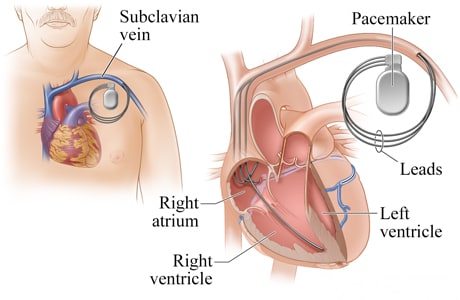
Cardiac resynchronization therapy (CRT), is designed to correct ventricular dyssynchrony, a type of irregular heart beat. Numerous studies have shown that this device can decrease the risk of mortality from sudden cardiac death and improves heart function and quality of life in patients with moderate to severe heart failure.
CRT improves the symptoms of heart failure in about 50% of patients who have been treated extensively with medications but still have severe or moderately severe heart failure symptoms. It's the most important advance in the treatment of heart failure for appropriate patients since the introduction of beta-blockers.
Like a pacemaker, a cardiac resynchronization device sends tiny electrical pulses via leads (soft insulated wires) to the lower chambers of the heart to synchronize the contractions of the ventricles.
Two types of heart failure devices are available to coordinate the heart's pumping action, improve blood flow, and speed up a heart that is beating too slowly - a CRT pacemaker and a pacemaker with defibrillation therapy. The latter also detects a heart rhythm that is dangerously fast.
During the procedure to install the device, small incisions are made in the chest and the leads and device are inserted. Patients are given a local anesthetic and the patient is usually discharged from the Hospital within 24 hours. It is recommended that patients with the device continue taking medication as determined by their physicians.
CRT can reduce a number of symptoms of heart failure, helping patients to resume many daily activities, and improve their quality of life.
The New York Heart Association has a classification system that helps health care professionals determine the severity of a person's heart failure and helps to guide the physician to a proper course of treatment. The best way to learn your classification and to discuss whether CRT is an option for you is to talk to your doctor.
Learn more about pacemakers and/or defibrillation therapy.
Contact us
NewYork-Presbyterian Brooklyn Methodist Hospital
Cardiac Resynchronization Therapy (CRT)