Obsessive-compulsive disorder (OCD) presents with remarkable heterogeneity in clinical practice, with the four most common symptom profiles revolving around obsessions with contamination, symmetry, harming oneself or others, and intrusive thoughts. Whether the distinct OCD presentations reflect different underlying neurobiology has remained an open question, challenging efforts to develop more personalized treatments.
Now, a new international study published in European Neuropsychopharmacology offers critical insight by analyzing brain MRI scans from 266 medication-free adults with OCD and 254 matched healthy controls across five countries. The research is described as the largest harmonized data collection initiative for unmedicated adults with OCD to date and stems from the Global OCD Study, a major research collaborative that seeks to identify robust brain imaging markers associated with OCD.
“OCD as a clinical diagnosis is just a constellation of symptoms,” says Helen Blair Simpson, M.D., Ph.D., professor of psychiatry in the Department of Psychiatry at Columbia and a founding faculty member of the Center for Youth Mental Health at NewYork-Presbyterian, who co-authored the paper and co-leads the Global OCD Study. “There's a different way of thinking about OCD, with different imaging signatures associated with different clinical profiles. If there really are reproducible and robust brain signatures, we could use them to develop new treatments.”
Why Researchers Studied OCD in Unmedicated Patients
Investigators aimed to address a persistent challenge in psychiatric imaging: distinguishing brain differences associated with OCD from those related to medication exposure, comorbidities, or methodological differences across studies. “If medications affect your psychiatric symptoms, they may affect your brain. We wanted people who were unmedicated to avoid that confound,” explains Dr. Simpson.
The analysis examined high-resolution structural MRI scans from adults aged 18 to 50 across five sites in Brazil, India, the Netherlands, South Africa, and the United States. Study participants with OCD had been free of psychotropic medications (apart from permitted as-needed sleep medicines) for at least six weeks prior to scanning, and 57% had never taken medications found to reduce OCD symptoms: selective serotonin reuptake inhibitors (SSRIs) or serotonin and norepinephrine reuptake inhibitors (SNRIs) antidepressants.
The more targeted we can get, perhaps the more effective we can be with treatment.
— Dr. Helen Blair Simpson
Notably, the researchers found no significant differences in cortical and subcortical brain anatomy between the OCD patients and control subjects. However, they did find that brain structure varied among the OCD patients according to illness severity, symptom profile, and coexisting depression, suggesting that different clinical presentations may have distinct structural underpinnings. These findings also reinforce earlier analyses that suggested structural differences may be more pronounced in medicated patients, although it remains to be demonstrated in prospective studies that medication is the cause.
How Distinct OCD Symptoms Map to Different Regions
Within the OCD group, overall illness severity produced the clearest anatomical finding. Patients with more severe illness showed smaller surface area in the orbitofrontal cortex and right insula, regions central to decision-making and emotional processing.
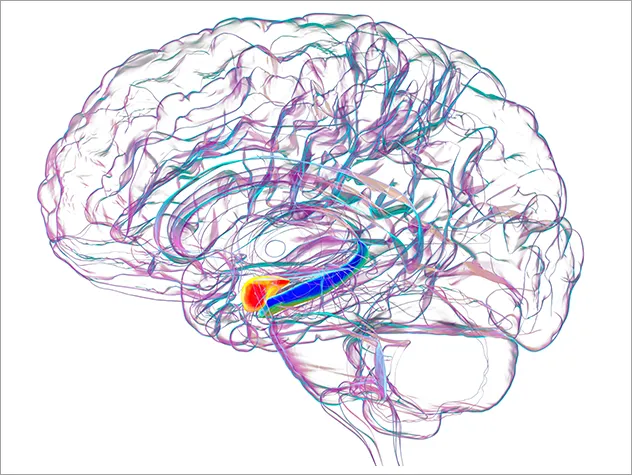
Brain morphology also varied by symptom pattern, supporting the idea that OCD presentations may arise from partially distinct neural circuits. Specifically, patients with intrusive thoughts about harm and aggression showed smaller surface area in the medial orbitofrontal cortex, while those with sexual or religious obsessions had a larger hippocampus. Coexisting conditions presented their own patterns: depression was linked to reduced surface area in parietal and temporal regions, and higher anxiety correlated with a larger thalamus.
OCD is very understudied, but it’s more common than schizophrenia and can be just as disruptive to people and their families.
— Dr. Helen Blair Simpson
Dr. Simpson explains that anatomical changes extend across broadly distributed pathways. The findings also align with previous analyses from the Global OCD Study showing symptom-specific differences in functional brain connectivity, providing converging evidence that distinct clinical profiles may have measurable structural and functional brain signatures.
"OCD, like many of our psychiatric diseases, is not dependent on a single circuit," she says. "It's going to be more of a network."
Researchers hope neuroimaging will eventually explain why OCD presentation varies so widely between patients and lead to more tailored treatment, and Dr. Simpson continues to research symptom-specific therapies. But until then, she says the study further substantiates the importance of recognizing OCD early and connecting patients with evidence-based treatment, such as SSRIs and cognitive behavioral therapy.
“Still today, OCD is very understudied, but it’s more common than schizophrenia and can be just as disruptive to people and their families,” Dr. Simpson says. “Our goal was to try and identify certain signatures through imaging already available in clinical settings, and the more targeted we can get, perhaps the more effective we can be with treatment.”

Learn More
de Joode NT, Vriend C, et al. Structural brain findings associated with clinical profiles but not diagnosis in unmedicated adults with obsessive-compulsive disorder: the Global OCD study. European Neuropsychopharmacology. Published online April 2026. doi: 10.1016/j.euroneuro.2026.112829
Featured Expert