


An Unexpected Lifeline: Child Life
Behind the scenes and at the bedside, the quiet force helping children and families feel seen.
When Lili Berkowitz’s Nine-Year-Old Son Was Diagnosed With Leukemia, she found herself plunged into a new, difficult reality but was met with a source of comfort she hadn’t known existed—Child Life.
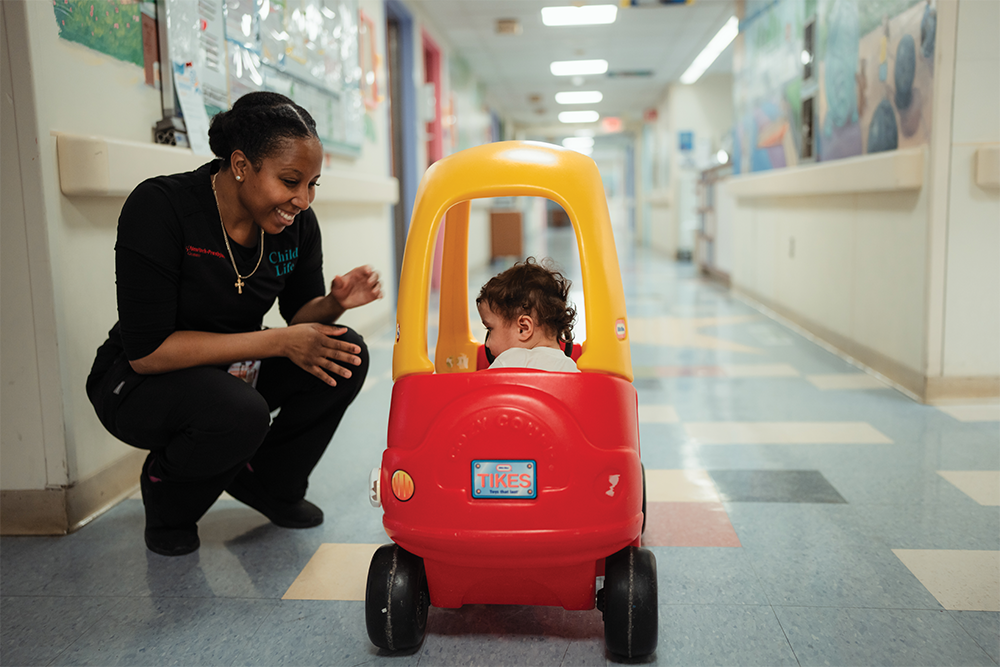
Child Life specialists on every Children’s Hospital of New York campus work with patients and their families to understand what is happening in the hospital. “Whether it is something as simple as normalizing the environment with a toy to explaining a lengthy procedure or a diagnosis,” says Michelle O’Hara, Director of Child Life for Morgan Stanley Children’s Hospital, “the Child Life specialists are with the patients through their entire clinical journey.”
For the Berkowitz family, one specialist became their son’s companion during his four-month inpatient cancer care journey. “She knew him so well. She brought in a Christmas tree and ornaments when he was in quarantine over the holidays. She gave him an entire set of Sharpies—every color imaginable—because she knew how much he loved to draw,” Berkowitz says. “She just showed up, every day, with joy. Child Life was our lifeline.”
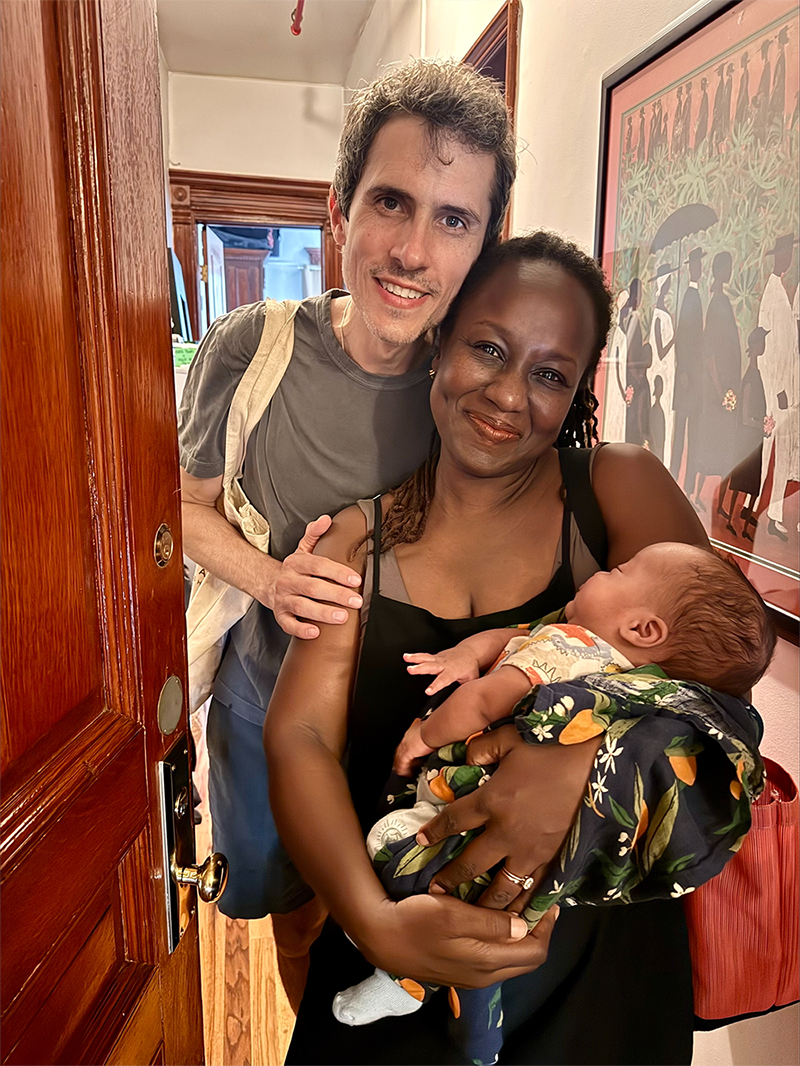
Stella Safo, MD (pictured, with her husband and son), a primary care physician, experienced Child Life after the premature birth of her son, Isaiah, at 29 weeks at NewYork-Presbyterian Brooklyn Methodist Hospital. Her daughter, Amara Joy, just two at the time, had already endured weeks without her mother when Safo was hospitalized during pregnancy. “One of my top priorities was that my daughter felt comfortable. And that’s where Annie, the Child Life specialist, came in.”
Young children cannot visit the NICU, so Annie Jacobson created an alternative. “She brought this doll and all these medical supplies and helped Amara Joy understand what was happening with Isaiah. It made such a big difference,” Safo says.
Safo remembers the team’s compassion, not only for her children but also for her as a parent. “Mother’s Day was really hard for me because you feel like you failed them—your job is to hold them in your body until they’re safe,” she says. “The team took pictures of us in the NICU and gave them to me. They saw me not just as the parent of their patient but as a person who was struggling. If I had millions of dollars, I would be donating it to this department.”
