Domains of Health

Chronic Disease Prevention & Management

CHALK

CHALK (Choosing Health & Active Lifestyles for Kids) programs support children, families, and their neighborhoods. Each initiative connects communities to safe and joyful public spaces, nutritious food, and/or resilient community-based organizations supporting the neighborhoods they call home. We collaborate with nonprofit organizations, emergency food providers, early childhood centers, city agencies, and healthcare teams in New York City and Westchester County.

Each program is co-designed with our partners, leveraging our combined strengths to respond to community needs. CHALK is part of NewYork-Presbyterian's effort to increase health justice by addressing social determinants of health. Our work aims to prevent nutrition- and physical activity-related chronic disease.
CHALK Programs

My Block

My Block is a built environment program that leverages existing community resources to increase opportunities for physical activity and social connection. Each project is tailored to a neighborhood’s unique strengths and needs, guided by the knowledge and experiences of local organizations, community leaders, and residents with the shared goal of improving the built environment and activating public space. Our priority neighborhoods are Washington Heights, Lower East Side, Chinatown, and Mount Vernon.

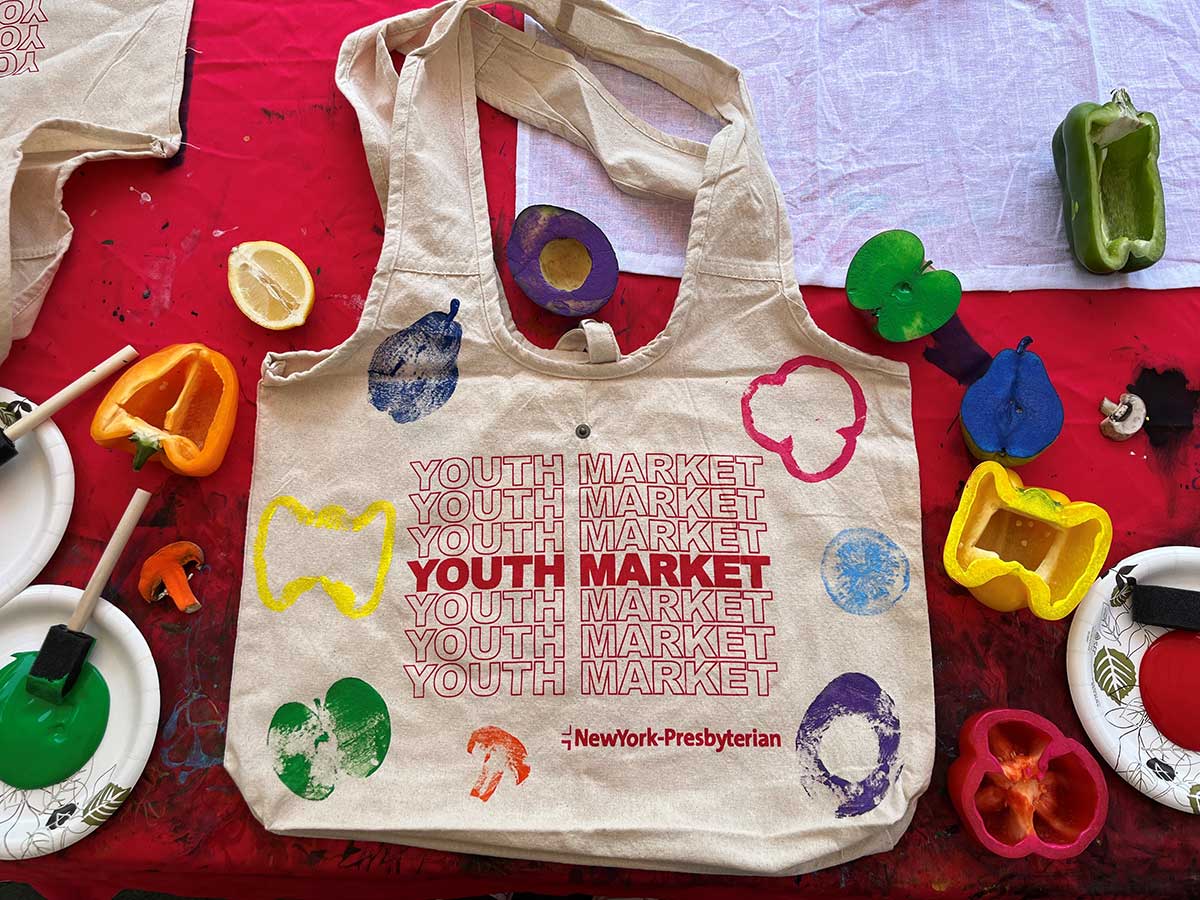
Youth Market

A paid opportunity for youth ages 16-22 in neighborhoods with high rates of food insecurity to gain experience and mentorship in nutrition, public health, and food justice

Food FARMacy

Offers home delivery of free, nutritious groceries and connection to SNAP/WIC for people experiencing food insecurity

CHALK Jr.

Partners with early childhood centers to promote nutrition education and physical activity, screen for food insecurity, and increase food access

Social Determinants of Health & Culinary Medicine Workshop

A seminar for Columbia University Irving Medical Center resident physicians in pediatrics, family medicine, and internal medicine

Fruit and Vegetable Prescriptions (FVRx)

Redeemable for free fruits and vegetables at GrowNYC Greenmarkets

Community Advocate

A paid opportunity for community members recruited from CHALK activities or priority neighborhoods to join our team, amplifying the voices of past program participants and increasing representation in the community health field

Key Accomplishments & Outcomes, 2023-24

14,068

interactions throughout 204 activities and events across CHALK programs in 2023

1,488

households supported through Food FARMacy

distributing over 450,000 pounds of nutritious food in 2023

240

patients received FVRx in 2023

4,529

people attended 118 workshops

in nutrition education, physical activity, or capacity-building in 2023

$58k

awarded in grants to community-based organizations

through the Mini-Grant and Capacity Building Program in 2023

Food FARMacy distributed more than

1M lb.

healthy groceries

by home delivery in 2024

Youth Market added

14,450

pounds of local produce

through our farm stands in 2024

52

pediatric medical residents attended community health and obesity prevention workshops in 2023

My Block program launched, partnering with

11

community-based organizations

My Block program supported more than

100

public space activations and improvements in 2024

CHALK Success Stories

We have been partners with the CHALK initiative for several years, and our experience has made us realize the level of commitment the CHALK team has to the Uptown Manhattan community. Our involvement in Open Streets allowed us to provide free high-quality summer programming to our community, aligning with NewYork-Presbyterian's vision to make these enriching experiences a reality for all.

Jazz Power Initiative

Being part of the Youth Market taught us essential life skills and helped us gain awareness of food insecurity and healthy eating. It also became a comforting space, like a second home, where we could share our life goals, learn from each other, and create unforgettable experiences. We’ll always remember how we attracted passersby and the excitement we felt when we saw the peaches and nectarines.

"Lucy," Youth Market Intern

Health4Life

Health4Life provides a safe and supportive environment for children, teens, and young adults ages 2-20 and their families who are interested in improving their health through better eating habits and increased physical activity.

Key Accomplishments & Outcomes, 2023-24

1,075

referrals to the clinical program

70%

attendance at clinical visits

offering both video and in person appointments

84

nutrition education classes offered, with 90% attendance

91

virtual exercise classes for kids

  • Three cooking demonstrations provided in 2024 by Chef Marti Wolfson from the NewYork-Presbyterian Hudson Valley Hospital Teaching Kitchen
  • Launched Family Activity Week in summer 2024, providing five days of physical activity programing

Participant Feedback

Receiving farm vegetables was a refreshing experience because the kids got to try veggies we never bought in the store. The recipes were also nice because as a mom, you run out of ideas about what to make for the kids.

They helped my children understand that they don’t have to quit eating what they like, but they must eat it properly and in smaller portions.

Fue de mucha ayuda todos los consejos y conocimiento adquiridos. Gracias por su ayuda—me encantó el grupo. Sería bueno qué se lo brindarán a más familias.

Lower Manhattan Housing Navigation Program

Launched in October 2024, the Housing Navigation Program at NewYork-Presbyterian Lower Manhattan Hospital empowers patients experiencing homelessness by providing compassionate, comprehensive housing support during their inpatient stay. By individualizing care, we aim to connect patients with stable housing opportunities—fostering their recovery, healing, and dignity and improving their quality of life.

Program Activities

Connecting undomiciled inpatients with housing options, including shelters, supportive housing, and long-term housing programs.

Promoting continuity of care through coordination with community-based organizations, housing agencies, and hospital services to achieve a seamless transition from inpatient care to a stable housing environment.

Identifying and mitigating barriers that patients face in securing housing, such as lack of documentation, medical needs, and substance use recovery.

Providing one-on-one guidance through a dedicated Housing Social Worker and Assistant Social Worker.

Integrating holistic housing solutions with comprehensive case management, with a focus on physical and mental health, substance use recovery, and social reintegration.

Advocating for housing as a critical determinant of health by collaborating with internal hospital teams and external partners to prioritize housing needs as part of a patient’s care plan.

Measuring and improving outcomes by monitoring patient housing placements and their impact on overall health outcomes.

Key Accomplishments & Outcomes, 2024

Of 87 patients reached

81

received services

and 6 declined them
Working Toward Recovery and Stability

A 41-year-old male experiencing homelessness and living in lower Manhattan subway stations was experiencing opioid withdrawal and had open wounds on his legs. He presented in November 2024 with pain and swelling in his left leg and reported a need for an asthma pump and nebulizer. When he met with the Lower Manhattan Housing Navigation (LMHHN) team, he expressed a desire to enter a shelter to focus on his sobriety and allow his leg to heal. The team facilitated an appointment at an outpatient methadone clinic. The patient returned to the hospital due to an infection, and the team assured him that he could resume his clinic appointments upon discharge. They assisted him in applying for and gaining acceptance into a shelter. Given the complexity of his needs, the patient was referred to the Urban Pathways Drop-In Center for post-discharge case management, offering help with coordination of his medical care and housing-related tasks. The LMHHN team continues to support the patient’s recovery goals and long-term stability through coordinated care and resources.

Manhattan Cancer Services Program

The mission of the Manhattan Cancer Services Program is to reduce cancer outcome disparities among underserved uninsured New Yorkers.

Program Activities

Providing community-based outreach and education in collaboration with community stakeholders, leaders, decision makers, and organizations serving at-risk populations

Using population data to identify communities who lack health insurance, are not up to date with cancer screenings, and represent groups that are at highest risk for cancer incidence base on race and ethnicity

Identifying and enrolling eligible community members

Providing patient navigation to direct community members to no-cost screening, diagnostics and case management services

Assessing and addressing all social determinants of health barriers

Assuring high-quality comprehensive care and patient satisfaction

Key Accomplishments & Outcomes, 2023-24

3,035

people screened for cancer

1,546

people received cancer education during 87 events

  • New York State Department of Health funding received in 2023 and extending through 2028
  • Heyward Foundation funding received in 2023 to create a resource in collaboration with the Northern Manhattan Improvement Corporation to help patients in need of financial support for transportation, food, and housing arrears during their cancer treatment journey; Cestone Foundation provided funding in 2024 to augment the Heyward grant
  • Expanded to Metropolitan Hospital in 2024 as a provider site
  • NewYork-Presbyterian/Weill Cornell, NewYork-Presbyterian Lower Manhattan Hospital, Betances FQHC, and Henry Street Settlement were providing no-cost screening to eligible populations in lower Manhattan by the end of 2024

Support During Breast Cancer Treatment

A 47-year-old woman was diagnosed with breast cancer through the Manhattan Cancer Services Program. At the time, she lived with family and slept on their couch. Once diagnosed, she found a room for rent but did not have sufficient funds. Our case manager referred her to the Northern Manhattan Improvement Corporation to secure Heyward funding. She also enrolled in our breast cancer support group, which is supported by the Davida T. Deusch Fund. She was able to move into her own rented room during treatment and continues to attend the support group. She is very grateful for the support and treatment received through the Manhattan Cancer Services Program.

Student Run-Clinics

Student-Run Clinics serve uninsured patients by empowering medical students to deliver compassionate care, promote health equity, and foster a culture of service to the medical community. As a collaboration between the Division of Community and Population Health, Weill Cornell Medicine, and Columbia University Vagelos College of Physicians and Surgeons, this model enhances community health by supporting place-based accessible high-quality healthcare services. It is being implemented by students and faculty from the medical schools.

Care Availability

  • The Columbia Student Medical Outreach Program (CoSMO), the oldest and largest student-run free clinic at Columbia University Vagelos College of Physicians and Surgeons. Every week, student volunteers from the schools of medicine, physical therapy, public health, social work, nutrition, and nursing provide complementary and comprehensive services that address the physical, social, and behavioral aspects of health.
  • The Weill Cornell Street Medicine Clinic, a free community-based clinic in East Harlem's New York Common Pantry staffed by volunteer physicians and run by volunteer medical students affiliated with Weill Cornell Medicine. This clinic provides high-quality care for patients experiencing homelessness and food insecurity in New York City. The clinic aims to integrate medical care with social, emotional, and physical support systems, with the ultimate goal of fostering housing stability for our patients.

Key Accomplishments & Outcomes, 2024

CoSMO Program

13

attending physicians

97

student volunteers

90

unique patients

51

in-person clinic days

The Weill Cornell Street Medicine Clinic partnered with Lyft to help patients with transportation, set up payments of copays for labs for patients with Medicare, and formed a partnership with a community pharmacy

Enhancing Efficiency

This year, CoSMO’s Social Work and Community Outreach team streamlined the workflow for referrals to ensure patients with need can be connected with social work students for timely and thorough follow-up. CoSMO also launched a new system to internally track these referrals so referring physicians can easily determine when patients have been connected with resources.

Targeted Community Outreach Program

NewYork-Presbyterian Targeted Community Outreach Program strives to promote health and disease prevention by engaging in educational and screening activities that support early detection and intervention and ensure that community members have a reliable source of medical care. These activities create collaboration opportunities, dialogue, and networks to address community needs.

Because quality-of-life outcomes improve through the early detection of potentially life-threatening illnesses, we provide the necessary referrals for medical care and ensure appropriate follow-up. This focus inspires a sense of urgency and proactive engagement in the community, making everyone feel involved and part of the solution.

Our Initiatives

Building Bridges, Knowledge & Health (BBKH) Coalition

BBKH aims to develop collaborations with faith-based and community-based organizations in Mount Vernon, Peekskill, Northern Manhattan, Harlem, Corona, Crown Heights, the Lower East Side, and the South Bronx to reduce health disparities and improve the health of their members, neighbors, and community. We do this through education, screenings, and connections thereby transforming and revitalizing the community's approaches to disease prevention and health promotion.

HEAL’in the Community

HEAL’in the Community aims to reduce maternal health disparities and improve patient experiences in our communities. Our team fosters empowerment, engagement, and trust through a patient-centered approach. We seek to improve women’s lives before they enter the hospital and address the most common factors associated with pregnancy-related deaths.

HeartSmarts Program

HeartSmarts Program empowers individuals through cardiovascular health education and practical lifestyle interventions to reduce health disparities in underserved communities. Our mission is to promote heart health, prevent cardiovascular disease, and foster holistic well-being in communities with limited access to essential health resources.

Sociocultural Language and Community Initiative

Provides effective, accessible, and respectful care and services tailored to the diverse cultural health beliefs, practices, preferred languages, health literacy levels, and communication needs of individuals. The goal is to ensure that all patients receive equitable care regardless of their linguistic or cultural background.

Key Accomplishments & Outcomes, 2023-24

Asylum Seeker Initiatives

476

served

Mental Health First Aid

279

served

Flu Vaccination Campaign

2,447

served

Health Screenings

136

served

HeartSmarts

5,604

served

Sociocultural Language and Community Initiative

131

participants

  • Building Bridges, Knowledge & Health Coalition provided mental health first aid training to over 200 community members in Westchester County, Washington Heights, Brooklyn, Queens, and lower Manhattan, empowering faith leaders to reduce the stigma and pain associated with behavioral health disorders.
  • HEAL’in the Community launched in February 2024 with a virtual webinar on the current state of maternal health in New York City
  • In April, the Division of Community and Population Health's Community Outreach Program hosted its first in-person HEAL'in the Community Maternal Health Fair during Black Maternal Health Week in Harlem, attended by about 95 people

Program Testimonials

My base Spanish is decent since I learned it in high school, but the [Sociocultural Language and Community Initiative] classes helped me review and speak more comfortably. My medical Spanish also improved greatly.

I would like to express my heartfelt appreciation for your class. I genuinely learned a lot and truly enjoyed our time together each week. Your dedication to teaching made the experience enriching, and I am grateful for the knowledge and insights gained throughout the semester.

When I started the HeartSmarts Program, I was trying to lose weight, move toward a vegan lifestyle, and avoid being placed on medications for metabolic syndrome (diabetes, high cholesterol, and high blood pressure). I also had sleep apnea. Since participating in this program, I’ve lost weight and reduced my blood pressure, cholesterol, and blood sugar. I am currently on NO medications and no longer need the CPAP machine after almost 20 years of sleeping with it. The educational programs and readings have been a blessing. The most important thing I’ve learned is that I am worth building this new life. I’m grateful for this program.

Connecting with Diabetes Treatment

During a pop-up clinic, a woman shared that people in her community were talking about the free medical services and prescriptions they had received from NewYork-Presbyterian. She wanted to know if it would be possible for her to get the medications she needed. She shared that she had diabetes, had recently come from the Dominican Republic, and had no health insurance. She was hesitant to share her immigration status and ask for diabetes medication as it is very costly. That day, we connected her with a primary care clinic and helpful resources. We were also able to provide her diabetes medication at no cost. She was very grateful to receive the medical assistance and medications she needed and hadn't believed it would be possible. With teary eyes, she said, "You are angels from heaven. Thank you!”

The Center for Hope and Resiliency

The Center for Hope and Resiliency provides a medical home for individuals involved in the carceral legal system. We achieve this through compassionate evaluation, thorough clinical evaluation, in-depth treatment, and coordinated linkage to care for mental health, substance use, and subspecialty care. Services are delivered utilizing a trauma-informed care framework.

Key Accomplishments & Outcomes, 2024

More than

68

seen since the program started in January 2024

Conducted two training workshops with

150

medical students

regarding the impact of mass incarceration on health

Created a referral network of

8

community partners 

  • Instituted streamlined internal referral procedures for clients requiring dental and subspecialty medical, mental health, and substance use services
  • Hosted two medical students, one fellow, and two interns in the clinic, with plans to develop a rotation for psychiatric nurse practitioner students

On the Road to Health

A 52-year-old man with type 2 diabetes and hypertension who had been incarcerated was receiving care at another hospital, but was frustrated his concerns weren’t being addressed. His diabetes was poorly controlled, and he was inconsistent with treatment and good nutrition. After further counseling, shared decision making, and coordination with his pharmacist, he was able to pick up a new prescription for a glucometer and a new diabetes medication, which we anticipate will improve his diabetes control. He also had mental health concerns. Within two weeks, he was connected with a psychiatric nurse practitioner, who diagnosed him with bipolar disorder, provided education and counseling, and started him on medication.

TRANSiT Clinic

Established in May 2024, the TRANSiT Clinic provides compassionate, low-barrier, evidence-based care for individuals experiencing substance use challenges. Our goal is to bridge the gap between crisis and long-term recovery by offering immediate access to treatment, resources, and support that empower patients to achieve stability, improve their health, and reclaim their lives.

Program Benefits

Combining medical care, medication-assisted treatment (MAT), and behavioral health support tailored to each patient’s needs and goals.

Creating a welcoming and stigma-free environment that fosters trust and encourages engagement in care.

Offering same-day and next-day appointments.

Addressing social determinants of health by connecting patients with housing, employment, and community resources.

Enhancing continuity of care by ensuring seamless coordination between emergency or inpatient services and long-term treatment.

Promoting recovery and resilience through education, counseling, and personalized care planning.

Training healthcare professionals and staff in trauma-informed stigma-free approaches to the treatment of substance use.

Building collaborative partnerships with hospital departments, community organizations, and public health agencies.

Advocating for systemic changes that improve access to and quality of care.

Key Accomplishments & Outcomes, 2024

343

referrals

274

unique patients served

430

encounters

Many patients return every

4-6

weeks for follow-up visits

Finding Stability Amid Turmoil

When MG first came to the TRANSiT Clinic in June 2024, he was navigating a complex web of challenges. Struggling with severe alcohol use disorder and anxiety, his substance use began after being prescribed opioids for pancreatitis during prior hospitalizations. New pain and the strain of a toxic relationship with a partner who also used opioids exacerbated his discomfort. MG’s struggles culminated in an emergency room visit that December, following a Kratom overdose for which he gave himself Narcan before seeking help. This incident became a turning point for him, sparking his interest in MAT. Since then, MG has actively engaged with the TRANSiT Clinic, addressing his anxiety and substance use and starting buprenorphine treatment. Our case management team is helping him navigate the practical barriers to recovery, such as securing insurance through the healthcare marketplace. MG’s journey is a testament to resilience and the power of comprehensive, compassionate care. 

Up next

behavioral & mental health