For the Future of
Cardiac
Care

The Campaign for NewYork-Presbyterian

For the Future of
The Campaign for NewYork-Presbyterian

A 38-year-old construction worker in Queens, who seems to be in perfect health.
A softball player in her junior year at Fordham.
A grandmother of five in Washington Heights, getting ready for a holiday dinner.
Any one of these people could be at risk for a major cardiac event, and no one will know until it’s too late.
But it doesn’t have to be this way. And together, we can create a different, better future for all.
At NewYork-Presbyterian Hospital, we’re making advances that will keep each one of them alive and healthy. With innovations in technology and procedures, we will:
Close the implementation gap that keeps the best treatments away from most patients.
Detect risk factors in patients that a human doctor cannot always see.
Continue to advance and innovate the field of cardiac surgery.
Maintain our position as a world leader in heart transplants.
Someone in America dies from cardiovascular disease every 36 seconds. Each year, 17.9 million people worldwide die from cardiovascular diseases, comprising 31 percent of all deaths. Heart disease is the leading cause of death in women.
With your support, we can build the tools of the future today: catching conditions before they become serious, learning more about how they affect different populations, and creating specially designed treatment plans for each individual patient—from prevention, to diagnosis and treatment, and if necessary, surgery and transplant and post-surgical care.

Cardiovascular disease remains the leading cause of mortality and morbidity worldwide. The vast amounts of data generated in this field are ideally suited for artificial intelligence, enabling more accurate interpretation, predictive insights, and easing the burden on cardiologists as they focus on patient care.”

Ashley Beecy, MD, FACC
Medical Director for Artificial Intelligence (AI) Operations, NewYork-Presbyterian
Assistant Professor of Medicine, Division of Cardiology, Weill Cornell Medicine
Medicine is about taking science and applying it in the real world where things are messy and people have many challenges. It’s the translation of something that’s theoretical to something that’s actual. And the daily practice of that is a humbling one.
[Still,] there’s a part of me that’s restless, that says, 'This isn’t good enough. This isn’t the way things ought to be.' … We can do more; we can do better. These new technologies give us a path to build a healthier future.”
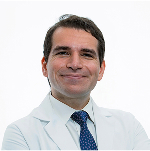
Pierre Elias, MD
Medical Director for Artificial Intelligence NewYork-Presbyterian
Assistant Professor in the Division of Cardiology and the Department of Biomedical Informatics NewYork-Presbyterian/Columbia University Irving Medical Center


Investment Priorities
Recruiting, retaining, and empowering the physician-scientists, surgeons, and caregivers who are defining the next frontiers of care in every cardiac service, from cardiology to cardiac surgery to heart transplants.
Providing advanced facilities and technology to support leading-edge work.
Investing in research programs and data analysis by connecting the world’s best minds with the most comprehensive, diverse set of patient data anywhere.
Investing in machine learning, AI, and predictive analytics to realize previously impossible aspirations in:
Prediction: Charting the next stage in the course of a disease with greater precision and personalization than ever.
Prevention: Assessing a patient’s risk of developing heart conditions based on personal risk factors and health history and taking steps to make sure they never arise.
Diagnosis: Identifying cases that would once have gone undetected by using AI-powered tools to analyze every electrocardiogram in our system and flag warning signs the human eye often misses.
Treatment: Analyzing all the factors in a patient’s life, from physical data to social determinants of health, and creating individual treatment plans.
Health Equity: Analyzing and accounting for the full diversity and potential differences of the communities we serve.
Expanding our remote-monitoring program to catch life-threatening problems before they happen, adjust treatments more rapidly and precisely, and reduce the need for heart surgery.
Closing the implementation gap to prevent thousands of unnecessary deaths each year, by investing in data analysis and outreach to ensure that everyone receives the treatment they need to avoid heart failure.
Continuing to create brilliant innovations and pioneering treatments in the field of cardiac surgery.
Pioneering new approaches and alternatives to heart transplants to expand access, reduce complications, and ensure longer, healthier lives.
At Weill Cornell, we push the boundaries of clinical innovation, academic research, and our understanding of cardiovascular pathophysiology—while mentoring the next generation.”
Jonathan W. Weinsaft, MD
Chief of the Greenberg Division of Cardiology
Weill Cornell Medicine and NewYork-Presbyterian/Weill Cornell Medical Center
I’ve seen philanthropy transform the hospital throughout my decades-long tenure. It was essential to our becoming a top ten cardiology program in the country—few others can claim such breadth and depth.”
Allan Schwartz, MD
Chief of the Division of Cardiology
Physician-in-Chief, Vivian and Seymour Milstein Family Heart Center NewYork-Presbyterian/Columbia University Irving Medical Center
Seymour Milstein and Harold Ames Hatch Professor of Clinical Medicine Vice Chair, Department of Medicine Columbia University Vagelos College of Physicians and Surgeons
Sarah with her athletic trainer, Bridget Ward, who brought the defibrillator and used it to help revive Sarah when she went into cardiac arrest.
Sarah
Sarah Taffet, a 21-year-old softball player for the Fordham University Rams, was running out a routine ground ball during a tournament in Newark, New Jersey, when her opponent tagged her in the chest for the out.
She fell forward and hit the ground.

I’m so excited and so happy to be able to play my senior season,” Sara says. “‘Thank you’ doesn’t even scratch the surface of what I would like to convey to my doctors for what they have done for me and my family.”
Read Sarah’s full story


Mati
Mati Luik was playing in his winter league tennis match in December 2019, when he felt his heart racing. He quickly lay down to avoid falling since he had collapsed on the court a year before and had to be hospitalized.
It's hard to describe the feeling, going from such a damaged heart to a new, properly functioning heart."
Read Mati’s full story
Mati Luik with his wife, Veronica, and daughter, Carolina.
At NYP, a tradition of innovation and creativity—and most of all, of vision and optimism—has driven the development of advances that have changed the lives of so many.”
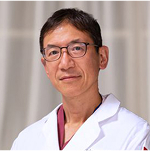
Hiroo Takayama, MD, PHD
Chief of Adult Cardiac Surgery
Director, Aortic Surgery Program
Co-Director of the Aortic Center, the Hypertrophic Cardiomyopathy Center, and the Marfan Clinic
NewYork-Presbyterian/Columbia University Irving Medical Center
Whichever surgeon they choose for whichever problem they have, they're going to get a complete commitment from the minute they walk in to the minute they walk out.”
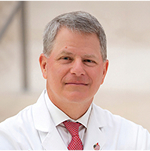
Leonard Girardi, MD
Cardiothoracic Surgeon-in-Chief, NewYork-Presbyterian/ Weill Cornell Medical Center
Attending Cardiothoracic Surgeon, NewYork-Presbyterian/ Weill Cornell Medical Center
Chair of Cardiothoracic Surgery, Weill Cornell Medical College with Weill Cornell Medicine
O. Wayne Isom Professor of Cardiothoracic Surgery, Weill Cornell Medical College with Weill Cornell Medicine
It’s not often that you get the opportunity to see the future. But from where we stand today, we can see that the work we are doing will save millions of lives, in New York City and across the world.
But we need your help to make that future possible.
We hope you will join us on this journey today.
For every person walking through life with an undiagnosed heart condition…
For every family who isn’t ready to lose their dad, their mom, or their child…
For every physician who desperately needs the tools we can pioneer…
